


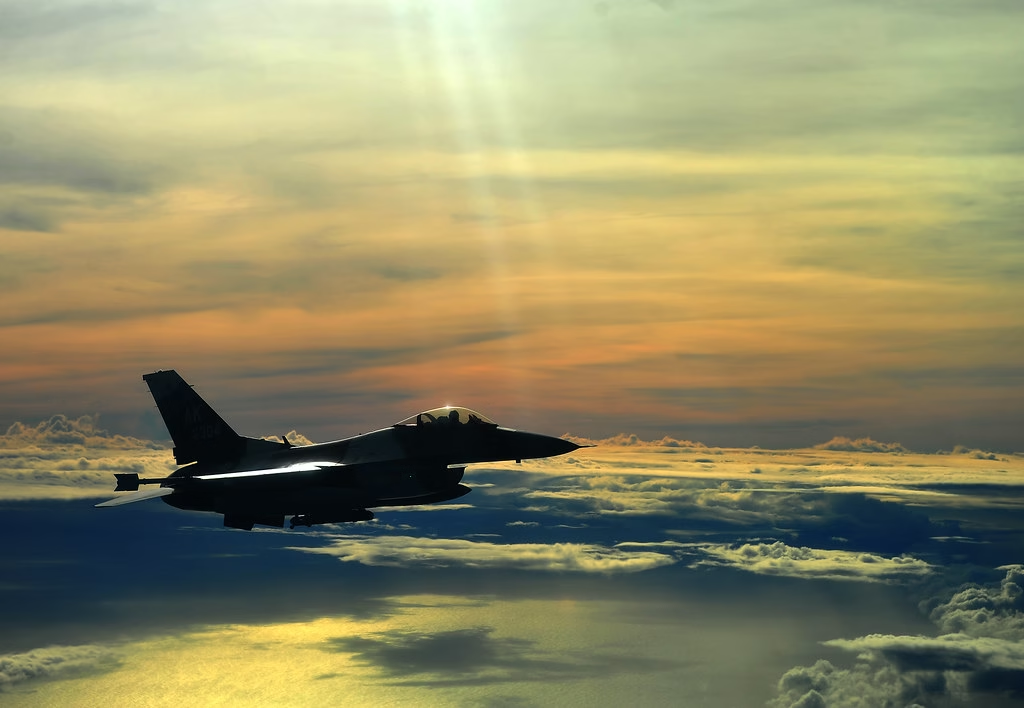
Saudi Arabian civil defense authorities triggered emergency missile alerts early Wednesday in the Al-Kharj region, an area housing the strategic Prince Sultan Air Base, which currently hosts American military personnel and equipment. The alert, which prompted residents to seek cover, marks a significant moment of heightened tension in the Gulf region as security forces investigate potential aerial threats to critical infrastructure.
The Strategic Significance of Al-Kharj
Prince Sultan Air Base, located south of Riyadh, has served as a vital hub for United States operations in the Middle East since the early 1990s. The facility houses advanced radar systems, fighter squadrons, and air defense batteries designed to counter regional missile and drone threats.
Its strategic importance increased significantly following the 2019 attacks on Saudi oil facilities. Since then, the base has become a focal point for joint US-Saudi efforts to monitor and intercept hostile aerial activity across the Arabian Peninsula.
Regional Security Volatility
The alert comes amid a backdrop of persistent regional instability. Throughout the past year, Saudi Arabia has faced recurring threats from cross-border missile and unmanned aerial vehicle (UAV) strikes originating from external actors in the region.
Intelligence reports from the Pentagon have frequently cited the proliferation of precision-guided munitions among non-state actors as a primary security concern. These groups have demonstrated an increasing capability to target both civilian and military installations with low-altitude drones that often evade conventional radar detection.
Expert Perspectives on Defense Readiness
Defense analysts suggest that the activation of such alerts serves as a critical test for the kingdom’s integrated air defense network. “The ability to detect and warn the public in real-time is as important as the interceptor capability itself,” noted a security consultant specializing in Gulf defense systems.
Data from the Global Security Index indicates that Saudi Arabia has invested heavily in Patriot missile systems and Terminal High Altitude Area Defense (THAAD) batteries. These assets are critical for protecting the high-value military installations that host coalition forces, as well as protecting the kingdom’s energy sector.
Despite these investments, the challenge of intercepting “swarm” drone tactics remains a significant hurdle for regional security. Military experts point out that the cost-asymmetry of using multi-million dollar interceptor missiles to down low-cost drones is a growing concern for long-term defense sustainability.
Implications for Coalition Operations
For the United States, the presence of these alerts underscores the ongoing risks associated with maintaining a forward-deployed posture in the region. Washington continues to prioritize the protection of its service members while balancing the need to support regional partners against evolving aerial threats.
The incident is expected to accelerate discussions regarding the integration of artificial intelligence into regional air defense architectures. By automating threat detection and response times, military commanders hope to narrow the gap between initial detection and successful interception.
Observers are now watching for further official statements from the Saudi Ministry of Defense regarding the origin of the potential threat. Future developments will likely focus on whether this alert will result in a recalibration of air defense zones around the Al-Kharj facility and what additional security measures will be implemented to safeguard the coalition presence in the coming months.























Leave a Reply