



A Shift in Diplomatic Strategy
President Donald Trump has initiated a significant pivot in U.S. foreign policy toward Belarus, signaling a potential thaw in relations with Alexander Lukashenko, the leader often labeled as Europe’s last dictator. This move, which emerged during recent diplomatic consultations, marks a departure from years of Washington-led isolation and sanctions against the Minsk regime. The policy adjustment aims to recalibrate regional geopolitical dynamics as the United States seeks to reduce Russian influence in Eastern Europe.
Historical Context of Isolation
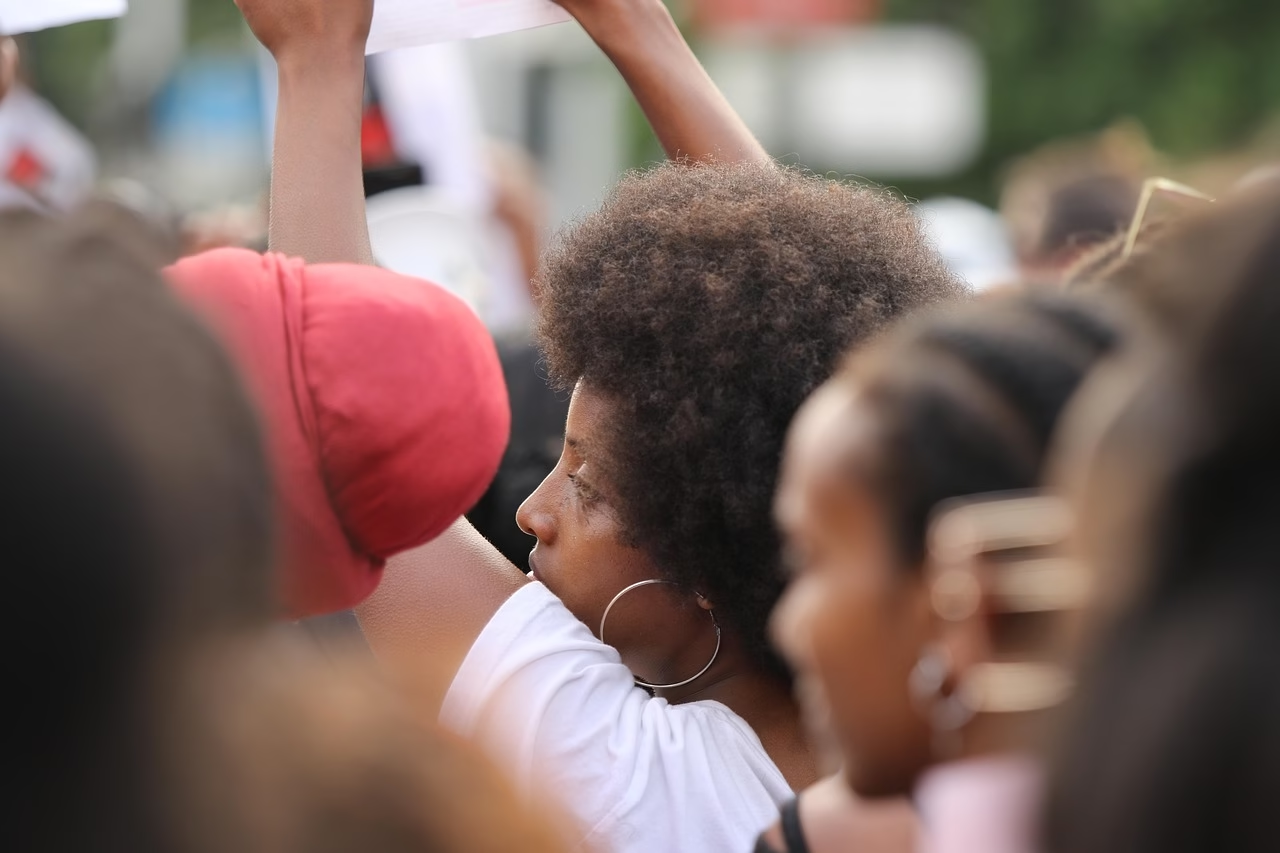
For over two decades, Belarus has remained largely ostracized by Western powers due to Lukashenko’s authoritarian governance, human rights crackdowns, and restricted democratic processes. Following the contested 2020 presidential elections and the subsequent crackdown on protesters, the United States and the European Union implemented severe economic sanctions against the Belarusian state. These measures were designed to force democratic reforms and isolate the administration from international legitimacy.
The Geopolitical Calculus
The current administration’s shift appears rooted in a broader strategy to create distance between Minsk and Moscow. By engaging directly with Lukashenko, the White House aims to exploit the recent tensions between the Kremlin and the Belarusian leadership. Analysts note that Lukashenko has historically navigated a precarious balance, attempting to assert national sovereignty while relying on Russian economic subsidies and security support.
“This is a classic realpolitik maneuver,” says Dr. Elena Vance, a senior fellow at the Institute for European Security. “The strategy assumes that if you offer Lukashenko an alternative to total dependence on Russia, he may prioritize his own political survival over his alignment with Moscow.”
Economic and Security Implications
Any diplomatic outreach is expected to be incremental, focusing initially on humanitarian cooperation and limited economic engagement. Critics, however, warn that engaging with the Minsk regime risks undermining U.S. commitments to human rights and democratic values. Human rights organizations, including Amnesty International, have cautioned that any normalization of relations must be conditioned on the release of political prisoners and an end to state-sponsored repression.
From an economic standpoint, the lifting of targeted sanctions could provide a lifeline to Belarus’s state-run industries, which have struggled under the weight of international trade restrictions. Industry experts suggest that even small concessions could shift the regional balance of power, potentially allowing Belarus to act as a more independent buffer state.
Looking Ahead
Observers are now closely watching for signs of reciprocal gestures from Minsk, such as the potential release of high-profile political detainees or a cooling of rhetoric toward Western institutions. The sustainability of this rapprochement will likely depend on how the Kremlin reacts to the sudden cooling of its primary regional security partner. As the situation develops, the international community will be monitoring whether this engagement leads to genuine reform or simply provides a temporary reprieve for an isolated regime.


















Leave a Reply