


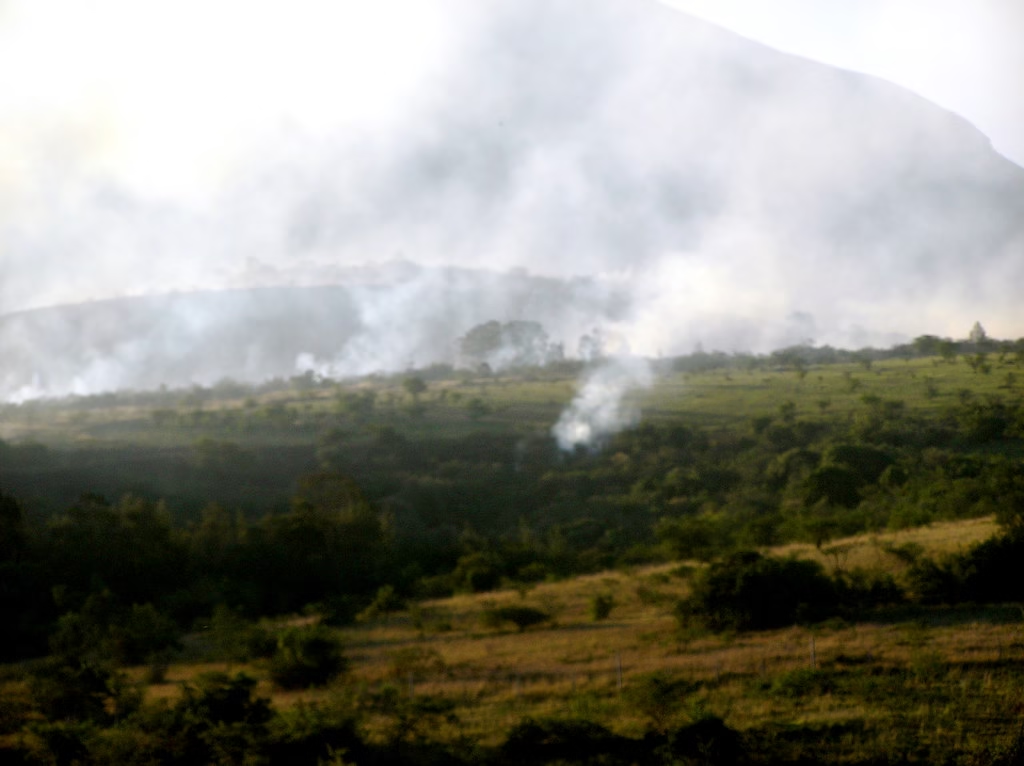
A high-stakes criminal trial commences this week in Los Angeles, where prosecutors will argue that Ramon Rodriguez Guevara, 55, intentionally ignited the devastating Palisades Fire that scorched thousands of acres of rugged terrain in 2021. The legal proceedings, set to unfold in the Superior Court of California, seek to hold the defendant accountable for a blaze that forced mass evacuations, destroyed local ecosystems, and strained the resources of state fire agencies during a period of extreme drought.
Context of the Palisades Blaze
The Palisades Fire erupted in late October 2021, rapidly expanding through the dense, dry brush of the Santa Monica Mountains near Topanga State Park. At its peak, the fire consumed over 1,000 acres, threatening multimillion-dollar hillside properties and forcing hundreds of residents to abandon their homes under emergency evacuation orders.
The incident occurred during a year defined by record-breaking wildfire activity across the American West. Firefighters faced significant challenges, including steep, inaccessible terrain and erratic wind patterns that propelled flames toward residential zones, leading to a multi-agency response involving aerial support and specialized ground crews.
Evidence and Prosecution Strategy
Prosecutors allege that Guevara acted with clear intent when he sparked the fire, citing forensic evidence collected from the ignition point. Law enforcement officials conducted an extensive investigation, utilizing satellite imagery, witness accounts, and physical debris to link the defendant to the origin of the inferno.
During pre-trial hearings, the District Attorney’s office emphasized the severity of the charges, which include arson and the reckless endangerment of both public safety and first responders. The prosecution intends to present a timeline of events that they claim places Guevara at the scene moments before the first smoke plumes were reported by local residents.
The Human and Environmental Toll
The environmental impact of the Palisades Fire remains a point of concern for conservationists and local officials. The scorched earth in the Santa Monica Mountains experienced significant soil erosion following the fire, and experts warn that the recovery of native flora could take years, if not decades.
From an economic perspective, the blaze highlighted the rising cost of wildfire management in Southern California. According to data from CAL FIRE, the state spent millions of dollars on suppression efforts alone in 2021, a figure that does not account for the loss of property value, insurance claims, or the long-term cost of habitat restoration.
Industry and Future Implications
Legal experts suggest that the outcome of this trial could set a precedent for how the state handles arson cases in high-fire-risk zones. As climate change continues to shorten the intervals between major fire events, local jurisdictions are under increased pressure to pursue aggressive litigation against individuals deemed responsible for man-made ignitions.
Looking ahead, residents and policymakers are monitoring the trial as a barometer for how California will manage urban-wildland interface safety. Observers are also watching for potential legislative shifts regarding fire mitigation and the funding of specialized arson investigation units. The conclusion of this trial will likely spark renewed debates over the balance between public safety, civil liberties, and the criminalization of activities in areas prone to rapid environmental destruction.




















Leave a Reply