


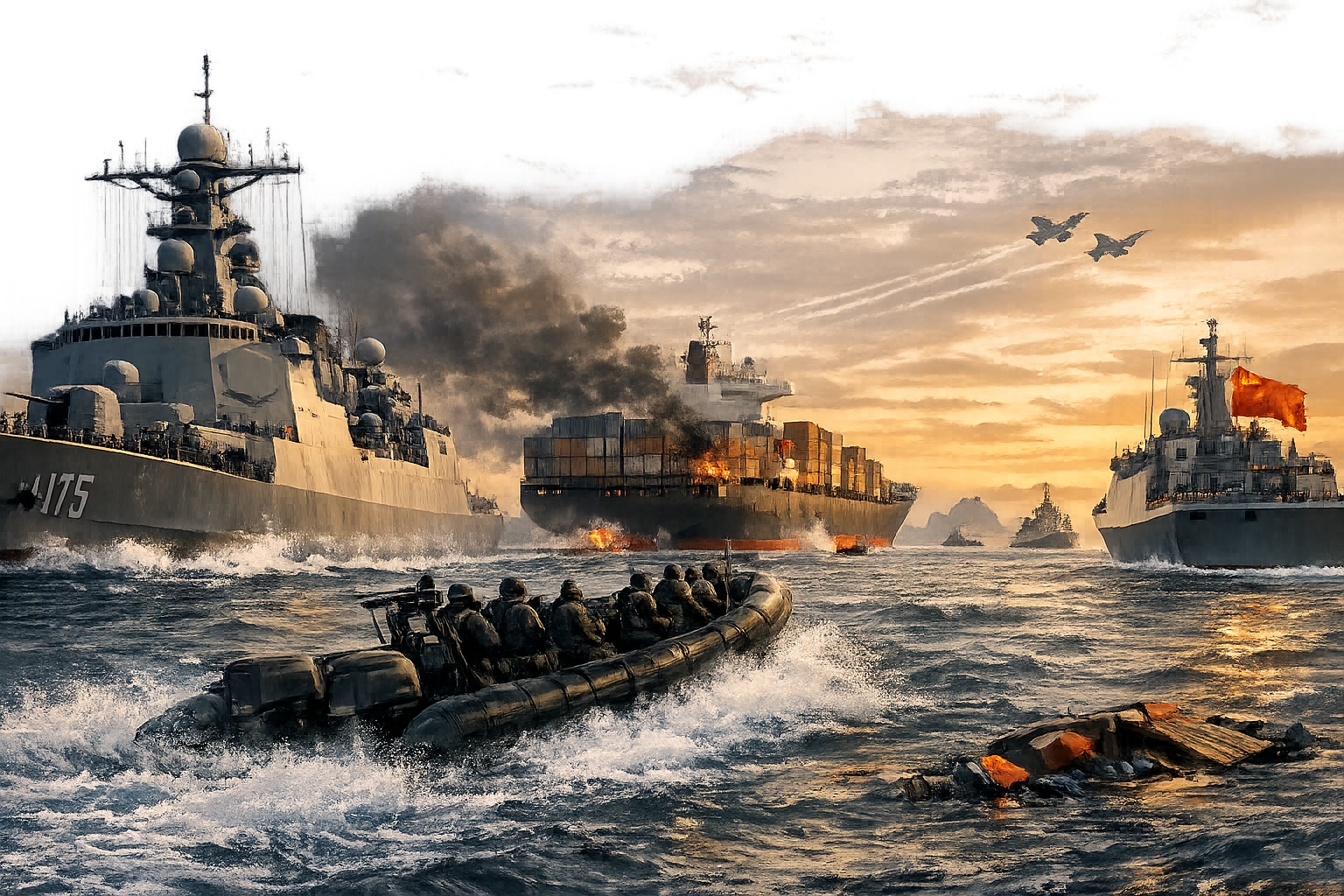
The May 2026 South China Sea Interdiction: Impact on Global Logistics
As of May 14, 2026, the maritime landscape in Southeast Asia has shifted from ‘confrontational’ to ‘restrictive.’ Following the recent declaration of a ‘Maritime Safety Zone’ around the Scarborough Shoal, commercial traffic is facing unprecedented delays. For business owners and logistics managers, this is no longer a theoretical risk—it is a direct hit to the bottom line.
The Current Situation
The establishment of a permanent administrative zone has effectively throttled the main deep-water shipping lanes connecting the Singapore Strait to the ports of Hong Kong and Shanghai. Unlike previous skirmishes, the current 2026 escalation involves active ‘document inspections’ by coast guard vessels, forcing cargo ships to choose between 72-hour delays or expensive rerouting.
Tracking the Escalation: AMTI Island Tracker
To monitor this in real-time, analysts are utilizing the Asia Maritime Transparency Initiative (AMTI) Island Tracker. This platform provides satellite imagery and AIS (Automatic Identification System) data that identifies the exact density of non-commercial vessels in contested corridors. Currently, AMTI data shows a 60% increase in ‘dark targets’—vessels with transponders turned off—indicating a high probability of imminent naval exercises that could shut down the Luzon Strait by next week.
Actionable Business Impacts
- Insurance Premiums: ‘War Risk’ surcharges for the South China Sea transit have spiked by 400% since May 1st. If your freight forwarder hasn’t updated your quote, expect a retroactive bill.
- The Lombok Alternative: Many carriers are rerouting through the Lombok and Makassar Straits. This adds approximately 3,200 nautical miles and 6 to 8 days of transit time, drastically affecting ‘Just-in-Time’ (JIT) inventory models.
- Currency Volatility: The Philippine Peso (PHP) and Vietnamese Dong (VND) are experiencing high volatility as local markets react to the maritime pressure. Freelancers paid in USD by firms in these regions should lock in exchange rates immediately.
Strategic Recommendations
- Audit Your Tier-2 Suppliers: Identify if your components pass through the ‘First Island Chain.’ If so, begin diversifying toward Indian Ocean or Trans-Atlantic routes.
- Trigger Force Majeure Clauses: Review your shipping contracts. Most standard ‘Force Majeure’ clauses cover government-mandated maritime blockades. Document the AMTI data logs to support your claims for delivery delays.
- Bunker Fuel Hedging: Rerouting around the exclusion zone increases fuel consumption by 15-20%. Logistics managers should hedge fuel prices now before the June peak season.
The Bottom Line: The South China Sea is no longer a free-transit zone. It is a managed chokepoint. Diversifying your logistics footprint south toward the ‘Middle Corridor’ or through Indonesian waters is the only way to ensure 2026 delivery targets are met.
























Leave a Reply