


The Release of Critical Documentation
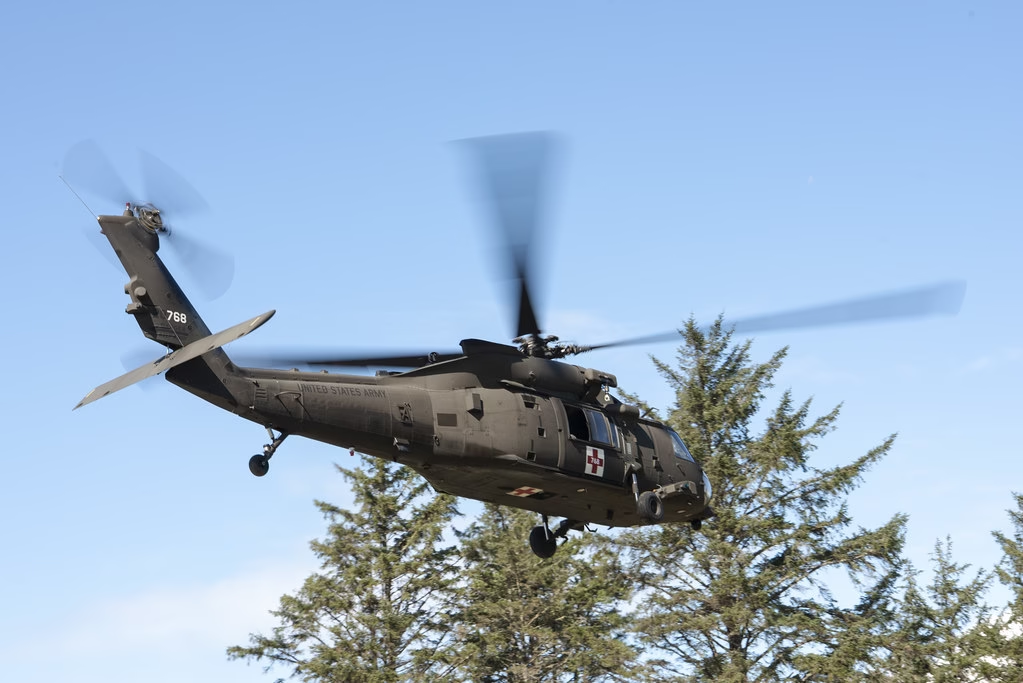
Two years after the high-stakes daylight raid in the heart of Nuseirat, the Israel Defense Forces (IDF) have released previously unseen footage documenting Operation Arnon. The operation, conducted on June 8, 2024, successfully extracted four hostages—Noa Argamani, Almog Meir Jan, Andrey Kozlov, and Shlomi Ziv—from a dense urban environment in the Gaza Strip. The newly declassified material provides a granular view of the tactical complexities faced by special forces during the intense mission.
The Strategic Context of the Mission
Operation Arnon stands as a pivotal moment in the ongoing conflict, occurring eight months after the initial October 7 attacks. The mission was named after Chief Inspector Arnon Zamora, a member of the elite Yamam counter-terrorism unit who was fatally wounded during the extraction. The operation required months of intelligence gathering and precise coordination between the Shin Bet, the IDF, and police special units.
Tactical Execution and Urban Warfare
The newly released footage highlights the multi-layered approach taken by ground forces and aerial support. By operating in broad daylight, the tactical team relied on the element of surprise to infiltrate two separate apartment buildings simultaneously. The video confirms reports that the hostages were held in civilian residences, a tactic that complicates military intervention due to the high density of non-combatants in the area.
Military analysts note that the operation was characterized by rapid movement through hostile territory under heavy fire. The footage depicts the intense firefights that erupted as the rescue teams moved the four hostages toward the extraction point. This level of synchronization, according to defense experts, remains a benchmark for urban extraction operations in contemporary asymmetric warfare.
Expert Perspectives on Modern Hostage Rescue
Security analysts suggest that the release of this footage serves both as a historical record and a demonstration of military capability. Dr. Eitan Cohen, a senior fellow at the Institute for National Security Studies, argues that the operation changed the calculus for hostage negotiations. “The successful extraction of four individuals proved that intelligence-led rescue missions remain viable even in the most complex urban environments,” Cohen stated.
However, the operation also drew significant international attention regarding the civilian toll in Nuseirat during the rescue. Reports from the Gaza Health Ministry at the time cited hundreds of casualties, sparking debates in global forums about the ethical and legal boundaries of military operations in densely populated urban centers. The IDF maintains that the intensity of the engagement was a direct result of the resistance offered by militants positioned within the civilian infrastructure.
Implications for Future Operations
For the defense industry and military strategists, Operation Arnon underscores the critical importance of real-time intelligence and drone surveillance in urban combat. The ability to track hostage locations in real-time while neutralizing threats in close-quarters environments has become a primary focus for special operations training globally. The integration of high-definition footage into training curricula is expected to influence tactical planning for years to come.
Observers are now looking toward how these tactical lessons will shape future rescue attempts and the ongoing efforts to recover remaining hostages. As the conflict continues to evolve, the memory of Operation Arnon remains a central point of reference for both military planners and the families of those still in captivity. The focus remains on whether similar intelligence-driven strategies can be replicated as the operational landscape changes and the conflict enters new, unpredictable phases.





















Leave a Reply