


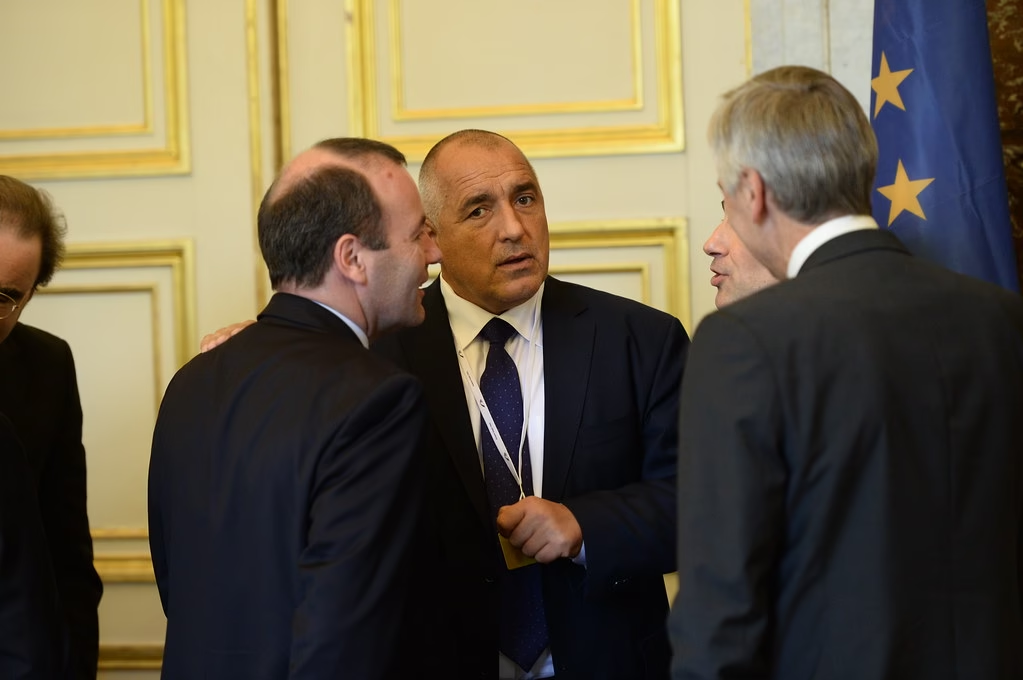
British Prime Minister Keir Starmer is set to host Ukrainian President Volodymyr Zelensky alongside the leaders of France and Germany in London this week for a series of critical security discussions. The meeting, which comes at a pivotal moment in the ongoing conflict in Ukraine, aims to solidify Western support for Kyiv’s defense strategies and future security guarantees as the war enters a grueling winter phase.
The Geopolitical Backdrop
This summit arrives as Ukraine faces intensified pressure on its eastern front and mounting uncertainty regarding the long-term trajectory of international military aid. With the conflict nearing its third year, European powers are increasingly concerned about the sustainability of current logistics and the potential for a protracted stalemate that could shift the regional power balance.
Historically, the UK, France, and Germany have served as the primary pillars of European support for Ukraine. However, domestic political pressures and shifting economic priorities within these nations have necessitated a more coordinated approach to defense manufacturing and diplomatic outreach.
Strategic Coordination and Military Support
The agenda for the London summit centers on the acceleration of weapons deliveries and the strengthening of European defense industrial bases. Analysts suggest that the primary objective is to move beyond short-term military supplies toward a more sustainable framework for long-term deterrence.
Defense experts point to the critical need for increased ammunition production across the continent. According to recent data from the European Defence Agency, member states have struggled to ramp up output to match the high-intensity consumption rates seen on the battlefield, making this inter-governmental coordination vital for operational continuity.
Beyond immediate military aid, the talks are expected to touch upon potential security guarantees for Ukraine. These discussions are designed to signal to Moscow that European commitment to Kyiv’s sovereignty remains unwavering, regardless of shifts in the broader international political landscape.
Expert Perspectives on European Security
Security analysts emphasize that the presence of both French President Emmanuel Macron and German Chancellor Olaf Scholz alongside Starmer underscores the necessity of a unified European front. The ‘Weimar Triangle’ dynamics, often mediated by British diplomatic engagement, serve as a barometer for the collective resolve of NATO’s European members.
Dr. Elena Rossi, a senior fellow at a leading European security think tank, notes that the summit represents a shift from reactive policy to proactive strategic planning. ‘The focus is no longer just on surviving the next few months, but on defining the architecture of European security for the next decade,’ she stated.
Implications for the Continent
For the average European citizen, these high-level talks translate into significant fiscal and policy shifts. Increased defense spending is likely to remain a long-term fixture in national budgets, potentially influencing economic policy and social spending priorities across the bloc.
For the defense industry, the summit signals a period of sustained demand for military hardware and technological innovation. Companies operating within the aerospace and defense sectors are expected to see continued government investment as European nations modernize their armed forces to meet new geopolitical realities.
Looking ahead, observers should monitor the specific commitments regarding long-range weapon systems and the integration of Ukrainian defense capabilities into NATO-standard protocols. The coming months will likely see a push for a formalized ‘European pillar’ within the alliance, with London, Paris, and Berlin taking the lead in defining the parameters of this new security reality.

















Leave a Reply