



The Kremlin’s Stance on European Security
Russian President Vladimir Putin explicitly rejected Western warnings regarding potential Russian aggression against NATO member states during a meeting with military officials in Moscow this week. Addressing reports that Russia could eventually target countries in Eastern Europe, Putin labeled the claims as “complete nonsense” intended to justify increased military spending and domestic policies within the European Union and the United States.
Contextualizing the Rising Tensions
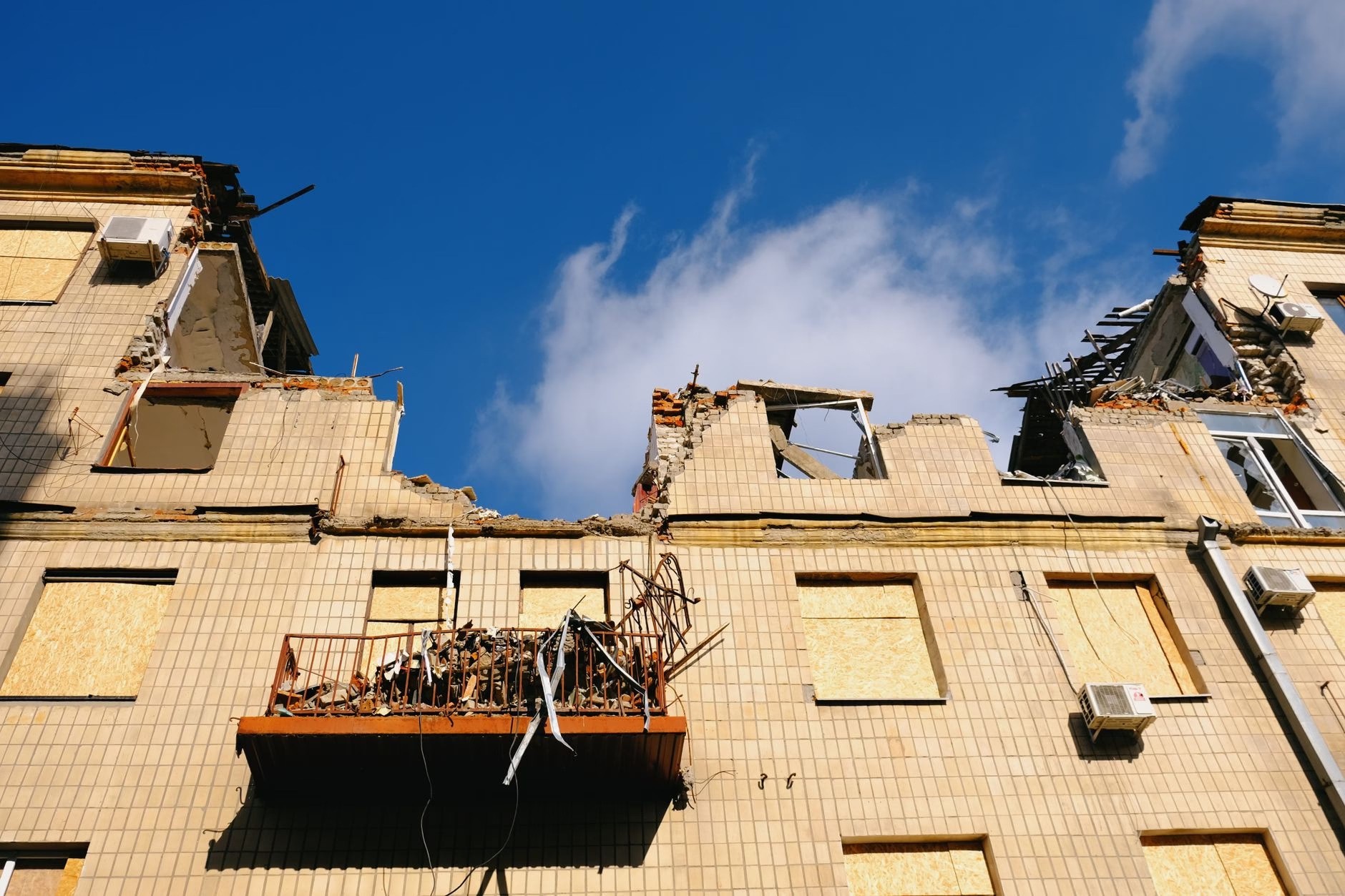
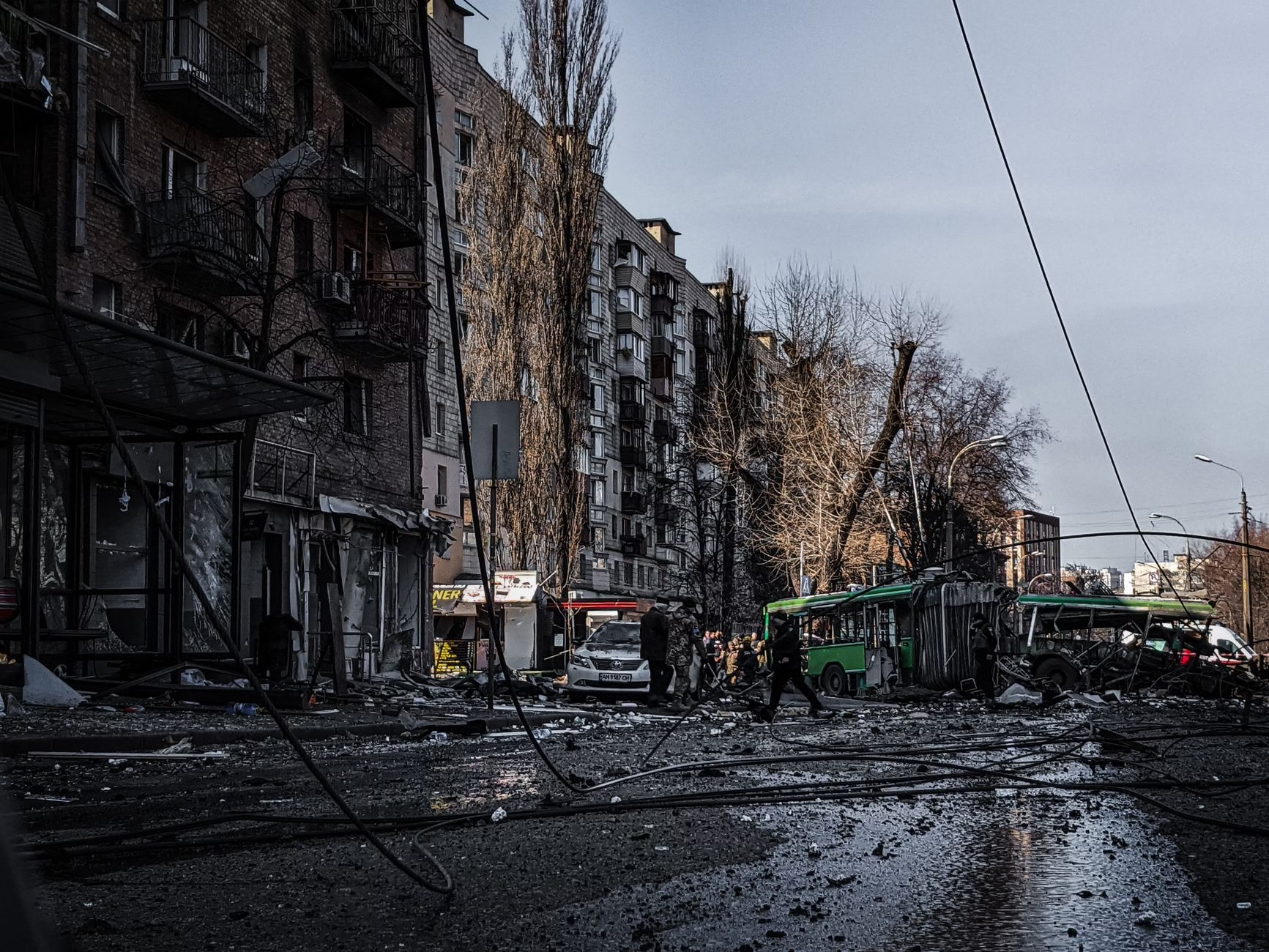
The warnings regarding a broader conflict have emanated primarily from Western leaders, including officials in the United States and Poland, who argue that Russia’s ongoing invasion of Ukraine serves as a precursor to wider territorial ambitions. These concerns are rooted in the Kremlin’s 2021 demands for a security overhaul in Europe, which included a request for NATO to withdraw its forces from nations that joined the alliance after 1997.
Analyzing the Geopolitical Friction
Analysts suggest that the rhetoric from the Kremlin is designed to stabilize domestic support while simultaneously projecting strength to international observers. By dismissing the threat of an attack on NATO, Putin seeks to neutralize the narrative that Russia is an expansionist power, framing the current conflict in Ukraine instead as a localized defensive necessity against Western encroachment.
Conversely, military experts point to the current state of the Russian armed forces, which remain heavily committed to the front lines in Ukraine. While some Western intelligence officials argue that Russia is rebuilding its military capacity faster than anticipated, there is little current evidence of troop movements that would indicate an imminent conventional assault on a NATO member state.
Expert Perspectives and Military Data
Data from the International Institute for Strategic Studies (IISS) indicates that despite significant equipment losses in Ukraine, Russia has maintained a high level of defense production and recruitment. However, military analysts emphasize that Article 5 of the NATO treaty—which mandates a collective response to an attack on any member—remains a powerful deterrent that significantly increases the cost of any potential escalation.
Dr. Elena Volkov, a regional security analyst, notes that “the current climate of mutual distrust creates a feedback loop where defensive posturing is interpreted as offensive intent.” She suggests that while both sides are locked in a cycle of escalation, a direct conventional war between Russia and NATO remains an unlikely scenario due to the catastrophic risks of nuclear escalation.
Future Implications for Global Security
The dismissal of these warnings by the Kremlin is unlikely to quell concerns in the Baltic states or Poland, where governments continue to advocate for increased NATO presence and enhanced border security. For the broader industry and global markets, the ongoing rhetorical standoff suggests that the ‘new normal’ of high defense spending and supply chain shifts in Europe will persist for the foreseeable future.
Observers should monitor upcoming NATO summits and Russian military exercises in the western districts for indicators of shifts in strategic posture. The stability of the European security architecture will likely depend on the effectiveness of diplomatic backchannels and the continued management of conventional military thresholds between the two powers.




















Leave a Reply