


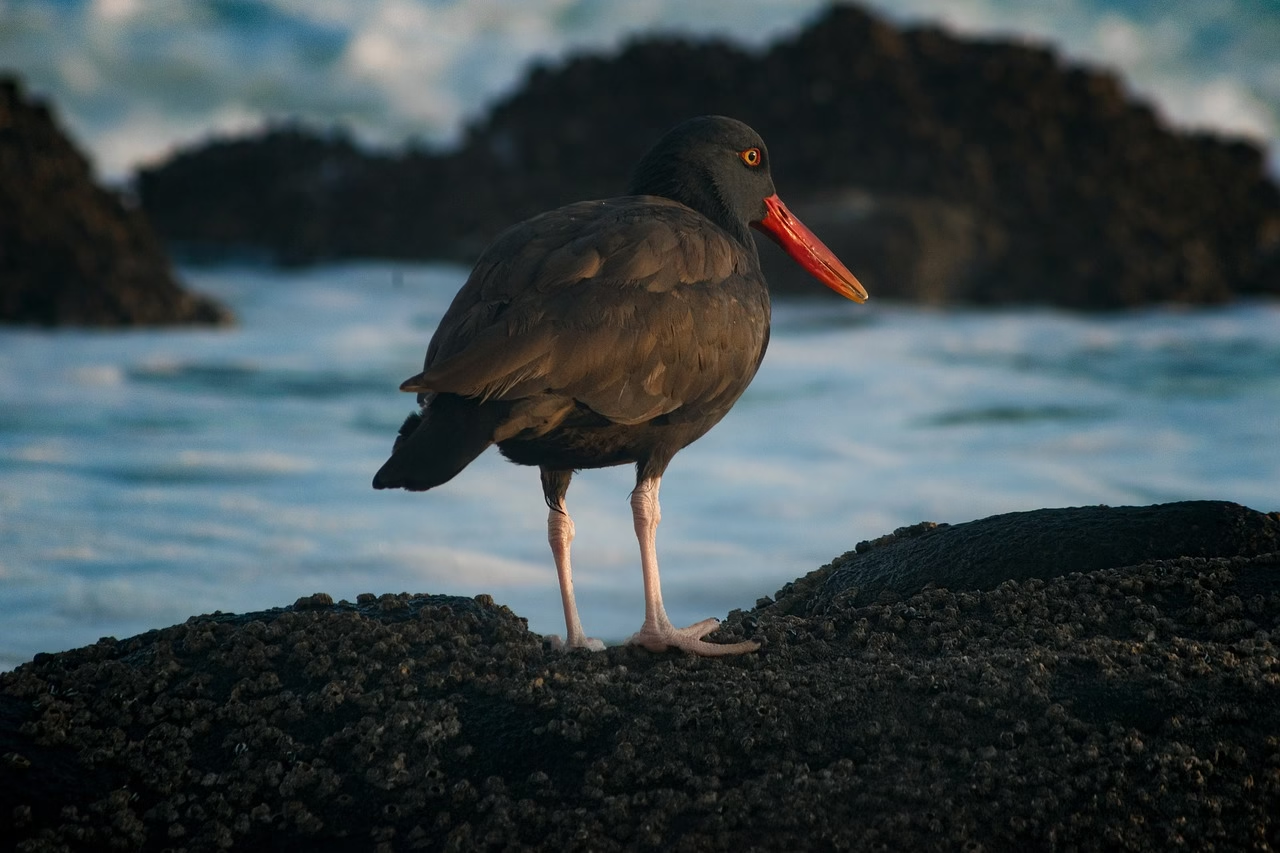
A coordinated, decades-long conservation effort across North America’s Atlantic and Gulf coasts has successfully spurred a major population recovery for the American Oystercatcher. Once facing severe declines from habitat loss and human encroachment, the distinctive shorebird—instantly recognizable by its long, carrot-orange bill and piercing yellow eyes—is thriving once again. The recovery highlights the effectiveness of targeted ecological management in the face of modern environmental pressures.
A Species on the Brink
The American Oystercatcher (Haematopus palliatus) serves as a vital indicator species for the health of coastal ecosystems. These birds inhabit salt marshes, sandy beaches, and barrier islands, where they feed almost exclusively on oysters, clams, and other marine mollusks. Because they nest directly on open sand, their reproductive success is highly sensitive to environmental changes and human activity.
During the 19th and 20th centuries, market hunting and rapid coastal development decimated their populations, pushing them off many of their historical nesting grounds. By the turn of the 21st century, biologists warned that without immediate intervention, the species faced a perilous future along the highly developed Eastern Seaboard, prompting urgent action from conservation groups.
The Power of Collaborative Conservation
The turnaround began in earnest in 2001 with the formation of the American Oystercatcher Working Group. This coalition brought together federal and state wildlife agencies, non-profit organizations like the National Audubon Society, and academic institutions to draft a unified recovery plan. By aligning goals across state lines, the group established a standardized protocol for monitoring and protecting the birds.
Conservationists implemented a multi-pronged strategy focused on protecting nesting sites during the critical spring and summer breeding seasons. This involved erecting symbolic fencing around nesting areas on public beaches and deploying signs to warn beachgoers to keep their distance. Because oystercatcher eggs are perfectly camouflaged against the sand, human foot traffic and off-road vehicles pose an existential threat to unhatched clutches.
“Protecting these birds required changing human behavior as much as managing wildlife,” said Dr. Sarah Jenkins, a coastal ecologist who has participated in the monitoring program for fifteen years. “When people understand that a single step can crush an invisible nest, they are generally very willing to share the shore and respect the boundaries.”
Managing Predators and Tracking Progress
Beyond human disturbance, conservationists had to address the rising threat of subsidized predators. Raccoons, foxes, and feral cats, whose populations thrive near human developments, frequently raid oystercatcher nests to consume eggs and chicks. In response, wildlife managers implemented targeted predator control measures and installed protective exclosures around vulnerable nesting sites.
To evaluate the success of these interventions, researchers launched an extensive banding program. By fitting birds with lightweight, unique leg bands, scientists and citizen scientists have logged thousands of sightings, creating a robust database of survival, migration, and breeding patterns. This data has allowed managers to adapt their strategies in real-time, focusing resources on the most vulnerable stretches of coastline.
Measurable Success Across the Coastline
The data reflects the success of these intensive management strategies. According to recent reports from the American Oystercatcher Working Group, the breeding population along the Atlantic coast has increased by an estimated 25% over the past two decades. In states like North Carolina, Virginia, and Massachusetts, targeted management zones have reported record-breaking numbers of nesting pairs and fledged chicks.
Biologists note that the success of the oystercatcher recovery serves as an encouraging blueprint for other threatened coastal species. Because oystercatchers share their nesting habitats with other vulnerable birds, the protective measures put in place for them have yielded secondary benefits for species like the piping plover and the least tern.
“The oystercatcher is an umbrella species for coastal conservation,” Jenkins explained. “When we secure a beach for them, we are effectively preserving the entire local biodiversity of the shoreline, creating a refuge for multiple species that might otherwise struggle to survive.”
Rising Tides and Future Challenges
Despite these significant gains, conservationists warn that the American Oystercatcher is not entirely out of danger. Climate change poses an escalating threat, with rising sea levels and more frequent, severe coastal storms routinely washing away low-lying nests. These climate-induced washouts can wipe out entire breeding cohorts in a single high-tide event, threatening to undo years of progress.
Additionally, the constant pressure of coastal development and recreational beach use means that conservation efforts cannot be paused. Without ongoing management, predator control, and public education, population gains could quickly reverse. The long-term survival of the species relies heavily on sustained funding and public cooperation.
Looking ahead, researchers are focusing on restoring salt marshes and constructing artificial nesting islands to provide more resilient habitats against rising seas. The next decade will test whether these engineered solutions, combined with continued community stewardship, can sustain the hard-won recovery of one of North America’s most charismatic shorebirds.























Leave a Reply