



As the United States approaches its semi-quincentennial in 2026, members of the high school class of 1976—who graduated during the nation’s grand bicentennial—are convening in forums and reunions across the country this month to reflect on a deeply polarized nation that nonetheless harbors a quiet, persistent hope for the future.
Fifty years ago, these graduates celebrated the nation’s 200th anniversary amid a collective effort to heal from the trauma of the Vietnam War and the Watergate scandal. Today, they view the upcoming 250th anniversary through a lens of concern over modern political divisions, yet they find solace in the resilience of local communities and everyday citizens.
The Legacy of the Bicentennial Spirit
In the summer of 1976, America celebrated its bicentennial with tall ships sailing into New York Harbor, neighborhood block parties, and a traveling Freedom Train. For the graduates of that year, the festivities represented a moment of national reconciliation and forward-looking optimism.
Historical analysts note that the 1976 celebrations served as a vital social adhesive during a period of economic stagnation and political disillusionment. The event succeeded because it focused on shared democratic ideals and local pride rather than partisan victories.
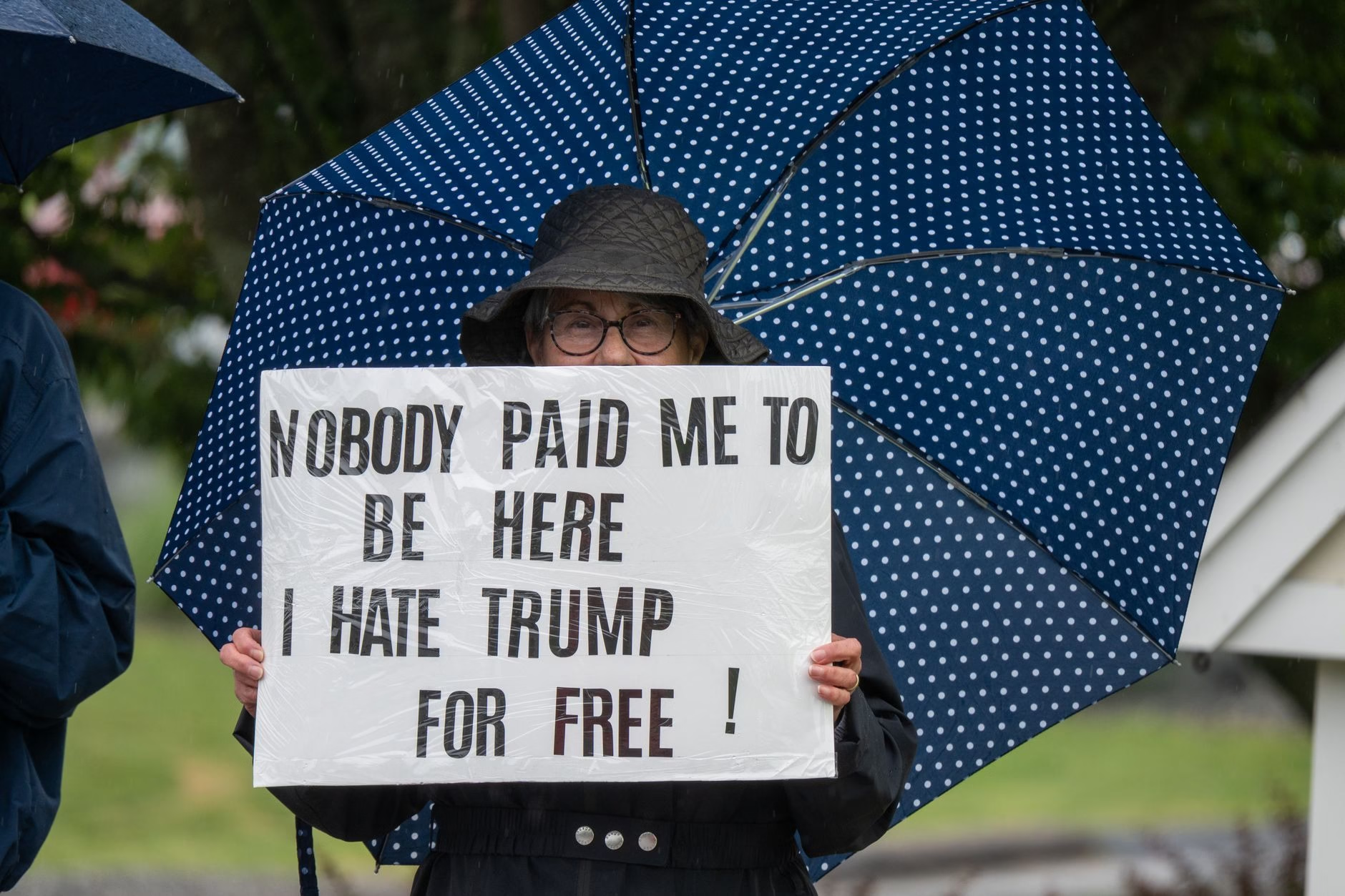
Today, as planning begins for the 2026 semi-quincentennial, the national atmosphere feels markedly different. The unifying symbols of the past have increasingly become battlegrounds in a broader cultural conflict, leaving many to wonder if a cohesive national celebration is still possible.
A Stark Contrast in Trust and Unity
Recent data highlights the depth of the shift in public sentiment over the last half-century. According to the Pew Research Center, public trust in the federal government has plummeted from over 50% in the mid-1970s to just 16% in recent years.
This erosion of trust complicates efforts by the U.S. Semiquincentennial Commission, established by Congress to coordinate the 2026 events. Organizers face the unprecedented challenge of designing a commemoration that resonates across a highly fragmented media and political landscape.
Class of 1976 alumni report that while their graduation year felt like the start of a cohesive national chapter, today’s youth face a world divided by algorithmic echo chambers and institutional skepticism. Yet, many alumni argue that this skepticism also fosters a healthy, critical engagement with American history that was lacking fifty years ago.
Redefining Patriotism for a New Generation
The definition of patriotism itself has undergone a profound evolution since the bicentennial era. In 1976, patriotism was often expressed through traditional symbols like the American flag, parades, and historical reenactments of the Revolutionary War.
Today, younger generations define civic duty more through active participation in social justice, environmental advocacy, and community mutual aid. This shift has created a generational divide in how the upcoming milestone is perceived and valued.
While older Americans may seek a return to traditional, unifying ceremonies, younger cohorts demand a critical examination of historical injustices. Finding a middle ground that honors both the nation’s achievements and its systemic shortcomings remains the central challenge for 2026 organizers.
Local Resilience Over National Rhetoric
Despite the grim national outlook, sociologists observe a counter-trend of robust civic health at the municipal level. Dr. Marcus Vance, a social historian specializing in American civic movements, argues that national polarization often obscures local cooperation.




















Leave a Reply