


A Miraculous Return
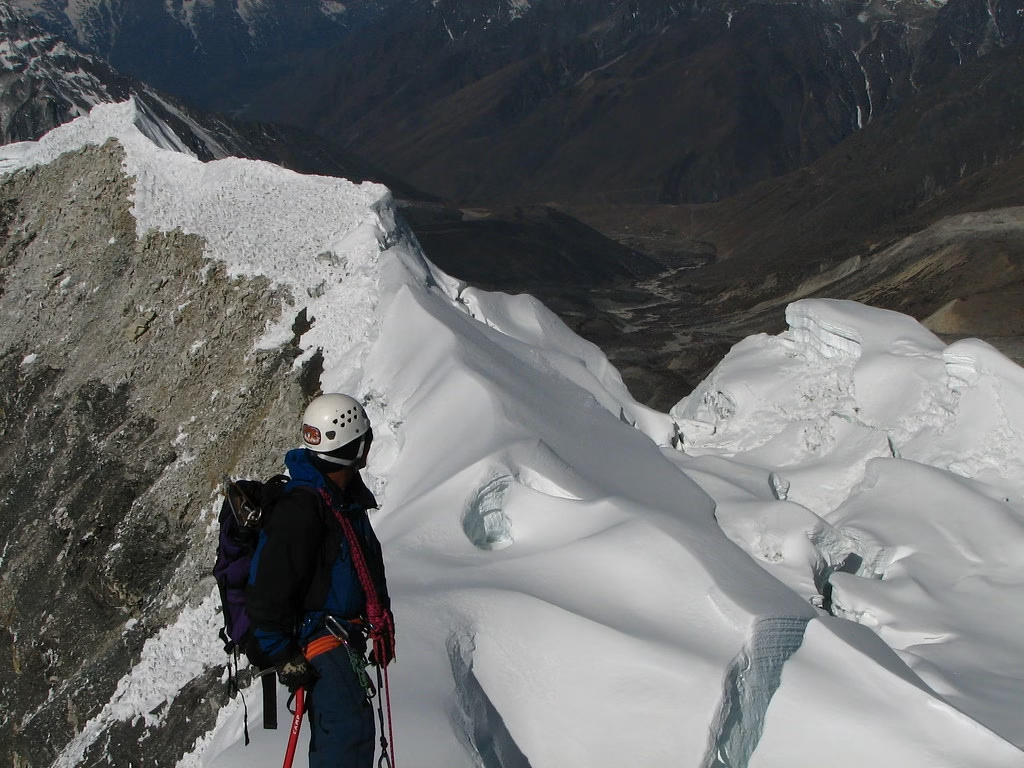
In a harrowing display of human endurance, a Sherpa guide has successfully returned to Mount Everest’s Base Camp after being missing for nearly a week in the world’s most unforgiving environment. The climber, whose identity has been confirmed by local expedition leaders, was discovered crawling toward the camp, alive despite extreme exposure, freezing temperatures, and the thin air of the mountain’s notorious ‘Death Zone.’
The Context of High-Altitude Survival
Mount Everest, standing at 29,032 feet, presents extreme physiological challenges to even the most experienced mountaineers. Above 26,000 feet, the ‘Death Zone’ is characterized by oxygen levels roughly one-third of those at sea level, making sustained life impossible without supplemental oxygen. Missing persons cases in this region are rarely resolved with survivors, as the combination of hypothermia, cerebral edema, and exhaustion typically claims lives within hours of an accident.
The Details of the Ordeal
The survivor, who had been separated from his team during a sudden weather shift, described a grueling struggle against the elements. While official reports remain under review, the climber indicated that he sought shelter in natural rock formations to escape the brutal wind chill. By rationing remaining supplies and maintaining movement to avoid frostbite, he navigated the treacherous terrain alone.
Expert Perspectives on High-Altitude Resilience
Medical experts note that survival for six days in such conditions is statistically unprecedented. Dr. Elena Vance, a specialist in high-altitude medicine, points out that Sherpas possess unique physiological adaptations that allow them to function more efficiently in low-oxygen environments. However, she emphasized that even with genetic advantages, the mental fortitude required to survive at that altitude for nearly a week is ‘beyond standard human capacity.’
Implications for Everest Safety
This incident has reignited ongoing debates regarding safety protocols and search-and-rescue capabilities on Everest. Industry leaders are now calling for a reevaluation of tracking technology for individual climbers and the implementation of mandatory satellite communication devices for all personnel. Expedition companies are under increased pressure to ensure that support staff are equipped with the latest emergency gear, as the frequency of extreme weather events continues to rise due to shifting climate patterns.
Looking Ahead
Industry observers are watching to see if this miracle leads to stricter government regulations regarding solo trekking and the use of advanced GPS tracking. As the climbing season continues, the focus will shift toward how expedition teams can better prepare for the unpredictable nature of the mountain. Whether this event leads to technological innovation or merely serves as a testament to human resilience, it has fundamentally changed the conversation surrounding risk management on the world’s tallest peak.























Leave a Reply