


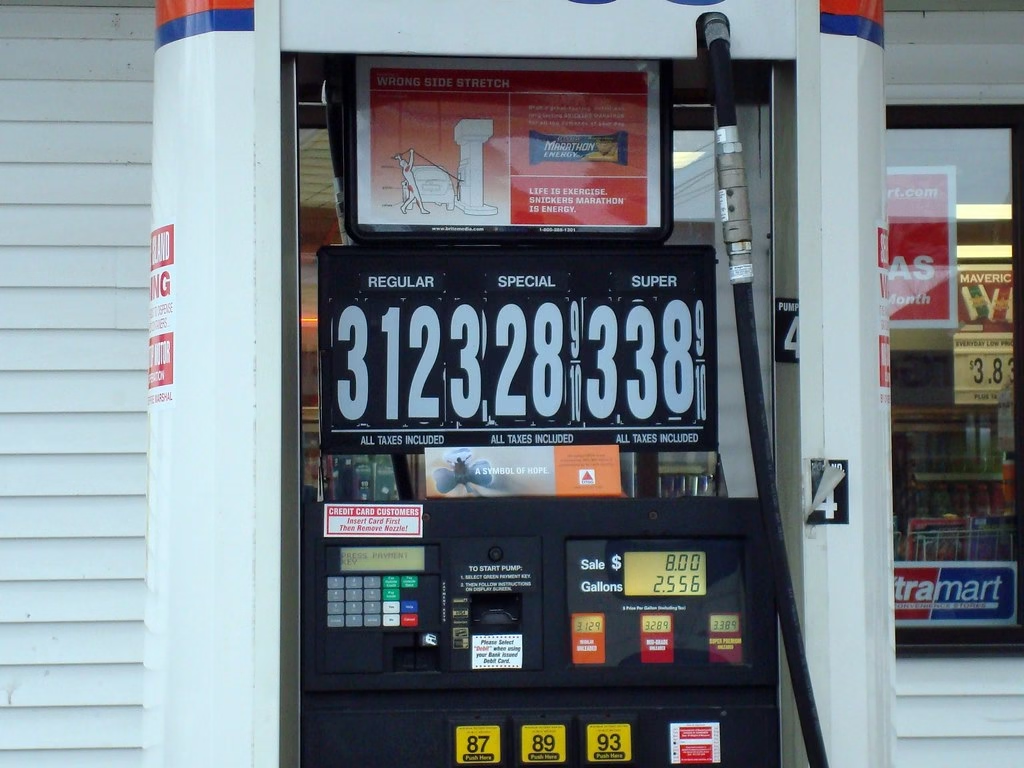
The Current Landscape of U.S. Fuel Costs
As of late 2024, American motorists are navigating a complex landscape of fluctuating gas prices, with national averages showing significant volatility across state and county lines. Driven by shifting global oil production levels, seasonal refinery maintenance, and evolving consumer demand, the cost of fuel remains a primary economic indicator affecting household budgets nationwide. NBC News continues to monitor these granular shifts, providing real-time data to help consumers and analysts track price trends in their local jurisdictions.
Contextualizing Market Volatility
Gas prices in the United States are rarely uniform, influenced by a combination of federal policies, state-level fuel taxes, and regional supply chain logistics. During the previous fiscal year, the market faced extreme pressure from geopolitical instability and post-pandemic supply chain disruptions, which pushed national averages to historic highs. Since those peaks, the energy sector has moved into a phase of stabilization, though localized shocks continue to create disparities between neighboring regions.
Factors Influencing the Pump
Refinery capacity remains a critical bottleneck in the pricing equation. When refineries undergo seasonal maintenance or face unplanned outages, supply tightening inevitably leads to price spikes at the pump. Furthermore, the transition between summer-blend and winter-blend gasoline formulations creates predictable, though sometimes drastic, fluctuations in retail pricing as refiners adjust their production processes.
Economic data from the U.S. Energy Information Administration (EIA) highlights that crude oil costs generally account for more than 50% of the price consumers pay at the station. Consequently, any disruption in global crude supply, such as changes in OPEC+ production quotas, reverberates quickly through the American retail market. Regional factors, such as the proximity to major pipeline hubs or the presence of specific state environmental regulations, further widen the gap between the cheapest and most expensive counties.
Expert Insights on Consumer Impact
Industry analysts emphasize that while national averages provide a helpful snapshot, they often obscure the reality for residents in high-cost states. Market experts point out that regional infrastructure challenges, such as limited pipeline access in the West Coast, often decouple local prices from national trends. Data tracking reveals that even within a single state, county-level taxes and local competition among retailers can cause price variances exceeding thirty cents per gallon.
Future Market Outlook
The industry is now looking toward the upcoming winter season to determine the next major shift in pricing. Investors are closely watching global demand metrics, particularly in emerging markets, as potential indicators of future oil price stability. Readers should monitor upcoming EIA reports for adjustments in inventory levels, which will serve as a bellwether for price stability in the coming months. As the energy sector continues its slow transition toward renewable alternatives, the sensitivity of the retail market to traditional crude oil pricing will remain a key focal point for both policymakers and the general public.

























Leave a Reply