


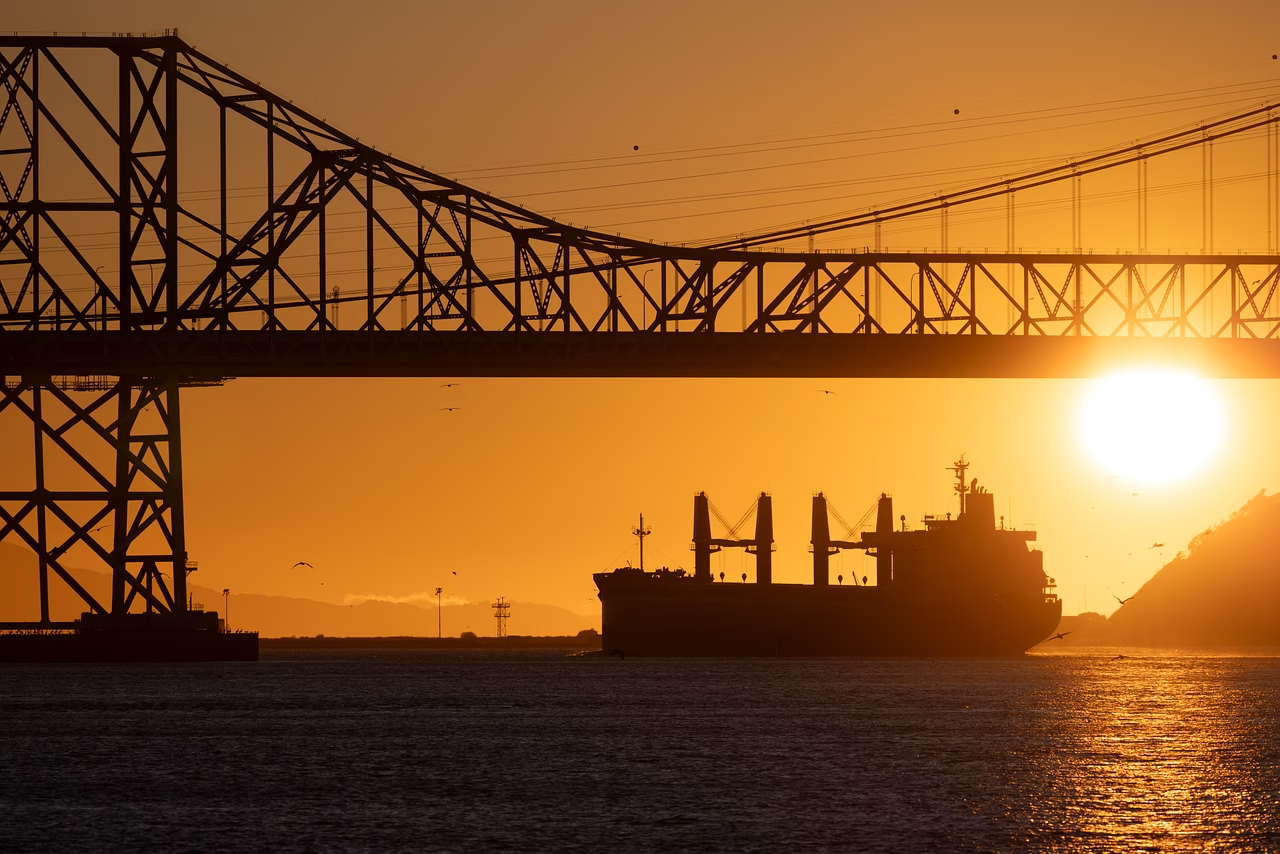
United States military forces completed a seventh consecutive night of precision airstrikes against Iranian-backed targets on Thursday, effectively halting all commercial maritime traffic through the strategic Strait of Hormuz. The military action, occurring 140 days into an escalating regional war, marks the most severe disruption to global energy corridors in decades. Pentagon officials confirmed the strikes targeted missile launch sites, radar facilities, and unmanned aerial vehicle depots inside Iran in response to repeated attacks on international shipping lanes.
A Vital Chokepoint Under Siege
The Strait of Hormuz, a narrow waterway between Oman and Iran, serves as the world’s most critical oil transit chokepoint. Approximately 20 percent of the world’s liquefied natural gas and petroleum liquids pass through this passage daily, equating to roughly 21 million barrels of oil. The current conflict, which has raged for over four months, has gradually transformed the Persian Gulf into an active combat zone, forcing commercial operators to reassess the safety of their crews and cargo.
Prior to the latest escalation, shipping companies relied on international naval escorts to navigate the volatile waters. However, the intensity of the recent seven-day campaign has rendered these security measures insufficient. Insurance underwriters have exponentially raised war-risk premiums, prompting major maritime conglomerates to suspend operations in the region entirely.
Global Shipping Grinds to a Halt
The immediate consequence of the prolonged U.S. bombardment and Iranian retaliatory postures is a complete standstill in shipping traffic. Marine traffic tracking data shows a stark absence of tankers within the Strait, a phenomenon analysts describe as unprecedented in modern maritime history. Both container ships and oil supertankers have dropped anchor in safe waters outside the Gulf of Oman and the Persian Gulf, waiting for a de-escalation that seems increasingly unlikely.
“Nobody is willing to move right now,” said Marcus Baker, a global head of marine and cargo at a leading risk consultancy. “The risk of collateral damage or direct targeting has reached a threshold where no commercial operator can justify the transit, regardless of the financial incentives.”
According to Central Command (CENTCOM) communiqués, the latest operations utilized a combination of carrier-based F/A-18 Super Hornets, guided-missile destroyers, and land-based strategic bombers. The coalition targeted highly specific coordinates in southern Iran, aiming to degrade the Islamic Revolutionary Guard Corps’ (IRGC) coastal defense network. Despite these efforts, military intelligence suggests that underground storage facilities remain largely intact, allowing Iranian forces to sustain their defensive and offensive postures.
Economic Shockwaves and Energy Markets
Energy economists warn that a prolonged closure of the Strait of Hormuz could trigger a severe global recession. Brent crude futures surged by over six percent within hours of the Pentagon’s announcement of the seventh strike. Analysts at Goldman Sachs estimate that a complete block of the waterway could push oil prices well past $120 per barrel, driving inflation higher across Western and Asian economies.
“The global economy is not built to withstand a total freeze of the Persian Gulf,” noted Dr. Elena Rostova, an international energy analyst. “While strategic reserves can buffer the initial shock, the long-term displacement of Middle Eastern crude will force refineries worldwide to scramble for alternative, more expensive sources.”
The International Chamber of Shipping, which represents over 80 percent of the world’s merchant fleet, issued an urgent directive advising all shipmasters to seek alternative routes. The detour around the Cape of Good Hope adds up to 14 days to transit times between Asia and Europe, significantly increasing fuel consumption and reducing global shipping capacity.
What to Watch Next
In the coming days, observers must monitor whether the U.S. coalition initiates armed convoy operations to force open the shipping lanes. Such a move would require a massive deployment of international naval assets and could risk direct, conventional clashes with Iranian regular forces. Additionally, the diplomatic response from major energy importers, particularly China and India, will be critical as their domestic industries begin to feel the supply squeeze.
The international community is also watching for potential United Nations Security Council emergency sessions aimed at brokering a temporary maritime ceasefire. Whether diplomatic channels can de-escalate the 140-day conflict before global energy markets suffer permanent damage remains the defining question of this crisis.




















Leave a Reply