


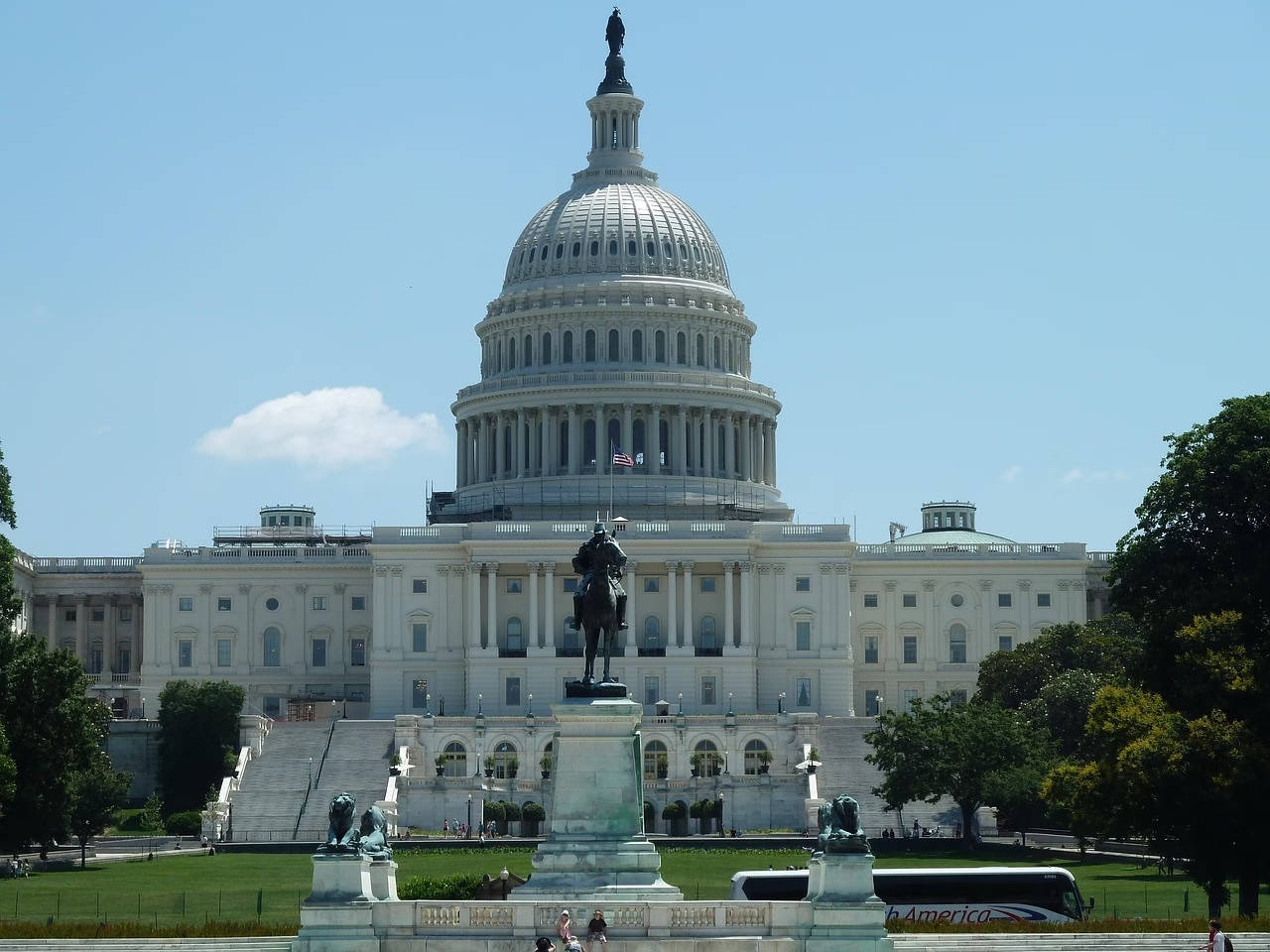
House Republicans in Washington unveiled the text of a $95 billion reconciliation package on Tuesday, aiming to direct substantial funding toward potential conflict with Iran, state-level election measures, and agricultural relief. The draft legislation, representing the party’s third reconciliation attempt this legislative session, bypasses bipartisan negotiations entirely as sponsors seek passage without a single Democratic vote. Crucially, the bill contains no spending offsets, potentially adding the entire $95 billion directly to the federal deficit.
Understanding the Reconciliation Maneuver
Budget reconciliation is a powerful legislative tool that allows certain tax, spending, and debt-limit bills to pass the Senate with a simple majority, bypassing the usual 60-vote filibuster threshold. Typically, this process requires strict adherence to budgetary guidelines, including provisions that address the national debt. However, House leadership has drafted this third iteration to function primarily as a spending vehicle for core conservative policy priorities rather than a deficit-reduction tool.
By opting not to include offsetting budget cuts or revenue-generating measures, the authors of the bill have set up a major procedural and political battle. The decision departs from traditional fiscal conservative positions that demand dollar-for-dollar offsets for new spending. Congressional budget analysts warn that this approach could complicate the bill’s progress when it reaches the Senate, where strict fiscal rules govern what can be included in a reconciliation package.
Breaking Down the $95 Billion Allocation
The defense portion of the bill allocates approximately $45 billion toward military readiness and deterrence operations in the Middle East, specifically targeting Iranian influence. This funding would bolster naval deployments in the Persian Gulf, upgrade regional missile defense systems, and increase intelligence-sharing capabilities with regional allies. Proponents argue these measures are urgent security requirements given the escalating tensions and proxy conflicts in the region.
For domestic policy, the bill earmarks $25 billion for state-level election administration. The funds are designated for grants to help states implement stricter voter identification requirements, upgrade voting machines to non-networked systems, and conduct post-election audits. While Republican sponsors frame these measures as vital steps to restore public confidence in election integrity, critics argue they represent an attempt by the federal government to influence local voting procedures ahead of upcoming federal election cycles.
The remaining $25 billion provides emergency financial relief to American farmers struggling with rising equipment costs, high fertilizer prices, and climate-related crop losses. The agricultural sector has lobbied intensively for this aid, which the bill’s sponsors have framed as a matter of national food security. This aid would expand federal crop insurance subsidies and provide direct payments to producers affected by recent natural disasters.
Fiscal Concerns and Bipartisan Resistance
The decision to fund these initiatives entirely through deficit spending has drawn sharp criticism from fiscal watchdogs and opposition lawmakers. The national debt currently exceeds $34 trillion, and analysts warn that adding unfunded spending packages worsens the long-term fiscal outlook. “Passing a massive spending bill of this scale without any revenue-raising measures or spending cuts sets a dangerous fiscal precedent,” said Maya MacGuineas, president of the Committee for a Responsible Federal Budget, in a statement analyzing the draft.
Democratic leadership quickly condemned the bill, labeling it a partisan wishlist that stands no chance of survival in the upper chamber. House Minority Leader Hakeem Jeffries stated that the bill violates previous spending agreements and undermines bipartisan governance. Democrats argue that any legitimate election security or defense funding must be negotiated through regular order rather than a unilateral reconciliation process.
Future Outlook and Legislative Hurdles
Observers will closely watch the House Rules Committee in the coming days as they prepare the bill for a floor vote. House Speaker Mike Johnson faces the delicate task of uniting his narrow majority, as even a few Republican defections could sink the measure. Some fiscal conservatives within the party have already expressed reservations about supporting a multi-billion dollar spending bill that lacks offsets.
Beyond the House floor, the legislation faces a brick wall in the Senate, where Democrats hold a slim majority and have already signaled their refusal to consider the bill in its current form. The White House has also hinted at a potential veto, citing concerns over the lack of fiscal offsets and the unilateral nature of the foreign policy funding. In the coming weeks, the debate will likely shift toward whether elements of the farm aid and defense packages can be integrated into broader, bipartisan government funding negotiations.

























Leave a Reply