


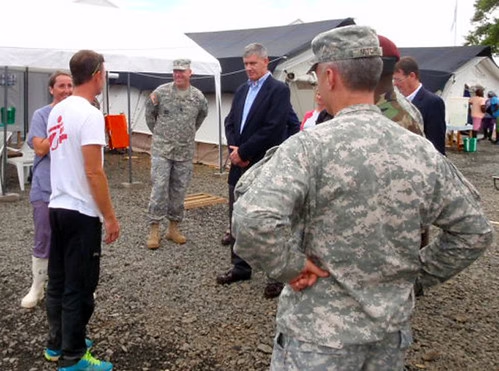
World Health Organization Director-General Tedros Adhanom Ghebreyesus arrived in the heart of the latest Ebola-affected region late Thursday, issuing a firm commitment to the international community that the current outbreak, while highly complex, remains stoppable. Speaking to reporters upon his arrival, Dr. Tedros emphasized that his presence serves as a symbolic and practical gesture to ensure local populations that they are not navigating this health crisis in isolation.
Understanding the Complexity of Modern Outbreaks
The current Ebola outbreak is occurring in a landscape significantly different from the 2014-2016 West African epidemic. Health officials are now contending with heightened security risks, volatile regional dynamics, and deep-seated community mistrust that complicates traditional containment efforts like contact tracing and safe burials.
Ebola is a severe, often fatal illness caused by the Ebola virus, which is transmitted to people from wild animals and spreads through human-to-human contact. Outbreaks require rapid isolation of patients and meticulous monitoring of those who have had contact with the infected to break the chain of transmission.
Operational Challenges on the Ground
The response effort faces a unique set of challenges that extend beyond medical intervention. Humanitarian agencies report that persistent instability in the region has hampered the movement of medical supplies and the deployment of specialized teams.
According to data from the WHO, vaccination campaigns remain one of the most effective tools in the current arsenal. However, the logistical feat of maintaining a cold chain for vaccines in remote, conflict-prone areas remains a significant hurdle for frontline workers.
Expert Perspectives on Containment
Public health experts point to the necessity of community engagement as the cornerstone of any successful containment strategy. Dr. Tedros highlighted that building trust with local leaders is just as vital as providing clinical care.
Epidemiological models suggest that while the transmission rate is aggressive, early detection and standardized treatment protocols can dramatically reduce mortality rates. The WHO continues to advocate for increased funding to bolster local laboratory capacity and surveillance networks.
Future Implications for Global Health
The success of the containment efforts in this region will likely set a precedent for how the global community manages future viral threats in unstable environments. Failure to stabilize the situation could lead to increased regional migration, further complicating health monitoring efforts.
Moving forward, the international health community will be watching for improvements in data transparency and the integration of local community leaders into the formal response structure. Continued investment in rapid-response infrastructure remains the primary defense against the outbreak spiraling into a wider regional emergency.






















Leave a Reply