


Diplomatic Breakthrough in the Middle East
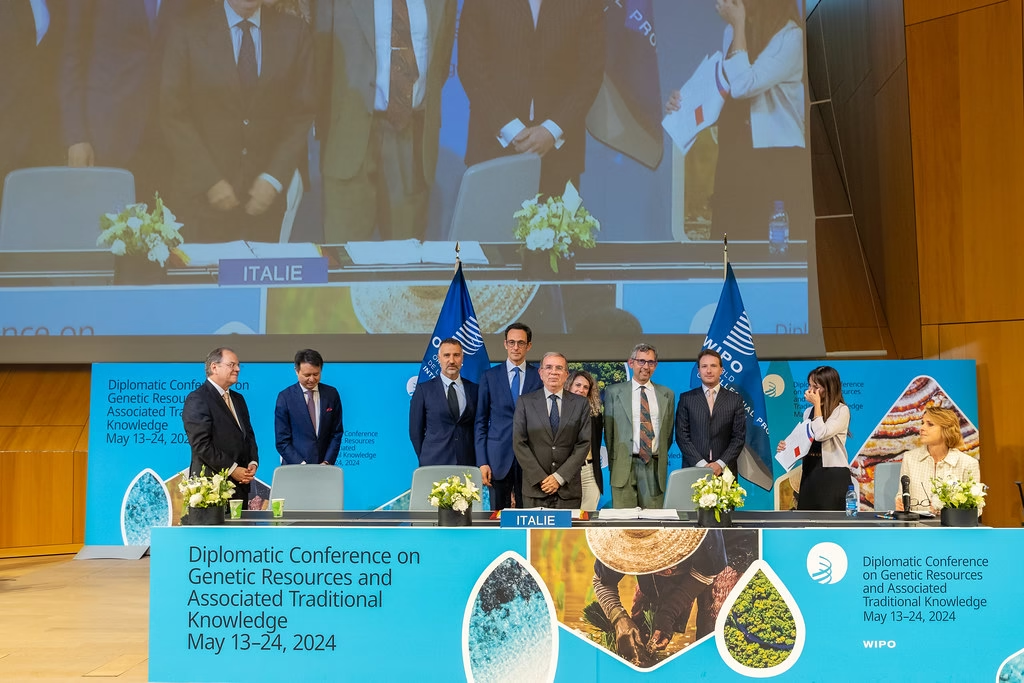
Vice President JD Vance announced in an interview with NBC News on Wednesday that the United States and Iran have reached a comprehensive agreement to end the ongoing conflict in the Middle East. As part of the diplomatic framework, Iran has formally consented to the immediate return of international nuclear inspectors to oversee its atomic facilities. The administration confirmed that a formal signing ceremony for the accord is scheduled to take place in Switzerland.
The Context of the Agreement
The deal follows months of escalating tensions and back-channel communications aimed at de-escalating regional instability. For years, the status of Iran’s nuclear program has remained a primary point of contention, with international oversight significantly curtailed since the collapse of previous non-proliferation frameworks. The return of inspectors is viewed by geopolitical analysts as a critical confidence-building measure intended to ensure transparency regarding Iran’s enrichment activities.
Mechanisms of the New Accord
Under the terms of the agreement, the International Atomic Energy Agency (IAEA) will regain access to sensitive sites that had been off-limits to external monitoring. This restoration of oversight is designed to provide the global community with verified data on Iran‘s nuclear capabilities. The transition from active military hostility to diplomatic monitoring represents a significant shift in U.S. foreign policy toward the region.
Expert Perspectives and Verification
Security experts emphasize that the success of this agreement rests entirely on the implementation of the verification protocols. “The return of inspectors is the cornerstone of any credible non-proliferation effort,” noted Dr. Elena Rossi, a senior fellow at the Center for International Security. Data from the IAEA suggests that such monitoring regimes have historically been the most effective tool in preventing the weaponization of civilian nuclear infrastructure.
Industry and Global Implications
For the global energy and financial markets, the news of a stabilized Middle East suggests a potential cooling of oil price volatility. If the agreement holds, it could pave the way for a broader normalization of trade relations and a decrease in regional military spending. However, industry analysts caution that the transition period will be fraught with logistical challenges as inspectors re-establish their presence on the ground.
Future Outlook and Monitoring
As the diplomatic delegation prepares to convene in Switzerland, the international community will focus on the specific language of the treaty and the timeline for implementation. Observers are watching for the formal list of facilities accessible to inspectors and the duration of the monitoring mandate. The coming weeks will determine whether this framework provides a durable foundation for long-term regional stability or if further negotiations will be required to address remaining security gaps.






















Leave a Reply