


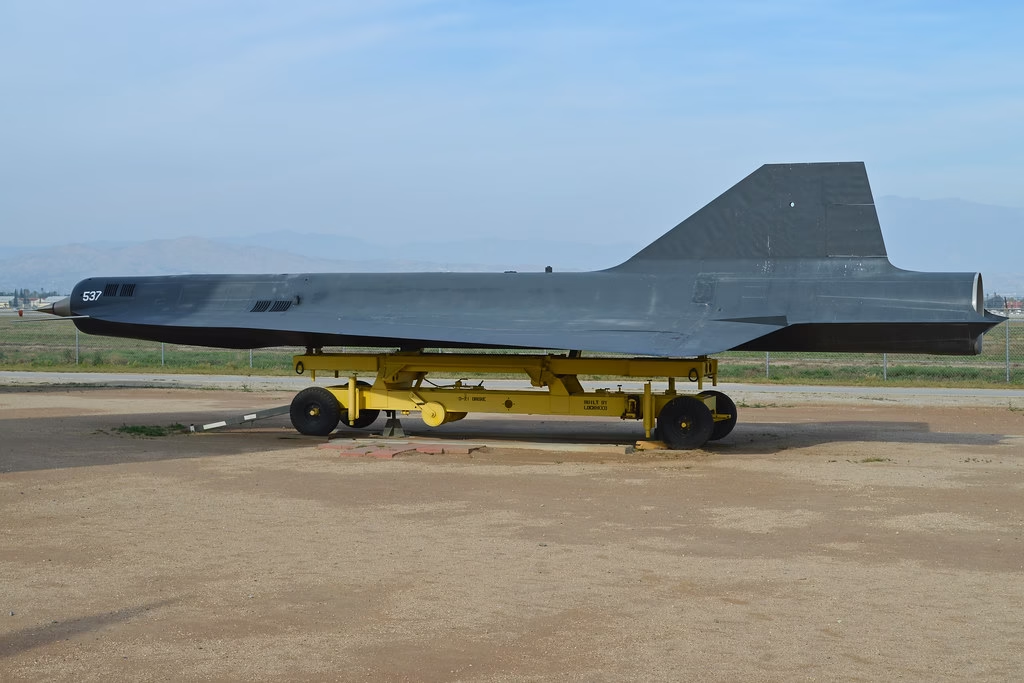
U.S. military forces conducted targeted strikes against Iranian drone infrastructure yesterday, successfully shooting down multiple incoming unmanned aerial vehicles and destroying a key ground control station within Iranian territory. The operation, confirmed by U.S. officials, marks a significant intensification of regional military posture as the Pentagon seeks to neutralize escalating threats posed by drone-based surveillance and offensive capabilities.
Context of Regional Drone Proliferation
The use of Iranian-manufactured drones has become a central challenge for U.S. and allied forces operating in the Middle East. Over the past several years, the region has seen a proliferation of low-cost, high-impact aerial platforms utilized by state and non-state actors alike to monitor maritime traffic and threaten military installations.
Intelligence reports from the Department of Defense have consistently highlighted Iran’s development of sophisticated drone technology, including the Shahed series of loitering munitions. These systems have fundamentally altered the tactical landscape, forcing the U.S. to invest heavily in advanced electronic warfare and kinetic interception technologies.
Tactical Execution and Strategic Objectives
The recent strikes were characterized by precision, aiming specifically at the command-and-control nodes that manage flight paths and target acquisition for the drones. By targeting the ground infrastructure rather than just the airframes, the U.S. military intends to disrupt the operational cycle of these units rather than merely reacting to individual incursions.
Military analysts suggest this shift in strategy reflects a move toward a more proactive defensive posture. Rather than waiting for drones to enter contested airspace, the U.S. is signaling a willingness to degrade the technical support systems that enable these long-range operations.
Expert Perspectives on Escalation Risks
Defense experts emphasize that the use of direct strikes within Iranian borders carries significant geopolitical risks. While the Pentagon maintains that these actions are strictly defensive in nature, the potential for unintended escalation remains a primary concern for regional diplomats.
According to data from the Center for Strategic and International Studies, the frequency of drone-related incidents has surged by nearly 30% over the last eighteen months. This uptick in activity has prompted a reevaluation of air defense architectures across the Middle East, with many nations increasing their reliance on multi-layered detection systems.
Future Implications for Regional Security
The industry is now watching closely to see how this development influences the future of drone-based warfare. As artificial intelligence integration becomes more common in drone swarms, the ability to neutralize these threats at the source will likely become a cornerstone of military doctrine.
Observers are monitoring for potential retaliatory measures and shifts in Iranian tactical doctrine in response to the destroyed control station. The coming weeks will likely see an increase in electronic surveillance and hardened defensive measures as both sides recalibrate their operational thresholds in a volatile theater.

























Leave a Reply