


Proposed Diplomatic Framework
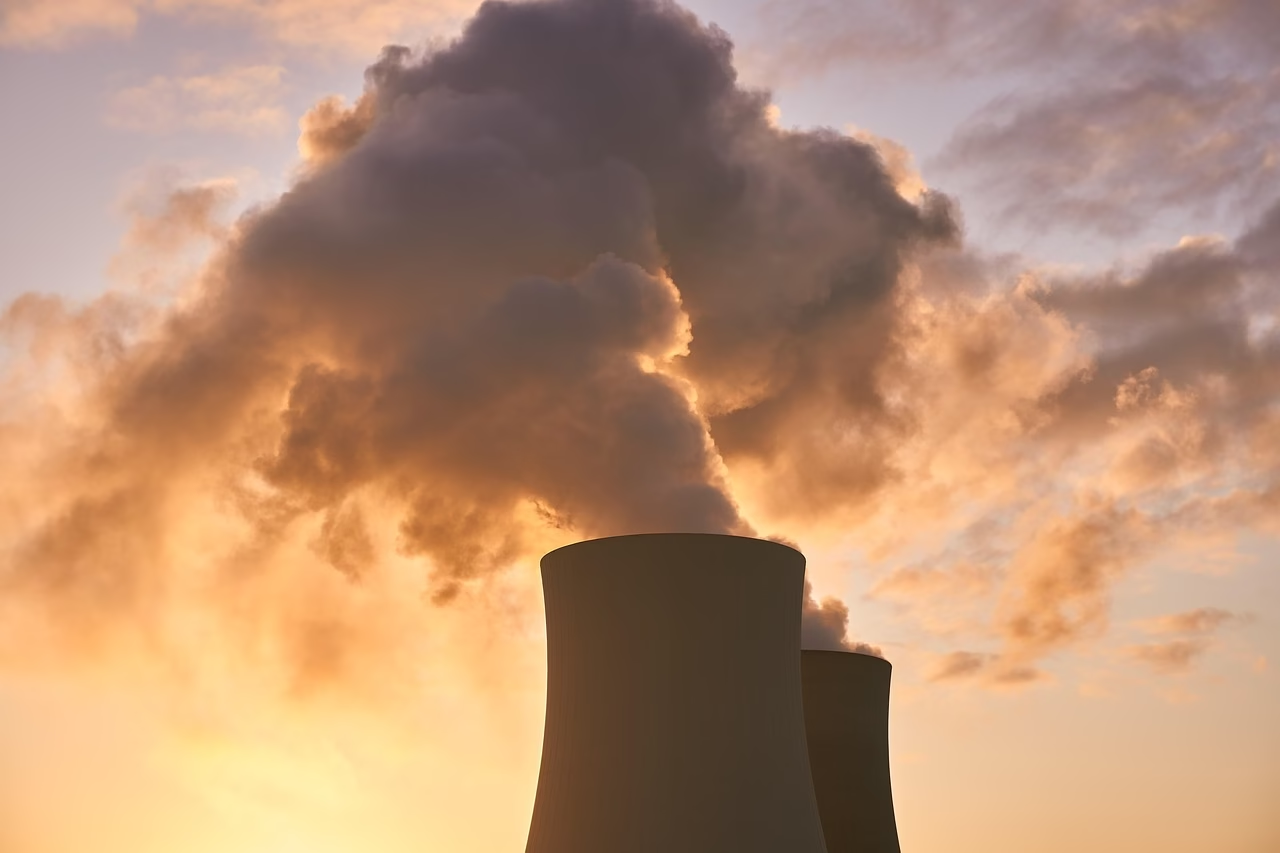
President Donald Trump announced this week that his administration is prepared to collaborate with Iranian officials to retrieve and permanently destroy the nation’s stockpile of highly enriched uranium, provided that a comprehensive deal is reached to conclude ongoing regional hostilities. Speaking from the White House, the President indicated that this diplomatic path serves as a strategic cornerstone for a broader agreement aimed at stabilizing Middle Eastern security and preventing nuclear proliferation.
The Context of Nuclear Enrichment
Iran has significantly expanded its nuclear program since the 2018 U.S. withdrawal from the Joint Comprehensive Plan of Action (JCPOA). International atomic energy monitors have reported that Tehran has increased its enrichment levels to near-weapons-grade purity, a development that has heightened tensions with Western powers and regional neighbors.
Previous negotiations under the JCPOA framework focused on strict monitoring and limitations on enrichment levels. Trump’s proposal, however, shifts the focus from long-term monitoring to the physical removal and destruction of existing materials, a move intended to provide verifiable assurance that Iran cannot quickly break out toward nuclear weaponization.
Strategic Implications for Foreign Policy
The proposal represents a dramatic shift in how the U.S. approaches Iranian nuclear assets. Analysts suggest that moving toward physical destruction of enriched uranium would require unprecedented levels of transparency and cooperation from the Iranian government, which has historically maintained the secrecy of its nuclear facilities.
“The logistics of verifying the total destruction of enriched material are immense,” noted Dr. Elena Vance, a senior fellow at the Center for Nuclear Non-Proliferation. “It requires a level of intrusive inspection that goes far beyond what has been accepted in the past, essentially necessitating a complete overhaul of the current inspection protocols.”
Data from the International Atomic Energy Agency (IAEA) confirms that Iran’s current stockpile of enriched uranium has grown steadily over the last two years. The technical challenge lies not just in the destruction of the material, but in the verification process required to ensure that no hidden reserves remain in underground facilities.
Economic and Geopolitical Impact
For the energy and defense industries, a potential deal would signal a monumental change in regional risk assessments. Investors are closely watching the rhetoric between Washington and Tehran, as any easing of sanctions tied to a nuclear agreement would fundamentally alter oil market dynamics and regional defense spending.
Diplomatic observers point out that the success of such a proposal hinges on the willingness of both parties to compromise on security guarantees. For the U.S., the goal is a permanent cessation of nuclear ambitions; for Iran, the primary driver remains the relief of crippling economic sanctions.
Future Outlook and Monitoring
The coming months will be critical in determining whether this proposal moves from rhetoric to a formal diplomatic dialogue. Observers are tracking three main indicators: the potential for back-channel communications, the response from regional allies in the Middle East, and the official stance of the IAEA regarding the feasibility of such a destruction plan.
Should negotiations proceed, the focus will likely shift to the specific technical protocols required for the transport and disposal of nuclear material. Market analysts advise monitoring upcoming statements from the U.S. State Department, as any official framework for these discussions will serve as the primary indicator of potential de-escalation in the region.























Leave a Reply