


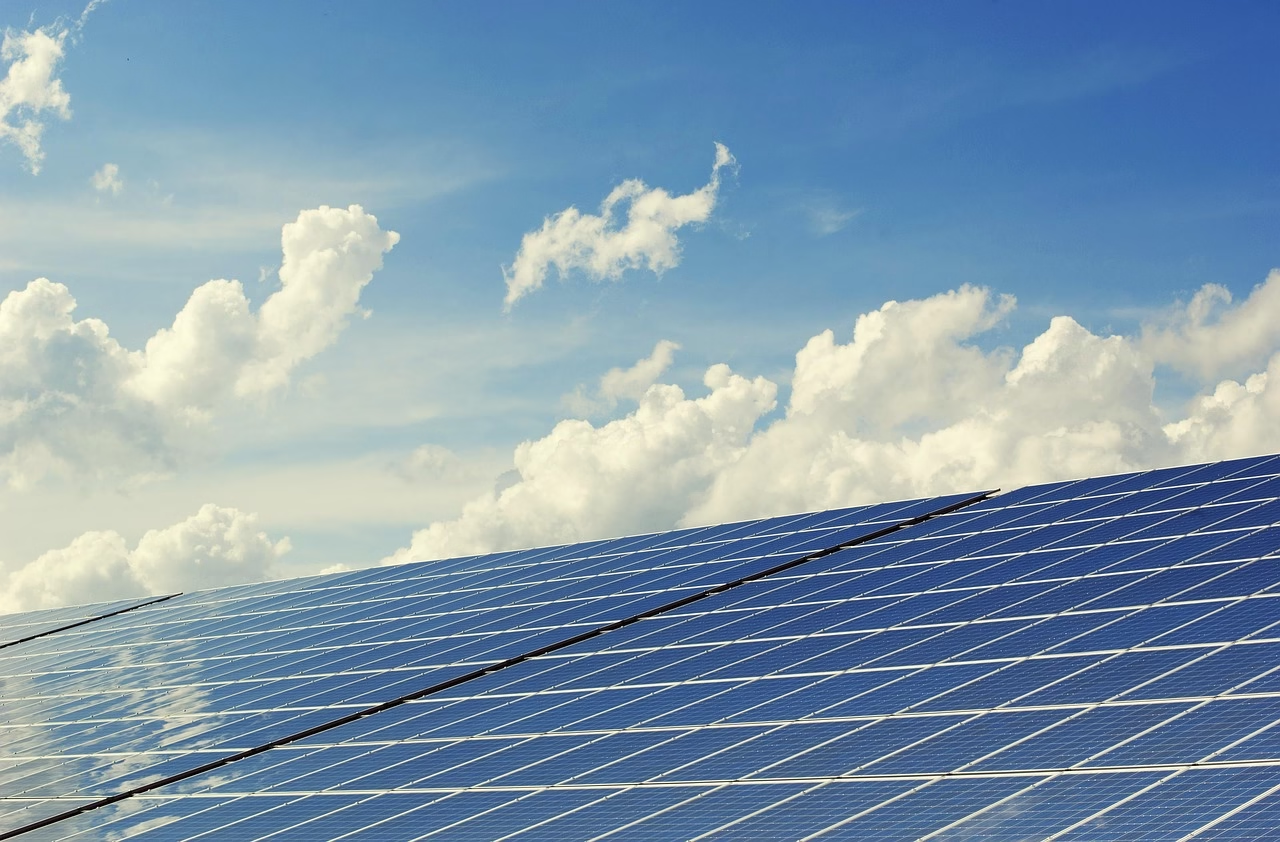
A fierce battle is shaping up across the United States as utility companies turn to natural gas to meet the massive electricity demands of artificial intelligence, prompting a coalition of renewable energy advocates to fight for cleaner alternatives. This clash comes as tech giants rapidly expand their data center footprints, threatening to derail national and corporate climate goals in the pursuit of computational dominance.
The AI Power Surge
The rapid proliferation of generative artificial intelligence has fundamentally altered energy demand projections. According to a recent analysis by Goldman Sachs, data center power consumption is expected to grow by 160 percent by 2030, driven largely by resource-intensive AI queries that require up to ten times more electricity than a standard Google search.
For over a decade, flat electricity demand allowed utilities to steadily retire aging coal and gas plants. Now, the sudden surge in demand from data centers has forced a dramatic recalculation, with utilities scrambling to secure reliable, around-the-clock power to prevent grid instability.
Utilities Double Down on Fossil Fuels
In response to this unprecedented growth, utilities in major data center hubs are proposing significant investments in fossil fuel infrastructure. In Virginia, home to the world’s largest concentration of data centers, Dominion Energy plans to build several new natural gas combustion turbines to keep pace with the localized digital boom.
Similarly, Georgia Power recently received regulatory approval to expand its fossil fuel capacity, citing the rapid influx of tech infrastructure as the primary driver. Clean energy advocates argue these decisions lock in greenhouse gas emissions for decades, directly undermining the transition to a decarbonized grid.
“We are seeing a worrying trend where utilities default to the legacy playbook of building new gas plants,” says Sarah Baldwin, a senior energy transition analyst. “This ignores the rapid cost declines and deployment speeds of wind, solar, and battery storage.”
The Clean Energy Counter-Offensive
Renewable energy allies are actively contesting these utility plans before state regulators and federal agencies. Advocates argue that a combination of solar, wind, and advanced battery storage can reliably power data centers without relying on fossil fuels.
A report by the Clean Energy Buyers Association (CEBA) highlights that tech companies themselves are among the largest corporate buyers of renewable energy. However, the physical reality of the grid means that even if a company buys green power certificates, the actual electricity keeping their servers running often comes from nearby gas or coal plants during peak hours.
To bridge this gap, clean energy developers are pushing for virtual power plants and long-duration energy storage. These technologies can store excess renewable energy generated during the day and release it when the sun goes down, offering a carbon-free solution to the “always-on” requirements of data centers.
Tech Giants Caught in the Middle
This energy crunch has placed major technology firms like Microsoft, Google, and Amazon in a difficult position. All three have committed to ambitious net-zero carbon goals, yet their actual emissions are rising alongside their AI investments.
Google recently admitted that its greenhouse gas emissions have climbed nearly 50 percent over the past five years, primarily due to data center expansions. Microsoft reported a similar 30 percent increase in indirect emissions since 2020, highlighting the difficulty of decoupling growth from environmental impact.
Industry insiders suggest that tech companies are beginning to pressure utilities to offer cleaner options. Some are investing directly in next-generation geothermal, advanced nuclear, and green hydrogen projects to secure clean, 24/7 baseload power.
What to Watch Next
The resolution of this conflict will depend heavily on upcoming regulatory decisions and grid modernization efforts. The Federal Energy Regulatory Commission (FERC) is currently reviewing rules aimed at speeding up the connection of new renewable energy projects to the transmission grid, a process that currently takes years.
In the coming months, state utility commissions will hold critical hearings on long-term integrated resource plans. These decisions will determine whether the AI revolution is powered by a new wave of fossil fuels or if it accelerates the transition to a fully decarbonized energy system.
























Leave a Reply