


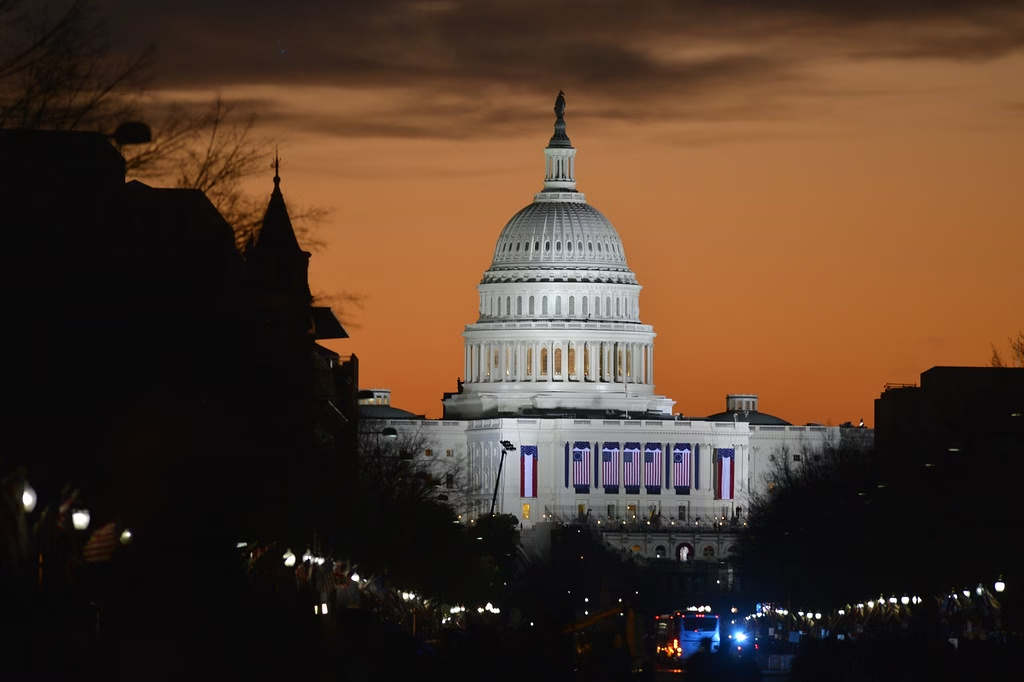
Legislative Action on Border Security
The U.S. Senate passed a $70 billion funding bill this week, primarily designated for the Department of Homeland Security, specifically bolstering the operational budgets of U.S. Immigration and Customs Enforcement (ICE) and the Border Patrol. The move comes as the current administration intensifies its nationwide deportation efforts, marking a significant commitment of federal resources toward border enforcement and interior immigration operations.
Despite the substantial appropriation, the Senate failed to pass a provision that would have restricted the use of a controversial ‘anti-weaponization’ fund initiated by the Trump administration. This legislative defeat ensures that the executive branch retains access to these funds, which critics argue have been utilized to bypass standard congressional oversight in immigration enforcement activities.
Contextualizing Federal Immigration Spending
The debate over DHS funding has become a centerpiece of the current congressional session, reflecting deep partisan divides over national security and humanitarian policy. Historically, ICE and Customs and Border Protection (CBP) budgets have seen consistent growth, but the current volume of funding represents a heightened trajectory aligned with the administration’s aggressive enforcement posture.
The ‘anti-weaponization’ fund, a legacy of the previous administration’s policy framework, was designed to provide the executive branch with discretionary spending authority to counter perceived threats to the government’s operational integrity. Congressional Democrats sought to curb this authority, characterizing the fund as a mechanism that lacks transparency and accountability in its application toward interior deportations.
Operational Impacts and Enforcement Strategies
The influx of $70 billion is expected to significantly enhance the logistical capabilities of ICE, including the expansion of detention facilities and the acquisition of advanced surveillance technologies. Agency officials have indicated that these resources are essential to manage the increased workload associated with processing and removing undocumented individuals currently residing in the United States.
Independent policy analysts note that the funding trajectory suggests a long-term shift toward a more robust interior enforcement model. According to recent data from the Transactional Records Access Clearinghouse (TRAC) at Syracuse University, deportation proceedings have reached record levels, placing unprecedented strain on the immigration court system and federal detention infrastructure.
Expert Perspectives and Industry Implications
Immigration policy experts emphasize that the Senate’s decision signals a political endorsement of the current administration’s enforcement-first strategy. ‘By failing to place guardrails on discretionary spending, the Senate has effectively signaled a green light for the continued expansion of interior enforcement operations,’ says Dr. Elena Rodriguez, a senior fellow at the Center for Migration Policy.
Conversely, proponents of the funding argue that the resources are vital to maintaining the rule of law at the border. They contend that without adequate staffing and funding for detention, the government loses the ability to execute court-ordered removals effectively, thereby undermining the integrity of the immigration system.
Future Outlook and Legislative Watch
Looking ahead, the focus shifts to how the Department of Homeland Security will allocate these billions in the coming fiscal quarter. Observers are particularly focused on whether the administration will prioritize high-profile workplace raids or focus on individuals with pending criminal dockets.
As the primary election cycle approaches, immigration remains a volatile issue that will likely prompt further legislative challenges. Analysts suggest that the next battleground will be the oversight of how these funds are specifically disbursed to private detention contractors, an area that has faced increasing scrutiny from both human rights organizations and fiscal hawks concerned about government waste.





















Leave a Reply