


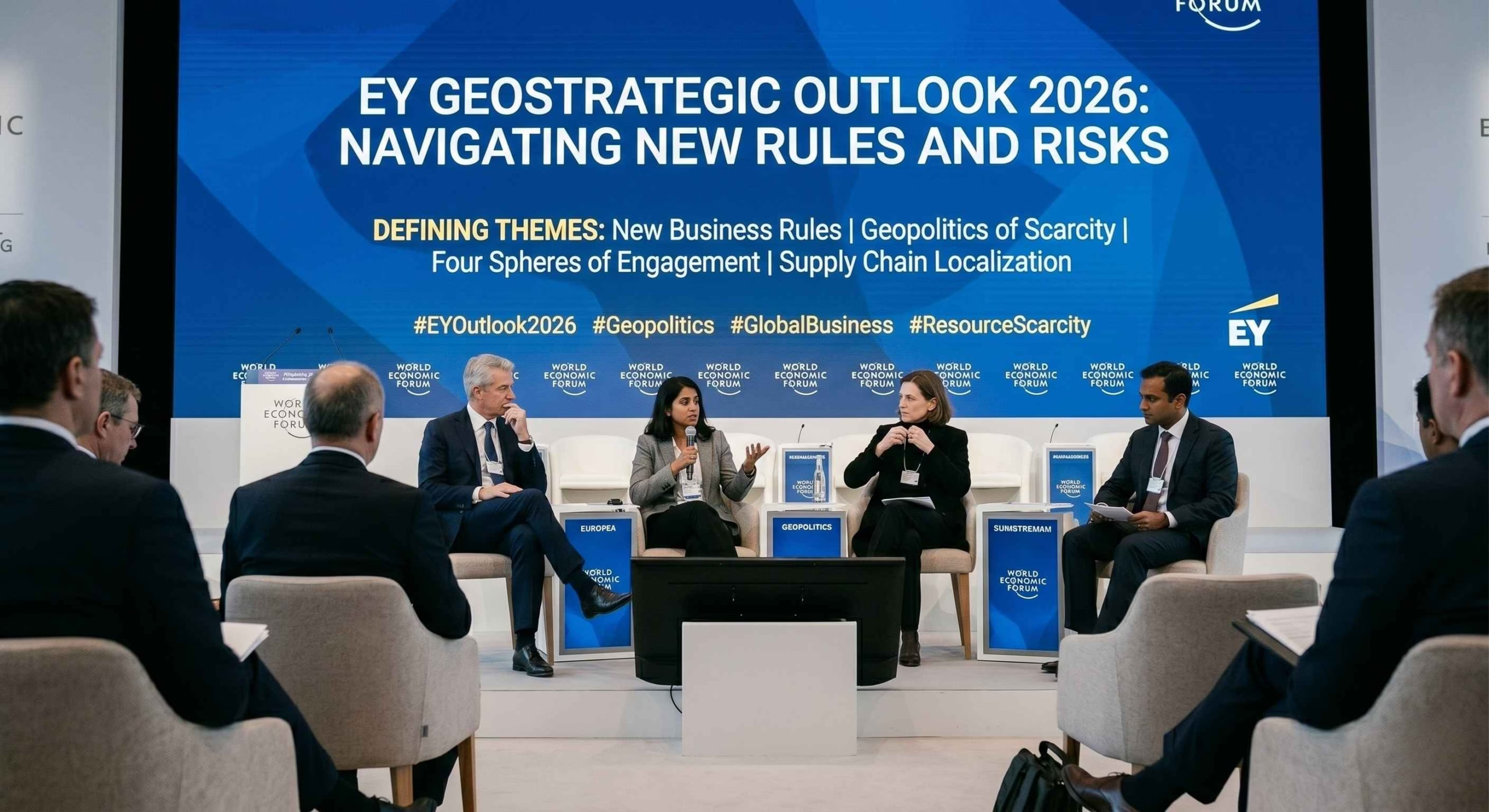
The EY Geostrategic Outlook 2026 has been released, offering a comprehensive analysis of the geopolitical developments expected to shape global business and governance in the coming year. The report identifies ten high-impact geopolitical trends, organized under three defining themes: the emergence of new rules and norms for global business, the solidification of the geopolitics of scarcity, and the dominance of four spheres of engagement. Together, these themes provide a roadmap for understanding the challenges and opportunities facing nations, corporations, and institutions in an increasingly complex world.
The first theme, the emergence of new rules and norms for global business, reflects the changing landscape of international commerce. Traditional frameworks for trade and investment are under strain, with nations adopting new regulations to protect domestic industries and ensure security. Supply chain localization has become a priority, with nearly 75% of CEOs reporting efforts to bring production closer to home. This trend reflects both economic and geopolitical concerns, as reliance on volatile regions is increasingly seen as a risk. The shift toward localization underscores the broader reality that globalization, once seen as inevitable, is now being redefined by geopolitical pressures.
The second theme, the geopolitics of scarcity, highlights the growing competition for resources. Energy, food, water, and critical minerals are all subject to geopolitical dynamics, with nations seeking to secure supplies amid rising demand and instability. The Middle East conflict has underscored the fragility of energy security, while climate change has exacerbated challenges in agriculture and water management. Nations are investing in renewable energy and alternative resources, but competition remains intense. The geopolitics of scarcity reflects the broader challenge of balancing sustainability with security, as nations seek to ensure access to essential resources in a volatile environment.
The third theme, the dominance of four spheres of engagement, identifies the United States, China, the European Union, and regional blocs as the primary actors shaping global dynamics. Each sphere represents a distinct approach to governance, trade, and security, with interactions between them defining the global landscape. The U.S. continues to emphasize military strength and technological innovation, while China focuses on expanding influence through infrastructure and investment. The EU prioritizes regulatory frameworks and sustainability, while regional blocs such as ASEAN and the African Union seek to assert their own identities. The interplay between these spheres reflects the complexity of modern geopolitics, with cooperation and competition coexisting in unpredictable ways.
The report emphasizes the importance of resilience in navigating these challenges. Businesses and governments must adapt to uncertainty, developing strategies that account for geopolitical risks. Flexibility, diversification, and innovation are identified as key tools for resilience, enabling actors to respond effectively to disruptions. The report highlights examples of successful adaptation, such as companies investing in renewable energy, governments strengthening regional alliances, and institutions promoting transparency and cooperation. These efforts demonstrate the potential for progress even amid instability.
Technology plays a central role in the outlook. Advances in artificial intelligence, digital platforms, and cybersecurity are reshaping both economic and security dynamics. Nations are competing for dominance in these sectors, recognizing their potential to shape future power. The report warns that fragmentation in technology markets could hinder progress, reducing the benefits of innovation and creating new vulnerabilities. At the same time, technology offers opportunities for resilience, enabling more efficient resource management, improved communication, and enhanced security. The dual nature of technology reflects the broader complexity of geopolitics, where opportunities and risks are closely intertwined.
Climate change is another critical factor in the outlook. The report emphasizes the urgency of action, noting that environmental challenges are already affecting communities worldwide. Extreme weather events, rising sea levels, and resource scarcity are creating both humanitarian and economic pressures. Nations must integrate climate policy into broader geopolitical strategies, recognizing that environmental issues cannot be addressed in isolation. The report highlights examples of progress, such as the EU’s sustainability initiatives and India’s investment in renewable energy, but warns that global cooperation remains essential. The intersection of climate and geopolitics underscores the interconnectedness of modern challenges.
The humanitarian dimension of geopolitics is also emphasized. Conflicts, crises, and resource scarcity have displaced millions, creating challenges for host nations and international organizations. The report calls for stronger cooperation to address refugee flows, humanitarian aid, and post-crisis reconstruction. These efforts are not only moral imperatives but also strategic necessities, as failure to address humanitarian concerns can exacerbate instability and hinder recovery. The report highlights the importance of integrating humanitarian considerations into broader geopolitical strategies, recognizing their role in promoting stability and security.
In conclusion, the EY Geostrategic Outlook 2026 provides a comprehensive analysis of the challenges and opportunities facing the global community. The emergence of new rules and norms for business, the geopolitics of scarcity, and the dominance of four spheres of engagement reflect the complexity of modern geopolitics. Resilience, technology, climate policy, and humanitarian cooperation are identified as key tools for navigating uncertainty. The report underscores the importance of adaptability and cooperation in shaping a stable and prosperous future. As nations, businesses, and institutions respond to these challenges, the outcome will define the trajectory of global affairs in the years ahead.
Disclaimer: This article is based on publicly available information and EY reports. It is intended for general informational purposes only and does not constitute business or policy advice.


























Leave a Reply