


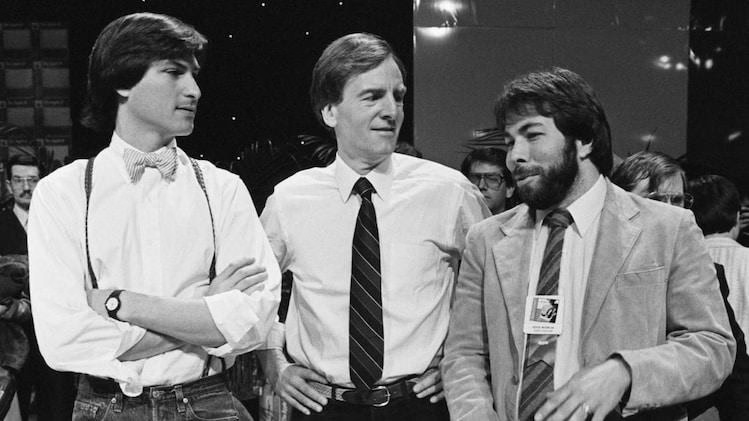
Introduction to Ronald Wayne
Ronald Wayne is an integral yet often overlooked figure in the history of technology and entrepreneurship, primarily known for his role as a co-founder of Apple Inc. Born on May 17, 1934, in the small town of Glenwood, New Jersey, Wayne demonstrated early on a passion for mechanics and design. He attended the Newark College of Engineering, where he honed his skills and later gained experience working in various capacities within the electronics industry, which ultimately led him to his crucial involvement with Apple.
In April 1976, alongside Steve Jobs and Steve Wozniak, Wayne co-founded Apple Computer, Inc. while both Jobs and Wozniak were aiming to innovate the burgeoning personal computer market. Wayne’s participation in this venture was particularly significant given his background. He brought to the table not only technical knowledge but also business acumen, having previously run a small electronics company. His expertise was evident during the formation of the partnership, where he crafted the original partnership agreement and established the early framework for the company’s operation.
Despite his considerable contributions during a pivotal moment in tech history, Wayne’s stay at Apple was notably brief. Just twelve days after the formation of the company, he chose to sell his shares for $800, a decision that would ultimately lead to regret as Apple surged to become one of the most valuable companies in the world. Wayne’s departure exemplifies the uncertainties faced by entrepreneurs in the dynamic landscape of technological innovation, a landscape that has since evolved beyond recognition. His story is a testament to the risks of entrepreneurship and the unpredictable nature of the tech industry, setting the stage for understanding the full narrative of Apple Inc. and its founders.
Wayne’s Early Life and Career
Ronald Wayne was born on May 17, 1934, in the bustling city of Los Angeles, California. His early life was marked by a penchant for invention and a fascination with technology, which laid the groundwork for his future ventures. Wayne’s education was somewhat unconventional, as he did not pursue a degree in a traditional four-year college but rather honed his skills through practical experiences and self-directed learning. He displayed an early interest in engineering and design, which would inform his later contributions in the tech industry.
Prior to his role at Apple, Wayne built a diverse career, particularly during his tenure at Atari. Joining the company in 1975, he worked as a draftsman and quickly gained valuable insights into the burgeoning field of personal computing. At Atari, Wayne was exposed to the dynamic environment of a startup, where taking risks and fostering innovation were essential to survival. His time there taught him about the complexities of business management and the challenges of navigating the tech landscape, experiences that would become pivotal when he co-founded Apple.
In addition to his work at Atari, Wayne ventured into several entrepreneurial projects, including a printing business and a brief partnership in a slot machine manufacturing company. These endeavors helped refine his understanding of operational and strategic challenges within businesses, enhancing his perception of market demands and customer preferences. Wayne’s multifaceted career, characterized by both successes and setbacks, provided him with a unique perspective as he collaborated with Steve Jobs and Steve Wozniak in creating Apple Inc. His experiences undoubtedly molded his business acumen, positioning him as an essential figure in the company’s formative days.
The Birth of Apple Computer Company
The inception of Apple Computer Company on April 1, 1976, marked a pivotal moment in the history of technology. This date not only signifies the official founding of the company but also encapsulates the vision and ambitions of three key figures: Steve Jobs, Steve Wozniak, and Ronald Wayne. At this juncture, the three entrepreneurs formed a partnership that would eventually lead to one of the most influential companies in the world.
Ronald Wayne played a significant role in this foundational period, particularly through his involvement in drafting the partnership agreement that would govern their collaborative efforts. His experience as an engineer and businessman lent credibility to the nascent company. This agreement delineated the responsibilities of each co-founder and outlined the share distribution of the business, a crucial factor in decision-making and financial investment at this early stage.
In the partnership agreement, Wayne held a 10% stake in the company, while Jobs and Wozniak each possessed a 45% share. This allocation reflected their respective roles, with Jobs focusing on marketing and business strategy, and Wozniak concentrating on product development and engineering. Despite the seemingly equitable distribution of shares, Wayne’s apprehensions regarding the potential risks of starting a new venture weighed heavily on his decision-making process.
What is often overlooked is how this partnership agreement encapsulated not just the operational framework of Apple, but also the spirit of innovation that characterized the early days of the company. Each founder’s contributions during this formative phase laid the groundwork for Apple’s future, establishing a legacy that would ultimately reshape technology and consumer electronics. The moment serves as a reminder of the fragility of entrepreneurial dreams, especially considering Wayne’s departure shortly thereafter, which would lead him to walk away from an extraordinary fortune in hindsight.
Wayne’s Role: The ‘Adult in the Room’
In the formative days of Apple, Ronald Wayne played a pivotal role as the ‘adult in the room,’ providing a structured and mature approach that balanced the youthful exuberance of his co-founders, Steve Jobs and Steve Wozniak. While Jobs brought a visionary mindset focused on the future potential of technology, and Wozniak contributed his technical expertise in engineering, Wayne’s experience as a businessman added an essential layer of stability to the nascent company.
Wayne, who was in his forties at the time of Apple’s founding in 1976, was well-acquainted with the intricacies of running a business. His managerial acumen was instrumental in legitimizing the startup during its early stages. He understood the necessity of structure, processes, and financial oversight, areas where the younger co-founders had limited experience. In fact, Wayne played a significant role in drafting the original partnership agreement, ensuring that roles and responsibilities were clearly defined, thus setting the foundation for Apple’s governance.
Additionally, Wayne’s cautious nature served as a balancing force against the often impulsive and innovative ideas proposed by Jobs and Wozniak. His ability to foresee potential pitfalls enabled Apple to navigate early challenges more effectively. For instance, concerned with the financial implications of their ambitious plans, Wayne encouraged prudent budgeting and resource management. This foresight not only eased operational strains but also positioned Apple to grow sustainably.
Though his time with Apple was brief, Wayne’s contributions underscored the importance of having a steadying influence in any organization, especially in an industry driven by rapid innovation and change. His role illuminated the complexities of startup dynamics, where vision needs to be complemented by practical management, thereby emphasizing his crucial involvement during a formative period in Apple’s history.
The Initial Successes and Challenges
In the nascent stages of Apple Inc., co-founders Steve Jobs, Steve Wozniak, and Ronald Wayne navigated a landscape filled with both promising opportunities and daunting challenges. Established in 1976, the trio faced a myriad of obstacles that tested their resolve as they sought to transform the way people interacted with technology. One significant milestone during this pivotal period was the introduction of the Apple I, which showcased the innovative spirit of the company and set the stage for future developments.
Wayne played a crucial role in the formative days of Apple, particularly in his capacity as a stabilizing force and a mediator between the visionary ideas of Jobs and the technical expertise of Wozniak. His experience in the electronics and engineering sectors provided the team with invaluable insights, especially in overcoming challenges related to production and operational logistics. For instance, Wayne’s concerns about the financial stability and liability associated with the new venture led him to draw up a partnership agreement that outlined the responsibilities and ownership of the company’s shares.
Despite his initial significant contributions, Wayne also faced considerable pressure as he grappled with the rapidly evolving circumstances of the startup environment. The ambitious visions of Jobs clashed at times with the pragmatic approach promoted by Wayne, revealing tensions that could have jeopardized their collaboration. The challenges they encountered, from securing funding to dealing with unforeseen technological hurdles, required a delicate balance of creativity and practicality. Ultimately, these early experiences shaped the dynamics among the co-founders and instilled a sense of resilience that would come to define Apple Inc.
Ronald Wayne’s departure from Apple merely 12 days after its formation remains one of the most poignant anecdotes in tech history. Wayne, who co-founded the company alongside Steve Jobs and Steve Wozniak in April 1976, chose to walk away from his stake, a decision driven largely by his apprehensions regarding the substantial financial risks associated with the nascent venture. Having previously experienced the fallout from a business failure, Wayne was understandably cautious about the potential for personal financial ruin, especially given the company’s reliance on loans and investments.
During his short time at Apple, Wayne had contributed not only to the foundational concepts of the company but also to key documentation, such as the original partnership agreement and the first Apple logo design. His decision to leave, however, meant that this influence was soon overshadowed by the much-cited successes of Jobs and Wozniak. Without Wayne’s presence, the company rapidly evolved into a tech giant, guided primarily by the vision of its remaining founders.
The ramifications of Wayne’s exit were significant in contours that went beyond immediate financial implications. Initially, Apple operated with a sense of urgency and ambition, but the absence of Wayne’s more deliberate and cautious approach led to a more risk-taking ethos within the company. This shift towards embracing high-Stakes ventures eventually shaped Apple’s innovative products and services, allowing it to become a leader in the tech industry.
Wayne’s reflections on risk and success serve as a stark reminder of the delicate balance between entrepreneurship and prudence. He viewed his choice to exit as a protective measure, shielding himself from potential fallout, yet it irrevocably altered the trajectory of Apple. As such, Wayne’s departure not only marked a personal loss of potential fortune but also carved a unique narrative in the annals of Silicon Valley history.
The $400 Billion Decision
In the realm of technology and entrepreneurship, few decisions have been as polarizing or consequential as that of Ronald Wayne, the co-founder of Apple Inc., who opted to sell his 10% stake in the company for a mere $800 in 1976. Had Wayne retained his shares, his current stake would be worth an astonishing $400 billion, positioning him among the wealthiest individuals in the world. This hypothetical scenario invites considerable speculation about not only Wayne’s personal fortune but also the potential influence he could have wielded in the tech industry.
Wayne’s choice to part ways with Apple was driven by a desire for financial security and avoidance of risk; he believed that the uncertainty surrounding a start-up like Apple warranted a cautious approach. Retaining his shares, however, would have meant weathering the rise of an unprecedented innovative powerhouse. His decision could serve as a case study in entrepreneurship, illustrating the delicate balance between risk and reward. With Apple growing dramatically over the years, one can only imagine how Wayne’s input could have shaped the company’s trajectory had he chosen to stay involved.
The impact of Wayne’s decision resonates in conversations of lost opportunities and financial regret, serving as a cautionary tale for entrepreneurs everywhere. It raises critical questions about the nature of investment, commitment, and visionary leadership in the fast-paced technology sector. As Apple became a titan, the implications of Wayne’s choice highlight how quickly fortunes can change and how pivotal decisions can echo throughout history.
As it stands today, Ronald Wayne is a testament to the complexities of entrepreneurship, illustrating the fine line between seizing opportunity and preserving peace of mind. His legacy, tied to a fantasy of immense wealth that almost was, continues to be a source of fascination and reflection within the industry.
Ronald Wayne, one of the lesser-known figures in the history of Apple, made a decision in 1976 that would shape his narrative as the co-founder who chose to walk away. His reflections on this pivotal choice reveal a nuanced understanding of risk, reward, and the nature of success in the entrepreneurial arena. Wayne’s perspective is often colored by a deep sense of pragmatism, rooted in his past experiences and philosophical views about business.
In his discussions, Wayne emphasizes that entrepreneurial success is not merely about financial gain, but also encompasses one’s values and approach to life. He believed that the holding of 10% in a fledgling company like Apple came with substantial risk, as he had witnessed firsthand the failures of prior ventures in the industry. This insight led him to prioritize his financial stability over potential windfalls. He famously stated that he did not want to be burdened with the fears of bankruptcy or debt that could stem from investment in a high-risk startup.
Moreover, Wayne’s approach to fortune and success has a reflective quality. He appreciates the achievements of Apple but maintains that wealth does not equate to happiness. In interviews, he has expressed a preference for a quieter, more stable life rather than one filled with the overwhelming pressures that come with extraordinary success. This philosophy highlights the delicate balance between what society often deems as success—wealth and notoriety—and the individual’s personal definition of a fulfilling life.
To Wayne, the entrepreneurial journey is riddled with choices that test one’s character and beliefs. His decision to walk away from Apple illustrates a distinct viewpoint on risk management, allowing him to advocate for a calculated approach to business ventures. This perspective serves not only as a lesson for aspiring entrepreneurs but also as a reminder that success can manifest in many forms, often left untethered from wealth alone.
Conclusion: The Legacy of Ronald Wayne in Apple’s Story
Ronald Wayne’s contributions to Apple Inc. are often overshadowed by the more prominent figures of Steve Jobs and Steve Wozniak. Nonetheless, Wayne played a pivotal role during the company’s nascent stages, particularly in its formation and early operational framework. As a co-founder, he not only brought his insights to the table but also lent a degree of stability and maturity that proved essential in the volatile world of startups. His design of the first Apple logo and the crafting of Apple’s partnership agreement highlight his critical, albeit brief, involvement with the company.
Wayne’s decision to sell his 10% stake in the company just days after its inception serves as a compelling narrative about the complexities of entrepreneurship. It underscores the delicate balance between risk and reward that entrepreneurs must navigate. Wayne’s story reflects the unpredictable nature of success in business; recognizing that opportunities often come with inherent risks is fundamental to understanding his legacy. He exemplifies how making a choice can define one’s career trajectory, leaving an indelible mark not only on Apple but also on the broader entrepreneurial landscape.
Now, as we reflect on Apple’s extraordinary journey—from a garage startup to a global technology leader—it is essential to acknowledge Wayne’s unique contributions. His exit from Apple serves as a cautionary tale about the unexpected turns that can accompany new ventures. Therefore, while he may be a ‘forgotten’ co-founder, Wayne’s story remains a vital part of Apple’s history and serves as a lesson for future entrepreneurs about the nature of risk, the importance of vision, and the often unpredictable roads to success in the tech industry.
















Leave a Reply