


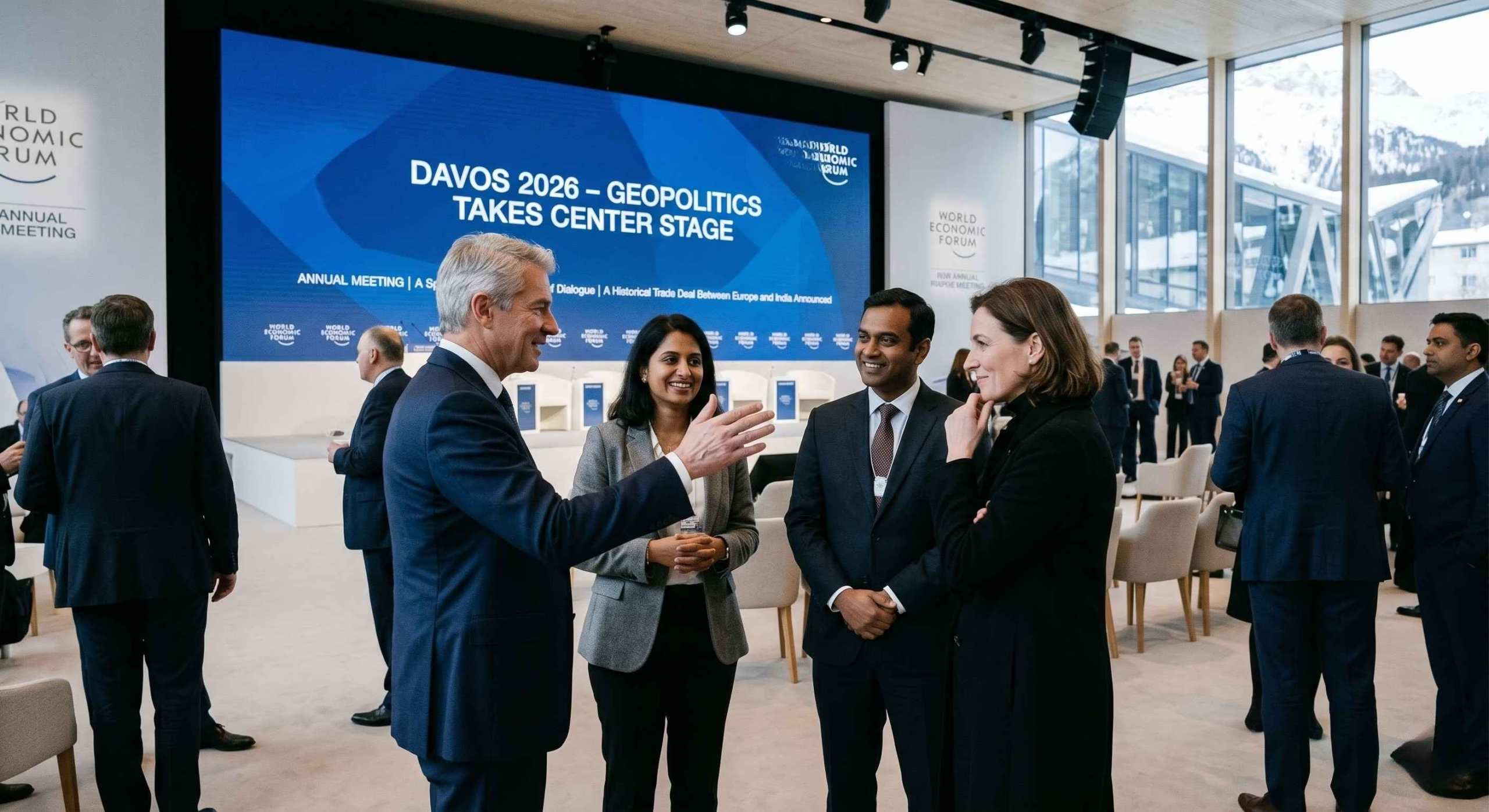
The World Economic Forum’s Annual Meeting in Davos 2026 has concluded, leaving behind a powerful message: geopolitics is now the defining force shaping global decision-making. Under the theme “A Spirit of Dialogue,” the gathering brought together 65 heads of state, hundreds of business leaders, and thousands of policymakers, all grappling with the complexities of a world marked by conflict, fragmentation, and shifting alliances. The discussions underscored that cooperation is evolving, dialogue persists despite widespread conflict, and new forms of partnership are emerging to address global challenges.
The Davos meeting took place against a backdrop of 61 active conflicts worldwide, ranging from the Middle East war to tensions in Eastern Europe and the Indo-Pacific. These conflicts have reshaped the global landscape, forcing nations to reconsider their strategies and alliances. The forum provided a platform for dialogue, even among adversaries, highlighting the importance of communication in preventing escalation. While disagreements were evident, the willingness to engage reflected a recognition that isolation is no longer viable in an interconnected world.
One of the most significant outcomes of Davos 2026 was the announcement of a historic trade deal between Europe and India. The agreement creates a free trade zone encompassing nearly 2 billion people, representing a major shift in global economic dynamics. The deal underscores the importance of flexible, minilateral partnerships, where smaller groups of nations collaborate to achieve specific goals. This approach reflects the reality that broad multilateral agreements are increasingly difficult to achieve in a fragmented world. By focusing on targeted cooperation, nations can make progress even amid global divisions.
The theme of geopolitical complexity resonated throughout the discussions. Leaders acknowledged that traditional frameworks for cooperation are under strain, with institutions such as the United Nations facing challenges in maintaining relevance. Instead, new forms of engagement are emerging, often driven by regional blocs or issue-specific coalitions. These partnerships allow nations to address pressing concerns, such as energy security, climate change, and technological innovation, without being hindered by broader disagreements. The shift reflects a pragmatic approach to global governance, emphasizing results over ideology.
Energy security was a central topic at Davos, reflecting the impact of the Middle East conflict on global markets. Rising oil and gas prices have forced nations to reconsider their energy strategies, with renewables and diversification gaining prominence. The trade deal between Europe and India includes provisions for cooperation on clean energy, highlighting the intersection of economic and environmental priorities. Leaders emphasized the need for resilience in energy systems, recognizing that dependence on volatile regions poses significant risks. The discussions underscored the role of energy in shaping both economic stability and geopolitical strategy.
Technology also featured prominently in the debates. Artificial intelligence, digital platforms, and cybersecurity were identified as critical areas of competition and cooperation. Nations are racing to develop and protect intellectual property in emerging technologies, aware that dominance in these sectors will shape future economic and military power. The forum highlighted both opportunities and risks, with leaders calling for frameworks to ensure responsible innovation. The intersection of technology and geopolitics reflects the broader reality that economic and security concerns are increasingly intertwined.
Climate change was another major focus, with leaders acknowledging the urgency of action. Extreme weather events, rising sea levels, and environmental degradation are affecting communities worldwide, creating both humanitarian and economic challenges. The forum emphasized the importance of integrating climate policy into broader geopolitical strategies, recognizing that environmental issues cannot be addressed in isolation. The trade deal between Europe and India includes commitments to sustainability, reflecting the growing recognition that economic growth must be aligned with environmental responsibility.
The humanitarian dimension of geopolitics was also highlighted. Conflicts and crises have displaced millions, creating challenges for host nations and international organizations. Leaders at Davos called for stronger cooperation to address refugee flows, humanitarian aid, and post-conflict reconstruction. The discussions emphasized that humanitarian concerns are not separate from geopolitical strategy but integral to stability and security. Addressing these challenges requires both resources and political will, underscoring the importance of global solidarity.
In conclusion, Davos 2026 demonstrated that geopolitics is now the central force shaping global affairs. The forum highlighted the complexity of the current landscape, the persistence of dialogue despite conflict, and the emergence of new forms of cooperation. The historic trade deal between Europe and India exemplifies the potential of flexible partnerships to achieve progress. Energy security, technology, climate change, and humanitarian concerns all featured prominently, reflecting the interconnectedness of global challenges. The outcome of Davos underscores the importance of adaptability, resilience, and dialogue in navigating a world defined by geopolitical complexity.
Disclaimer: This article is based on publicly available information and reports from the World Economic Forum. It is intended for general informational purposes only and does not constitute economic or policy advice.
#Davos2026 #Geopolitics #GlobalLeadership #TradeDeal #WorldEconomicForum





















Leave a Reply