


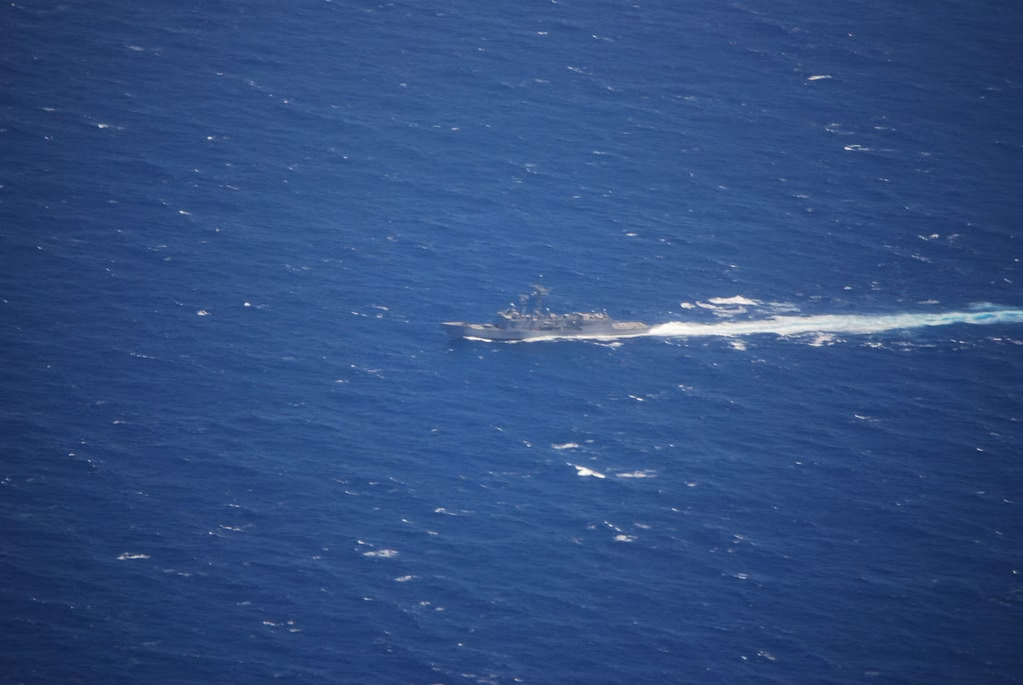
Pakistan’s Interior Minister arrived in Tehran this week for high-stakes diplomatic talks aimed at de-escalating tensions between Iran and the United States. The mission follows a volatile week in the Persian Gulf, where the U.S. military confirmed the downing of two additional Iranian drones operating near the strategically vital Strait of Hormuz.
The Geopolitical Context
The Strait of Hormuz remains the world’s most critical maritime chokepoint, through which approximately 20% of global petroleum consumption passes daily. Tensions in the region have escalated steadily following the collapse of the 2015 nuclear agreement and the subsequent imposition of stringent international sanctions.
Recent months have seen a marked increase in military posturing, with both Washington and Tehran accusing the other of violating territorial sovereignty. The deployment of U.S. naval assets to the region has been met with increased surveillance and aerial activity from the Islamic Revolutionary Guard Corps.
Military Escalation in the Strait
The U.S. Central Command reported that the recent drone interceptions were conducted by defensive fire to protect freedom of navigation. Officials stated the unmanned aerial vehicles posed a direct threat to regional stability by conducting unauthorized reconnaissance near naval corridors.
Tehran, conversely, has characterized the U.S. military presence as an act of regional provocation. Iranian state media suggests that the drone flights are routine surveillance measures intended to monitor foreign naval movements within their self-declared air defense identification zones.
Expert Perspectives on Mediation
Geopolitical analysts suggest that Pakistan’s intervention is a calculated attempt to prevent a localized skirmish from spiraling into a broader regional conflict. Islamabad maintains historically complex relations with both Washington and Tehran, positioning it as a rare neutral broker in the Middle East.
“Diplomacy is currently the only mechanism preventing a miscalculation from turning into a direct military confrontation,” said Dr. Sarah Al-Haddad, a senior researcher at the Institute for Regional Security. “Pakistan’s involvement indicates that both parties recognize the risks of an unchecked escalation, even if they remain miles apart on substantive policy.”
Data from the International Maritime Security Construct supports the view that the risk of accidental engagement is at its highest point in five years. Increased drone activity correlates directly with higher insurance premiums for commercial shipping vessels passing through the Strait.
Future Implications for Regional Stability
For the global economy, the primary concern remains the potential for a sudden closure of the Strait, which would trigger immediate spikes in global energy prices. Industry leaders are closely monitoring the outcome of the Tehran talks for any signs of a temporary de-escalation agreement or a formal communication channel between the two militaries.
The coming weeks will determine whether this mediation effort yields a tangible reduction in military assets near the waterway. Observers are watching for any shifts in Iranian naval behavior or changes in the operational frequency of U.S. patrols in the region. Should these negotiations fail, the increased presence of advanced drone technology suggests that the risk of an unintended kinetic event remains a persistent threat to global supply chain security.






















Leave a Reply