


Strengthening Transatlantic Security Ties
Canada and France have committed to a significant expansion of their intelligence-sharing capabilities, aiming to deepen cooperation across the critical sectors of defense, space exploration, artificial intelligence, and aerospace technology. Mark Carney, a prominent Canadian economic advisor, confirmed the agreement in Paris this week following high-level discussions with French President Emmanuel Macron.
The initiative marks a pivot toward deeper bilateral integration as both nations navigate an increasingly volatile geopolitical landscape. By aligning their intelligence apparatuses, Ottawa and Paris intend to address emerging threats that transcend traditional military boundaries, focusing specifically on the dual-use nature of modern technological innovation.
The Context of Modern Geopolitics
The move comes as Western nations grapple with the rapid militarization of space and the ethical and security challenges posed by artificial intelligence. Both Canada and France have identified these domains as essential to national sovereignty and economic stability in the 21st century.
For Canada, the partnership offers a vital bridge into European defense frameworks, while for France, it provides access to North American technological expertise and Arctic surveillance capabilities. This strategic alignment reflects a broader trend of middle powers seeking to consolidate influence and resources amid the competition between major global superpowers.
A Multi-Faceted Approach to Defense
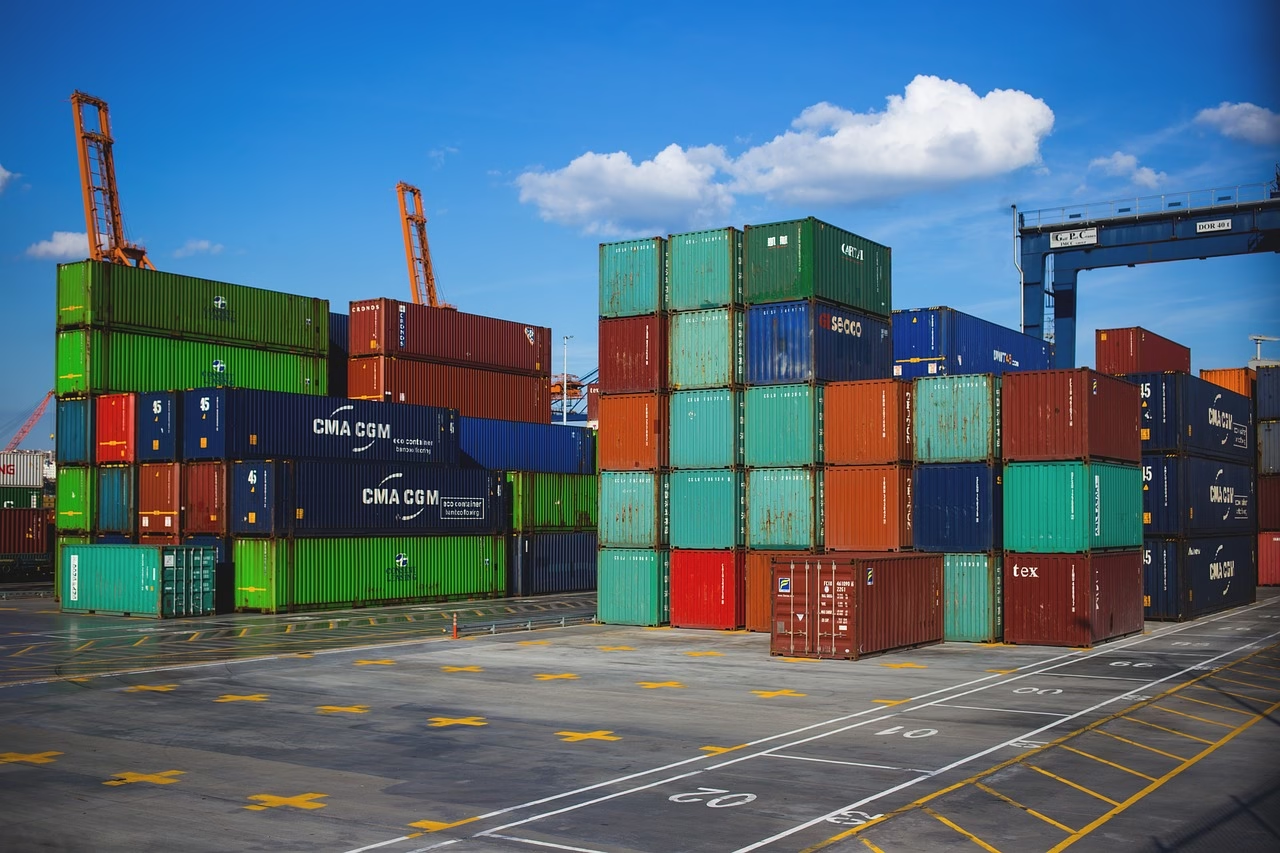
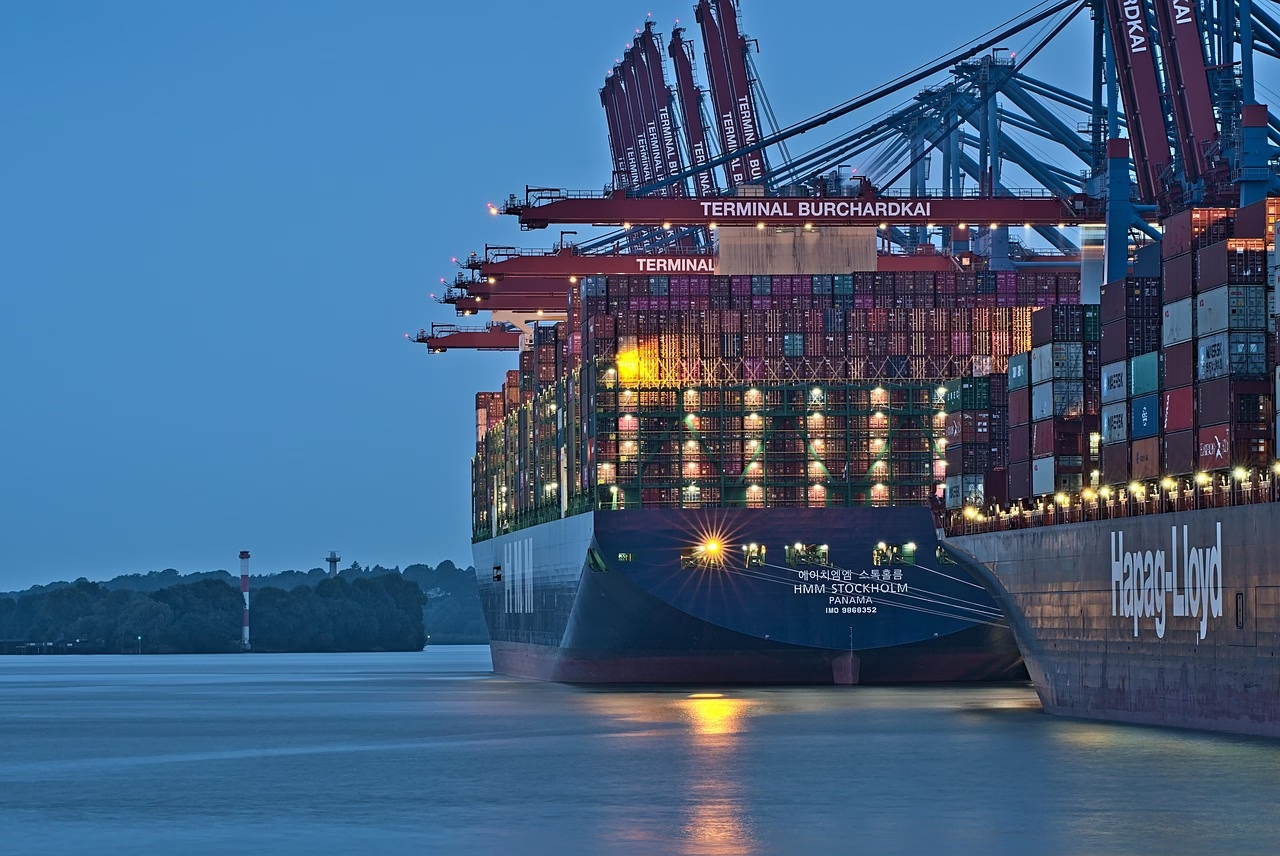
The collaboration focuses on creating secure channels for the exchange of classified information, specifically regarding the vulnerabilities of global supply chains and digital infrastructure. Officials indicated that the partnership will prioritize the protection of aerospace assets, which are increasingly susceptible to cyber-espionage and physical interference.
Artificial intelligence integration stands as a pillar of this new framework. According to recent reports from the Brookings Institution, the convergence of AI and defense intelligence has become a primary driver of national security policy, necessitating closer cooperation between allied research and development labs.
The aerospace component of the agreement also promises to bolster industrial ties between the two nations. By sharing intelligence on emerging aerospace technologies, both governments aim to ensure that their domestic industries remain competitive while maintaining strict security standards against foreign intellectual property theft.
Expert Perspectives on Strategic Alignment
Security analysts view this development as a necessary evolution of the NATO-adjacent security architecture. Dr. Elena Vance, a security policy researcher, notes that the move is an acknowledgement that conventional military strength is no longer sufficient to secure a nation’s interests.
“The inclusion of AI and space in an intelligence-sharing mandate signals a transition from reactive defense to predictive security,” Vance stated. She emphasized that the ability to process vast amounts of data across borders is now the defining characteristic of modern intelligence cooperation.
Recent data from the International Institute for Strategic Studies supports this assessment, indicating that cyber and space-based threats have risen by nearly 30% in the last fiscal year. The agreement addresses this by streamlining the classification and distribution of threat intelligence between the Canadian Security Intelligence Service and its French counterparts.
Future Implications and Regional Stability
For the industry, this pact will likely lead to increased government-funded research contracts and more stringent oversight of private-sector technology firms involved in sensitive aerospace projects. Companies operating in the space and AI sectors should anticipate a more integrated regulatory environment that demands higher levels of compliance regarding the handling of classified data.
Looking ahead, observers should watch for how this partnership influences broader North American and European defense policies. The success of this exchange mechanism could serve as a template for other G7 nations looking to secure their technological infrastructure against external disruption. The next phase of implementation will likely involve joint task forces focused on the technical interoperability of surveillance systems, testing the limits of this new diplomatic and security bridge.






















Leave a Reply