


Escalating Aerial Offensives Target Russian Infrastructure
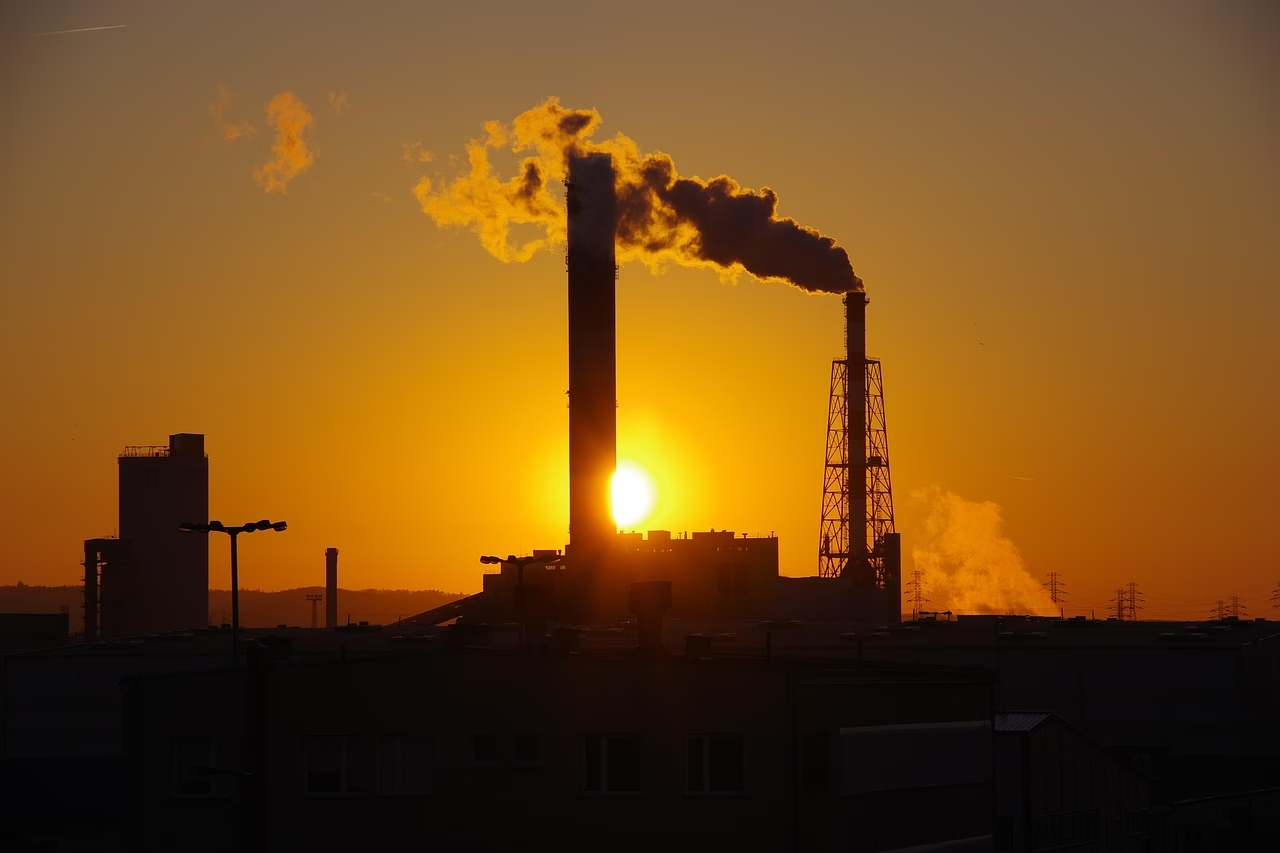
Ukrainian forces launched one of the most significant drone offensives against Moscow in years on Thursday morning, targeting critical energy infrastructure and forcing the temporary closure of major regional airports. The coordinated strike ignited a massive fire at an oil refinery on the outskirts of the capital, sending plumes of black smoke billowing over the city as Russian air defenses scrambled to intercept incoming projectiles.
The Context of Strategic Strikes
This assault marks the second time in a single week that Ukrainian forces have targeted the refinery, signaling a shift in military strategy aimed at degrading Russia’s domestic fuel production capabilities. Since the conflict began in 2022, Ukraine has increasingly utilized long-range, domestically produced drones to strike deep within Russian territory, bypassing traditional front-line defenses to target economic and logistical hubs.
Tactical Shifts and Operational Impact
Military analysts suggest that these strikes are designed to stretch Russian air defense resources and disrupt the supply chain fueling the ongoing invasion. By focusing on refineries and energy depots, Ukraine is attempting to impose direct economic costs on the Russian state while simultaneously challenging the Kremlin’s narrative of domestic stability and security.
The scale of this latest operation demonstrates a growing sophistication in Ukraine‘s drone fleet. Reports from regional authorities indicate that debris from intercepted drones fell across multiple districts, causing widespread disruption to public transport and air travel. While Russian officials claim the majority of the drones were neutralized, the visible damage to the refinery highlights the difficulty of protecting vast, stationary infrastructure from asymmetric aerial threats.
Expert Analysis on Economic Warfare
Energy sector experts note that while these individual refinery strikes may not immediately cripple Russia’s overall production, the cumulative effect of repeated attacks is significant. Data from the International Energy Agency (IEA) confirms that Russia remains one of the world’s largest oil exporters, and sustained pressure on its processing capacity could impact global fuel prices if volatility continues to rise.
“The strategic intent is to demonstrate that the war is not contained to the front lines,” says security analyst Marcus Thorne. “By targeting the energy sector, Ukraine is effectively weaponizing the vulnerabilities of Russia’s aging industrial infrastructure, forcing the military to divert precious air defense assets away from the front to protect the capital.”
Implications for the Ongoing Conflict
For the average citizen in Moscow, the increased frequency of drone attacks represents a tangible change in the nature of the conflict. The disruption of daily life, including the suspension of airport operations and the visible presence of emergency services, underscores the Kremlin’s struggle to insulate the domestic population from the war’s consequences.
Observers are now watching for how the Kremlin will respond to these provocations. Future developments may include increased demands for advanced electronic warfare systems or a potential pivot in military strategy aimed at retaliating against Ukrainian infrastructure in kind. Industry experts suggest that the next phase of this conflict will likely see a race between Ukraine’s offensive drone capabilities and Russia’s efforts to harden its energy facilities against future strikes.
























Leave a Reply