



The May 2026 Logistics Pivot: The Middle Corridor Reaches Breaking Point
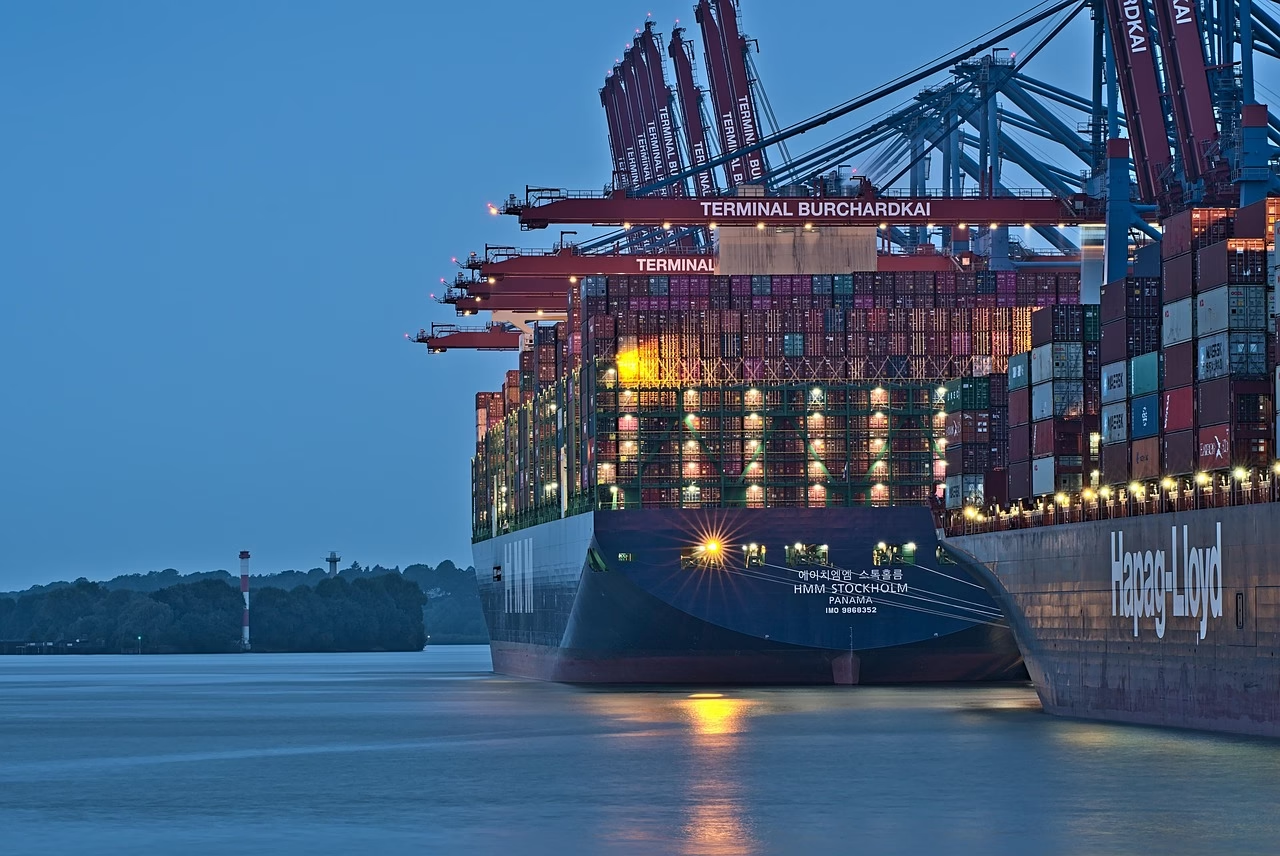
As of May 14, 2026, the Red Sea remains a ‘high-risk’ zone, with insurance premiums for Suez Canal transits remaining 400% above 2024 levels. Consequently, the Trans-Caspian International Transport Route (TITR), or ‘Middle Corridor,’ has become the primary artery for EU-Asia trade. However, this week, the corridor has hit a critical capacity bottleneck that global investors and logistics managers must address immediately.
The Current Situation: Baku-Tbilisi-Kars (BTK) Congestion
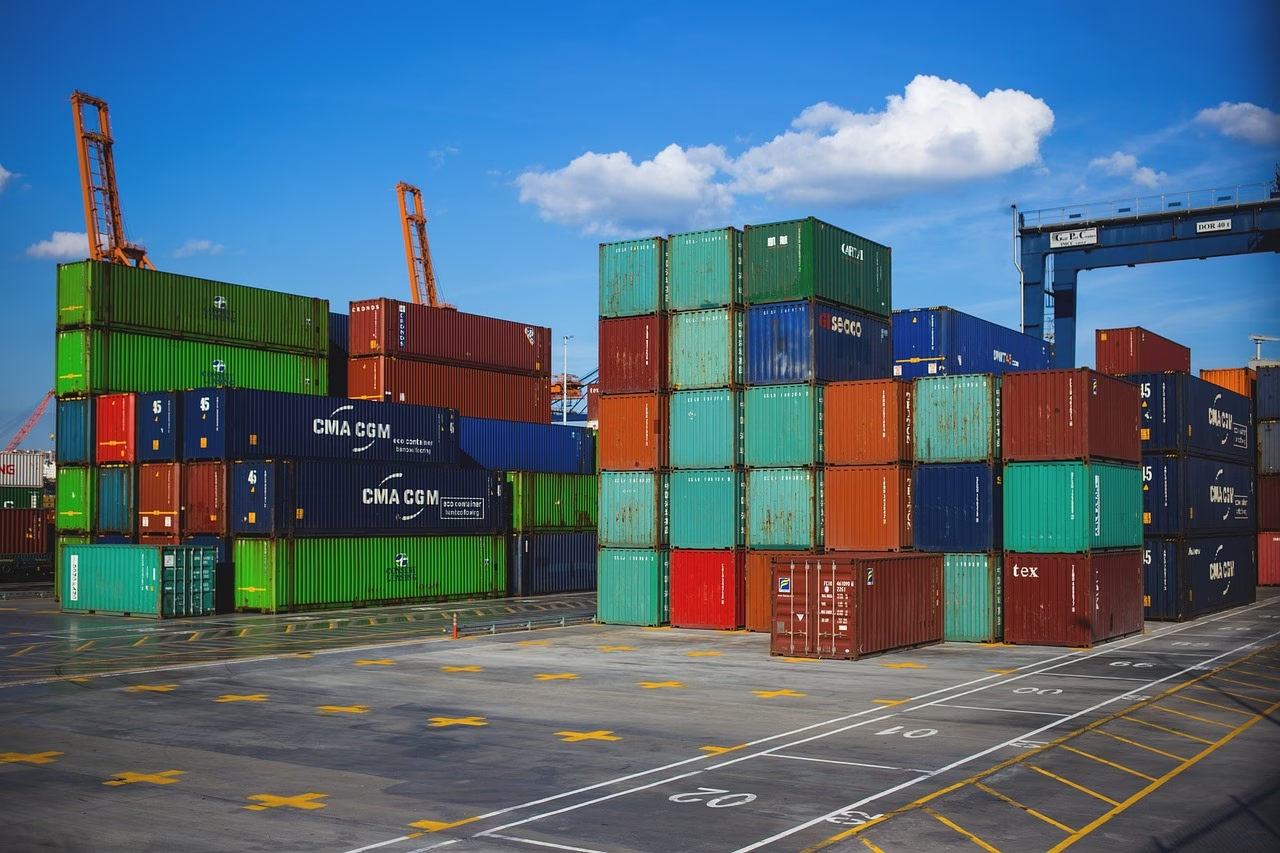
Following the completion of the Phase 2 expansion of the BTK railway earlier this year, volume has surged past the projected 5 million tons annually. In May 2026, a surge in electronics and automotive parts shipments has led to a 14-day backlog at the Port of Baku and the Port of Aktau. For business owners, this means that the ’15-day transit promise’ from China to Europe is currently stretching to 32 days, effectively neutralizing the speed advantage over traditional maritime routes.
Strategic Risk Monitoring: The Tool You Need
To navigate this, skip generic news and use Linerlytica. This platform provides real-time container market intelligence and port congestion heatmaps. Specifically, monitor the ‘Central Corridor Rail-to-Port’ ratio. If the congestion index in Aktau exceeds 75%, it is a leading indicator that your inland freight costs will spike by 15-20% within the following 10 days due to storage surcharges and equipment shortages.
How This Affects Your Bottom Line
- For Logistics Managers: Pivot ‘just-in-time’ inventory models to ‘just-in-case.’ The current backlog is causing a shortage of 40ft high-cube containers in Almaty and Tashkent. Secure your equipment leases 60 days in advance rather than the standard 21.
- For International Freelancers & Small Businesses: Expect a ripple effect in shipping costs for small parcels (e.g., DHL/FedEx via rail). If you are sourcing components from Shenzhen for assembly in Poland, your landed cost is likely to increase by 8% this quarter.
- For Global Investors: Watch the Kazakhstani Tenge (KZT) and Azerbaijani Manat (AZN). These ‘transit currencies’ are seeing increased volatility as their central banks struggle to manage the massive influx of foreign transit fees. We recommend hedging at least 30% of your operational expenses in these regions.
Actionable Strategy for May 2026
Stop waiting for ‘normal’ shipping to return. To protect your margins this month, implement a Multi-Modal Split. Move 60% of your high-value cargo via the Middle Corridor to maintain market presence, but divert 40% to the Cape of Good Hope maritime route. While the sea route is slower, the current TITR congestion has made the sea route more predictable for the first time in two years. Use Kpler to track the exact position of bulk commodities to ensure your raw materials aren’t caught in the Baku logjam.
























Leave a Reply