


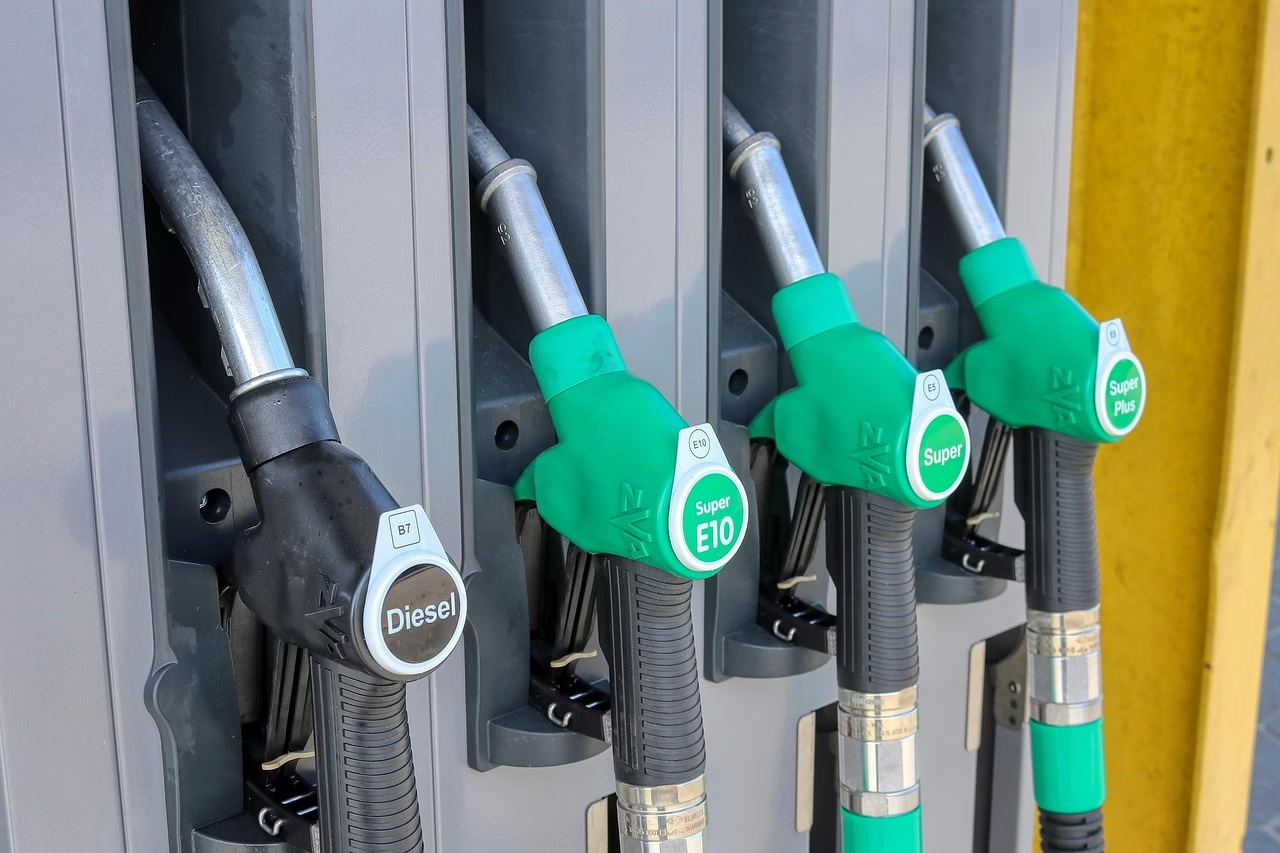
The Shifting Landscape of Fuel Costs
As of late 2024, American motorists are closely monitoring a volatile fuel market that continues to show significant geographic disparities across the United States. While national averages fluctuate based on seasonal demand, refinery maintenance schedules, and global crude oil supply, NBC News is currently tracking real-time data at the state and county levels to provide consumers with a clearer picture of their local economic reality. This ongoing tracking effort aims to demystify the complex factors driving price variations at the pump, which remain a primary concern for household budgets nationwide.
Understanding the Drivers of Price Volatility
Gasoline pricing is rarely the result of a single variable, but rather a confluence of localized and international pressures. Historically, the United States experiences predictable price cycles driven by the transition from winter-grade to summer-grade fuel, which is more expensive to produce due to environmental regulations. Furthermore, regional infrastructure plays a critical role; states with higher fuel taxes or those located further from primary pipeline hubs often see higher costs per gallon compared to their neighbors.
Analyzing Regional Disparities and Economic Impact
Data indicates that the price of gasoline acts as a leading indicator of regional economic health, often dictating the discretionary spending habits of millions of Americans. In coastal regions, supply chain logistics and environmental mandates often create a baseline price that is consistently higher than the national average. Conversely, the Midwest and Gulf Coast regions frequently benefit from proximity to major refining centers, leading to lower per-gallon costs.
Energy analysts point to the Energy Information Administration (EIA) reports, which regularly highlight that crude oil costs typically account for more than 50% of the final price at the pump. However, the remainder of the cost is distributed among refining, distribution, marketing, and retail taxes. Retailers operate on thin margins, meaning that even minor disruptions in the global supply chain—such as geopolitical tensions or extreme weather events—can trigger rapid price spikes at the local level within days.
Expert Perspectives on Market Stability
Industry experts suggest that the current market reflects a delicate balance between stabilizing domestic production and the unpredictable nature of global demand. While the transition toward electric vehicles is beginning to shift long-term energy consumption patterns, the immediate reality for most drivers remains tethered to the fluctuations of the oil market. Economists emphasize that while short-term dips in price provide immediate relief, the underlying volatility remains a structural feature of the energy sector.
Future Implications for Consumers
As the industry moves into the next quarter, market observers are watching for potential shifts in refinery capacity and international export policies that could tighten domestic supply. Consumers should remain vigilant in monitoring local price trends, as the delta between neighboring counties can often be significant due to local competition and tax structures. The long-term trajectory suggests that while extreme price spikes may moderate, the era of unpredictable fuel costs is likely to persist, necessitating more robust data transparency for the average driver.


























Leave a Reply