


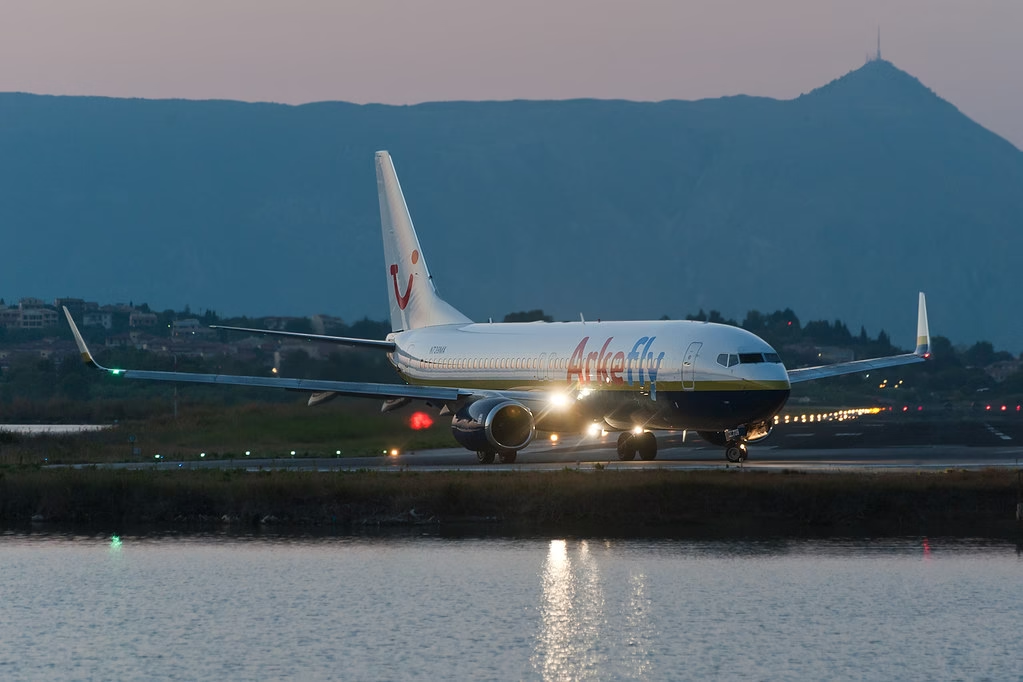
The International Air Transport Association (IATA) announced this week that global airline industry profits are projected to halve in the coming year, largely driven by a massive $100 billion surge in fuel expenditures. As carriers navigate a volatile geopolitical landscape and fluctuating oil prices, the industry faces a significant contraction in net earnings compared to previous fiscal periods.
The Economic Shift in Aviation
The aviation sector, which had been experiencing a robust recovery following the pandemic, now encounters a fresh set of economic headwinds. Fuel costs represent the single largest variable expense for airlines, and the current upward trajectory in oil prices is placing immense pressure on operational margins.
IATA Director General Willie Walsh emphasized that the primary concern for the industry is the sustainability of current pricing models. The critical question remains how long travelers and cargo shippers can continue to absorb the rising costs before demand begins to soften.
Understanding the Fuel Crisis
Historically, aviation fuel prices have been the most unpredictable element of airline balance sheets. When global crude oil prices climb, airlines are often forced to implement fuel surcharges, which directly increase ticket prices for passengers and freight costs for businesses.
Data from IATA suggests that the $100 billion increase is not merely a reflection of higher oil prices but also a result of refined product margins remaining historically high. This combination traps airlines in a high-cost environment that is difficult to hedge against effectively.
Expert Perspectives on Industry Viability
Industry analysts point out that while air travel demand remains resilient, the elasticity of that demand is being tested. Major carriers are currently balancing the need to maintain market share with the necessity of passing on fuel-related costs to consumers.
According to recent market reports, global airline net margins are expected to tighten significantly as the year progresses. Some analysts suggest that smaller, regional carriers may face the most acute challenges, as they lack the same fuel hedging capabilities or economies of scale as larger international airlines.
Operational Implications for the Sector
For the average traveler, these industry-wide trends translate into higher airfares and potentially fewer budget-friendly options on high-demand routes. Airlines are increasingly focusing on operational efficiency, including the deployment of more fuel-efficient aircraft and the optimization of flight paths to mitigate consumption.
Corporate travel departments are also reassessing their budgets. As the cost of business travel rises, firms may look to consolidate trips or shift toward virtual meeting technologies, potentially dampening the high-yield travel segment that airlines rely on for a significant portion of their revenue.
Future Outlook and Industry Watch
Looking ahead, stakeholders should monitor the volatility of crude oil benchmarks and the potential for geopolitical interventions that could impact supply chains. The industry’s ability to maintain profitability will likely depend on whether supply-side constraints ease or if consumers continue to prioritize travel spending despite the inflationary environment.
Observers will be watching upcoming quarterly earnings reports for signs of reduced capacity or route cancellations. If the current trajectory persists, the industry may see a shift toward consolidation, as weaker players struggle to survive the compounding pressure of high fuel costs and cooling consumer demand.






















Leave a Reply