


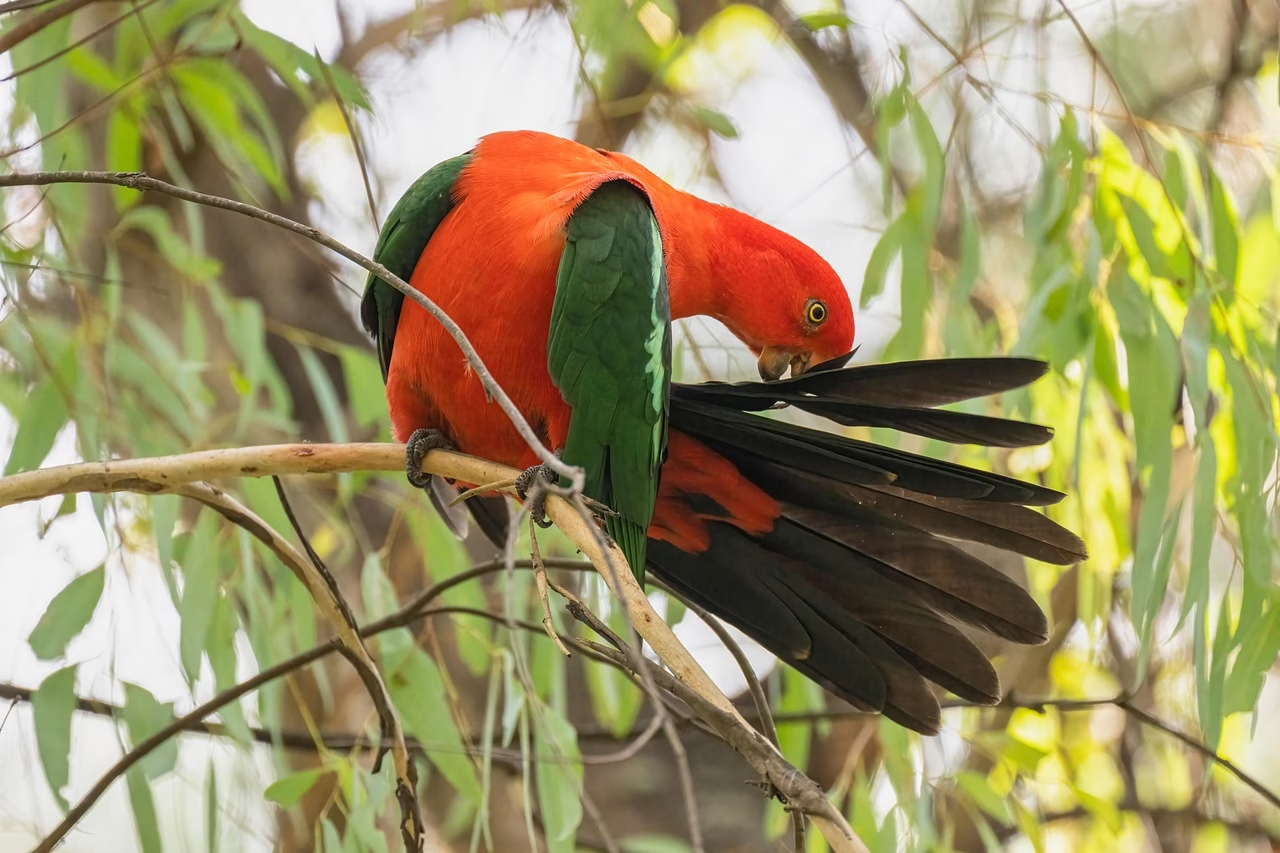
Conservationists and ornithologists in Australia have officially recognized the Paradise Parrot (Psephotellus pulcherrimus) as extinct, marking a definitive end to decades of hope that the species might still persist in remote corners of the Queensland wilderness. Once celebrated as the most beautiful parrot in the world for its iridescent plumage and unique nesting habits, the species has not been reliably sighted since the 1920s, leading scientists to conclude that the bird is permanently lost to history.
The Historical Context of a Vanishing Icon
The Paradise Parrot was historically found in the grassy woodlands of the border region between Queensland and New South Wales. Unlike most parrots that nest in high tree hollows, this species famously excavated nesting chambers in active termite mounds, a behavior that made them uniquely vulnerable to environmental changes.
By the turn of the 20th century, the species faced a catastrophic decline driven by the combined pressures of habitat destruction, overgrazing by livestock, and the introduction of invasive predators. Despite intensive efforts by early 20th-century naturalists to locate surviving populations, the bird remained elusive, leaving only a handful of museum specimens and hand-colored illustrations as a testament to its existence.
Ecological Factors and Human Impact
The decline of the Paradise Parrot serves as a stark case study in the fragility of specialized avian species. Experts point to the alteration of the fire regimes in the Australian bush as a primary driver of the parrot’s disappearance.
The species relied on a specific mosaic of native grasses that flourished under indigenous land management practices. When colonial pastoralism replaced these traditional methods, the resulting changes in vegetation structure eliminated the parrot’s primary food source and nesting sites, leaving them with nowhere to retreat.
Scientific Analysis and Modern Conservation
Data from the International Union for Conservation of Nature (IUCN) suggests that the loss of the Paradise Parrot represents a broader trend of extinction among Australian ground-nesting birds. Dr. Elena Vance, a leading avian ecologist, notes that the loss is not merely an aesthetic tragedy but a significant gap in the ecological record of the continent.
“The Paradise Parrot was a keystone of its specific woodland ecosystem,” Dr. Vance stated. “Its inability to adapt to the rapid transition of the Australian landscape during the industrial era provides a sobering warning for contemporary conservationists working to protect currently endangered species like the Night Parrot.”
Broader Implications for Biodiversity
The confirmation of the Paradise Parrot’s extinction forces a re-evaluation of how Australia manages its remaining wild spaces. The loss underscores the critical need for proactive habitat restoration rather than reactive rescue attempts once a population reaches a critical threshold.
For the agricultural and environmental sectors, this development highlights the necessity of balancing land development with the preservation of specialized micro-habitats. As climate patterns continue to shift, the pressure on species that rely on specific, narrow ecological niches will only intensify.
Future Outlook and Monitoring Efforts
Looking ahead, the focus shifts to the preservation of similar species currently teetering on the brink of extinction. Conservation organizations are now prioritizing the use of advanced satellite imagery and acoustic monitoring to track the status of elusive ground-dwelling birds across the outback.
The legacy of the Paradise Parrot will likely serve as a foundational reference point for future biodiversity policy. Observers should watch for new, stricter land-clearing regulations in the Queensland-New South Wales border regions, as lawmakers look to prevent the repeat of this ecological tragedy in other vulnerable habitats.






















Leave a Reply