



The May 2026 Taiwan Strait ‘Grey Zone’ Escalation: A Strategic Risk Briefing
As of May 18, 2026, the maritime landscape in the Taiwan Strait has shifted from routine tension to a ‘Grey Zone’ blockade simulation. Recent ‘law enforcement’ drills by regional powers have effectively throttled the flow of commercial traffic through one of the world’s most vital shipping arteries. For business owners and logistics managers, this is no longer a political debate—it is a direct hit to the bottom line.
The Situation: May 2026 Update
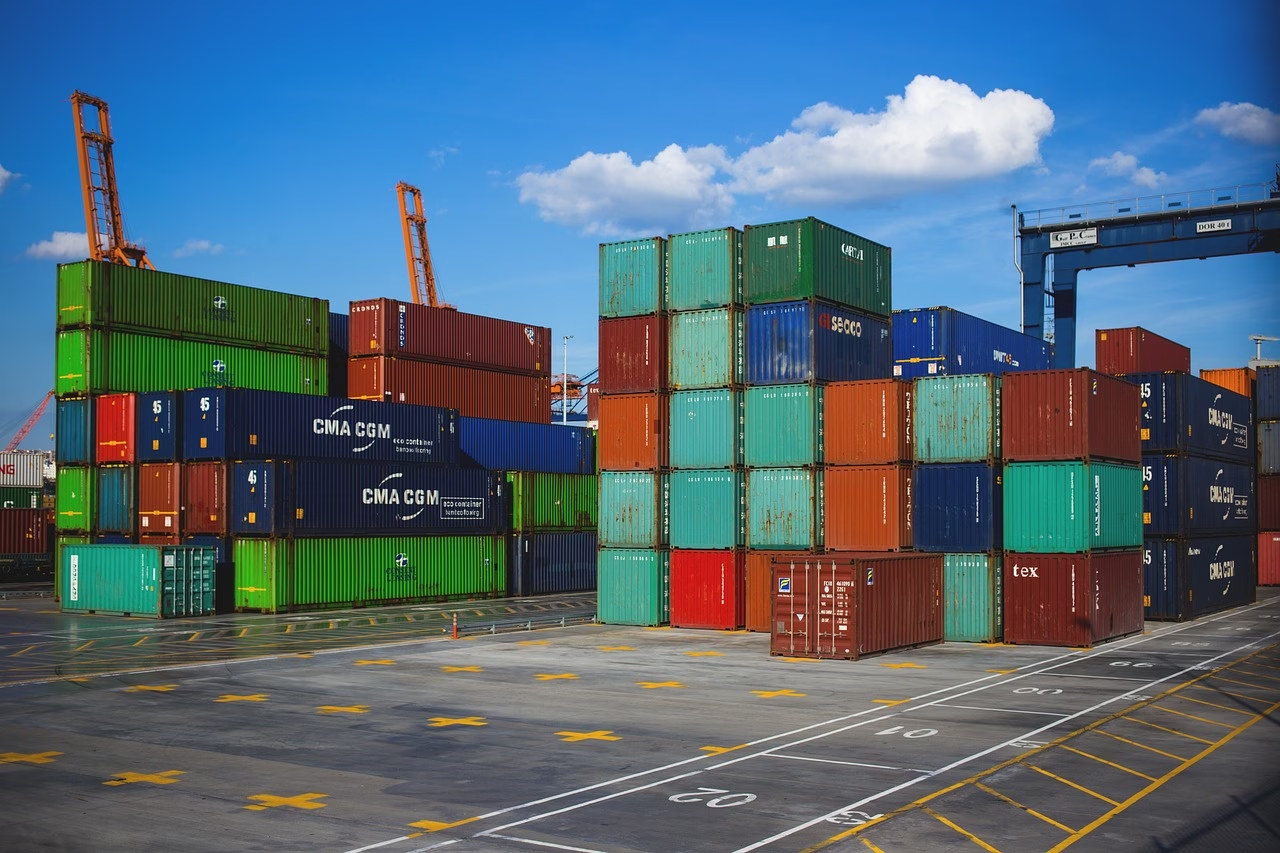
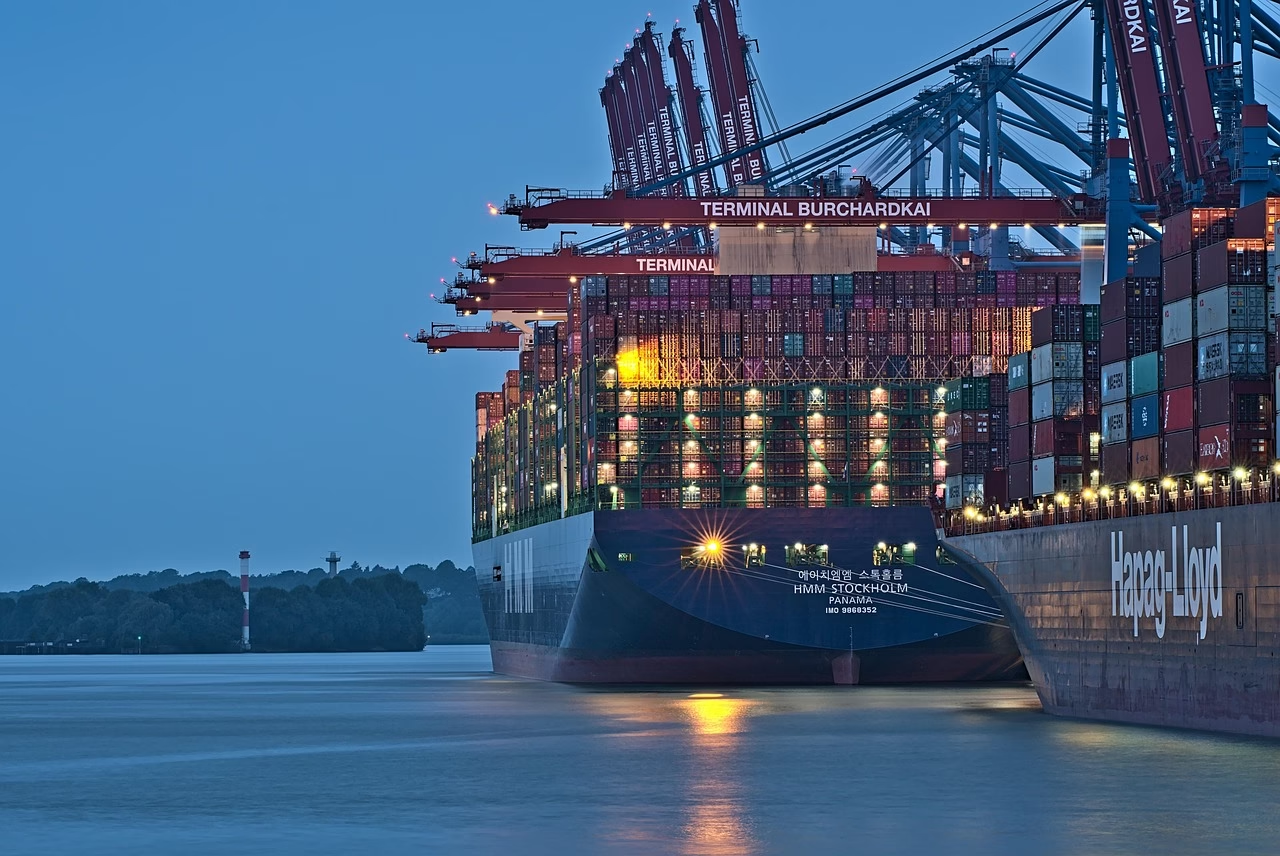
The current escalation involves large-scale maritime maneuvers that occupy key shipping lanes. Unlike traditional kinetic warfare, these drills use maritime militia and coast guard vessels to conduct ‘cargo inspections,’ leading to significant port congestion in Kaohsiung and delaying transit times for vessels headed to Long Beach and Rotterdam by an average of 72 to 96 hours.
Monitoring the Risk: Real-Time Intelligence Tools
To navigate this crisis, strategic planners are moving away from legacy news outlets and utilizing ACLED (Armed Conflict Location & Event Data Project) combined with MarineTraffic’s AIS (Automatic Identification System) data. By tracking ‘Conflict Events’ in ACLED alongside real-time vessel density maps, logistics managers can identify specific ‘choke points’ where maritime law enforcement activity is highest. If you see a cluster of ‘non-kinetic’ events on ACLED near the Penghu Islands, expect a 15% spike in immediate freight rates for that corridor.
Actionable Impacts for Stakeholders
- Logistics Managers: War Risk Insurance (WRI) premiums for the Taiwan Strait have surged by 200% this week. Carriers are now implementing ‘Emergency Risk Surcharges.’ Consider rerouting critical high-value components through the Luzon Strait, despite the added fuel costs.
- Global Investors: The ‘Alt-Asia’ shift is accelerating. Currency volatility in the TWD and KRW suggests a move toward ‘Safe Haven’ hedging in the USD and SGD. Monitor semiconductor manufacturers with facilities in Vietnam and India as immediate hedges against East Asian supply shocks.
- Business Owners: If your product relies on sub-10nm chips, your lead times just increased by 4 weeks. Transition from ‘Just-in-Time’ to ‘Just-in-Case’ inventory models for critical components sourced from the Hsinchu Science Park.
- International Freelancers: Digital nomads in the region should monitor the ‘Connectivity Risk.’ Underwater cable maintenance is often ‘accidentally’ disrupted during these drills, leading to significant latency issues for remote work.
Strategic Recommendation
Don’t wait for a formal declaration of conflict. Use FleetMon or MarineTraffic to monitor ‘Vessel Deviation’ alerts. When commercial ships begin proactively bypassing the Strait without official mandates, it is the primary signal that private intelligence firms have flagged an imminent escalation. Diversify your supply chain nodes south of the 20th parallel now to avoid the Q3 2026 shipping bottleneck.























Leave a Reply