


WASHINGTON — A sharp internal division has emerged within the Trump administration following a sweeping warning from Pope Leo XIV regarding the ethical dangers of unregulated artificial intelligence. The rift, which opened this week during high-level policy discussions in Washington, pits national security pragmatists and Silicon Valley allies against faith-based advisers who fear alienating a critical bloc of Catholic voters ahead of the upcoming electoral cycle.
The Vatican’s Moral Directive on Machine Learning
The current friction stems from a papal encyclical issued by Pope Leo XIV, which calls for immediate, binding international guardrails on AI development. The pontiff warned that unchecked algorithmic systems threaten human dignity, labor markets, and the cognitive sovereignty of individuals. This moral intervention marks a significant escalation in the Vatican’s ongoing campaign to shape global technology policy.
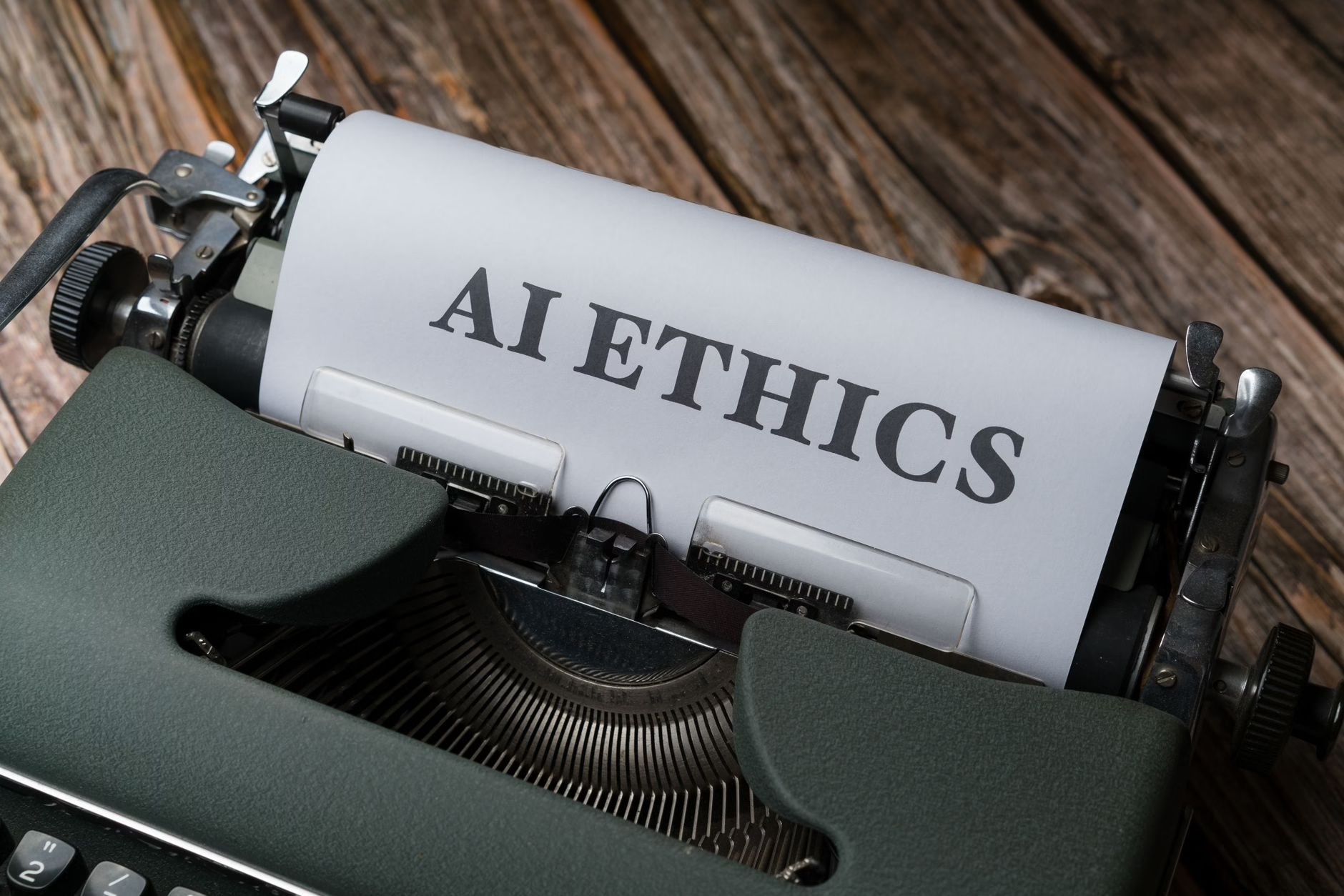
Historically, the Holy See has maintained a cautious but active dialogue with tech hubs, previously sponsoring the “Rome Call for AI Ethics.” However, Pope Leo’s latest address explicitly targets the rapid deployment of generative AI models without ethical oversight. The Vatican’s stance has resonated deeply with global regulatory bodies, putting pressure on Washington to align its policies with international ethical frameworks.
A Divided White House: Innovation vs. Ethics
Within the White House, the response to the Vatican’s warning has exposed deep ideological fault lines. On one side, the domestic policy council and economic advisers advocate for a highly deregulatory approach. They argue that imposing strict ethical guardrails would stifle American innovation and cede technological dominance to foreign adversaries like China.
Conversely, a faction of socially conservative officials and faith-based liaisons is urging the administration to take the Pope’s warnings seriously. This group argues that dismissing the head of the Catholic Church could carry severe political consequences, particularly in crucial swing states with dense Catholic populations. The debate has reportedly led to heated exchanges during National Security Council briefings over the past several days.
Silicon Valley’s Lobbying Efforts and National Security
Tech executives and Silicon Valley donors, who have heavily lobbied the administration for a laissez-faire approach to AI development, are watching the internal debate closely. Industry leaders argue that voluntary safety guidelines, rather than hard legislative mandates, are sufficient to mitigate potential risks. They maintain that over-regulation would cripple the capital investments currently driving the American tech sector.
National security officials within the administration echo these concerns, framing AI supremacy as a geopolitical necessity. “We cannot afford to slow down our development cycles based on theological frameworks,” said an administration official speaking on the condition of anonymity. “The race for artificial general intelligence is a matter of national defense, and our adversaries are not waiting for ethical consensus.”
The Political Calculus of the Catholic Vote
The domestic political stakes are high, as Catholic voters represent one of the most volatile and influential demographics in American politics. Recent polling by the Pew Research Center indicates that nearly 62% of religious Americans express concern over the rapid integration of AI into daily life. For the administration, balancing the demands of tech-sector donors with the moral anxieties of religious voters presents a complex electoral challenge.
Political strategists note that the Vatican’s critique of AI is not easily dismissed as partisan rhetoric. Because the Pope’s warning focuses on labor displacement and human dignity, it appeals to both working-class voters and traditional conservatives. This broad resonance complicates the administration’s efforts to dismiss the Vatican’s concerns as mere foreign interference.
“The administration is trying to walk a tightrope between two of its most critical constituencies,” says Dr. Aris Thorne, a technology policy analyst at the Brookings Institution. “They cannot afford to lose the financial backing of Silicon Valley, nor can they risk a backlash from faith-based voters who view the Pope as a moral authority on the future of humanity.”
What to Watch Next
In the coming weeks, observers expect the White House to attempt a delicate diplomatic balancing act. Administration officials are reportedly drafting a policy memorandum that seeks to address ethical concerns without introducing binding regulations. This document will likely emphasize “human-centric AI” while maintaining a staunchly pro-innovation stance designed to appease Silicon Valley allies.
Furthermore, upcoming bilateral meetings between U.S. diplomats and Vatican representatives in Rome will serve as a crucial test of this strategy. Whether the administration can successfully bridge the gap between technological ambition and moral restraint remains to be seen. As the debate intensifies, the outcome will likely shape the regulatory landscape of artificial intelligence and the administration’s relationship with religious voters for years to come.


















Leave a Reply