


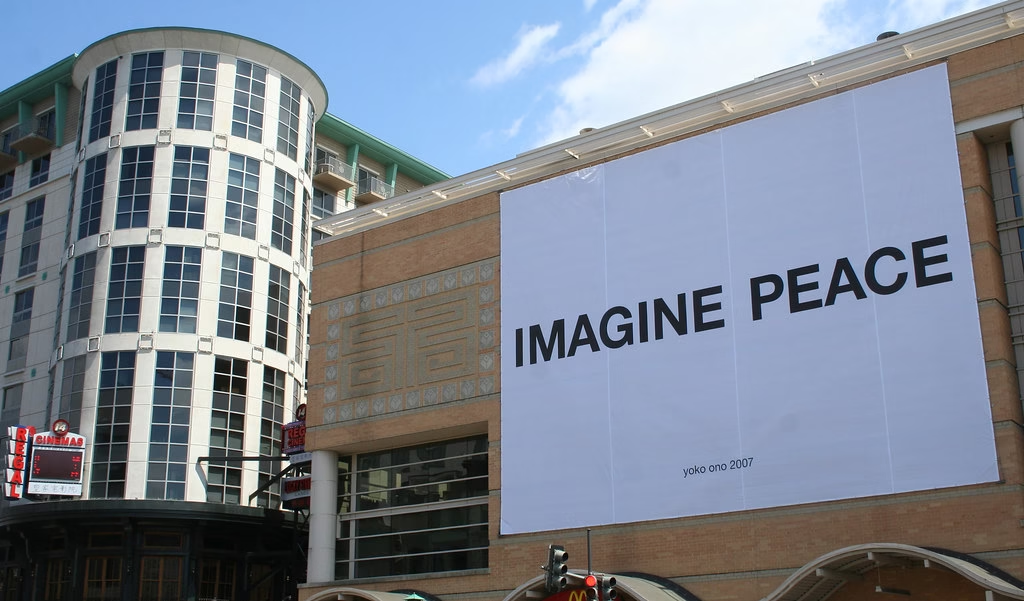
A poignant new public art installation titled “We Shall Rise” opened this week at a prominent shopping center in Tel Aviv, offering a visual narrative of Israel’s collective experience and national resilience following the events of October 7.
The exhibition serves as a reflective space for visitors, utilizing multimedia displays and commemorative artifacts to document the timeline of the conflict and the subsequent societal response. By situating the installation in a high-traffic commercial hub, organizers aim to integrate the ongoing national discourse into the daily lives of residents and international visitors alike.
Context of the Commemoration
The October 7 attacks initiated a period of profound instability and grief across Israel, fundamentally altering the country’s security landscape and social fabric. In the months that followed, various cultural initiatives emerged to process the trauma, ranging from grassroots memorials to state-sponsored exhibitions.
“We Shall Rise” distinguishes itself by focusing on the theme of reconstruction and the endurance of the human spirit. The installation draws upon thousands of personal items, photographs, and testimonials provided by families impacted by the events, creating a mosaic of individual stories within a larger historical framework.
Multidimensional Perspectives on Resilience
The installation is divided into several thematic zones, each addressing a different facet of the Israeli experience over the past year. One section focuses on the immediate aftermath, utilizing raw, unedited footage to convey the urgency of the initial crisis.
A secondary area highlights the mobilization of civil society, showcasing the vast volunteer networks that formed in the wake of the attacks. According to data from the Israel Volunteer Council, over 60% of the adult population participated in some form of organized relief effort during the final quarter of 2023, a trend that the exhibition seeks to immortalize through digital archives.
Art historians note that such installations play a critical role in collective memory. Dr. Elena Marcus, a researcher in conflict-related aesthetics, observes that “by transforming personal trauma into a public, tangible form, these spaces allow for a shared societal processing that traditional media often fails to capture.”
Societal and Economic Implications
The placement of the exhibit within a commercial space reflects a broader trend of integrating commemorative art into secular, everyday environments. For the retail sector, this represents a shift toward creating “third spaces” that serve as both community centers and commercial hubs.
For the broader public, the installation provides a necessary venue for acknowledgment. It highlights the strain on the national psyche while simultaneously emphasizing the ongoing efforts toward rehabilitation and economic stability. Industry analysts suggest that as the country continues to navigate the complexities of the regional conflict, such installations will likely become permanent fixtures in the architectural planning of new public spaces.
Future Outlook and What to Watch
As the anniversary of the October 7 events approaches, similar installations are expected to appear in municipal centers throughout the country, signaling a nationwide commitment to public remembrance. Observers should monitor whether these displays evolve from focusing on immediate trauma to addressing long-term diplomatic and social reconciliation efforts.
The success of the “We Shall Rise” project may set a precedent for how public institutions balance the need for sensitivity with the logistical requirements of high-traffic urban areas. Future developments in this space will likely involve more interactive, digital-first components designed to reach younger demographics and international audiences who are increasingly engaging with the conflict through curated digital narratives.
















Leave a Reply