


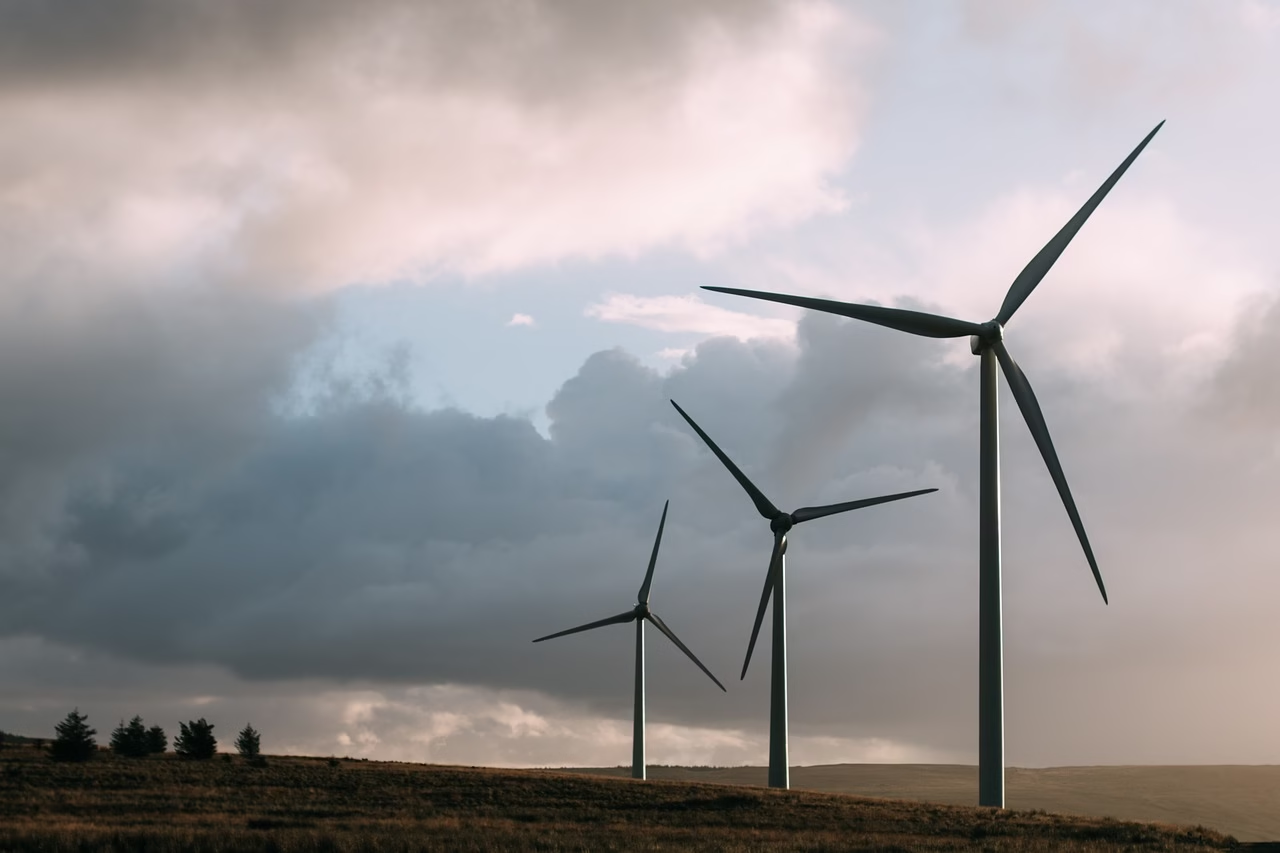
Public Outcry Against Fossil Fuel Expansion
Thousands of demonstrators gathered in western Germany this past weekend to voice strong opposition against the construction of new gas-fired power stations. The protests, which took place across several industrial hubs, highlight a growing tension between the nation’s urgent energy security needs and its ambitious climate protection targets.
The Context of Germany’s Energy Transition
Germany is currently navigating the ‘Energiewende,’ a long-term transition toward a carbon-neutral economy. Following the phase-out of nuclear power and the ongoing efforts to exit coal, the government has proposed increasing reliance on natural gas as a ‘bridge technology’ to ensure grid stability while renewable energy infrastructure scales up.
However, environmental groups and local residents argue that locking the country into fossil fuel infrastructure for decades contradicts the Paris Agreement goals. The protesters contend that the investment should be redirected entirely toward green hydrogen and expanded wind and solar capabilities.
Multiple Perspectives on Infrastructure
Industry leaders maintain that gas plants are essential to prevent blackouts during periods of low wind and solar generation. They argue that without these dispatchable power sources, the industrial heartland of Germany faces significant economic risks and potential energy shortages.
Conversely, climate scientists point to the methane leakage associated with natural gas extraction and transport as a major deterrent. According to data from the German Environment Agency (UBA), even gas-fired generation produces significant CO2 emissions that are incompatible with the target of climate neutrality by 2045.
Local activists have also raised concerns regarding the lifespan of these proposed facilities. Many argue that once built, these plants will be operational for thirty years or more, effectively creating a ‘carbon lock-in’ that hinders the transition to a fully renewable energy grid.
Economic and Policy Implications
The protests signal a potential shift in the political landscape as the German government struggles to balance industrial competitiveness with environmental mandates. If public pressure forces a moratorium on new gas projects, policymakers may need to accelerate the deployment of battery storage systems and cross-border energy sharing agreements much faster than currently planned.
For the energy industry, this uncertainty creates a difficult investment environment. Companies looking to modernize the grid are now facing both regulatory hurdles and significant social resistance, which could delay the commissioning of new plants and complicate the national strategy for energy security.
Market analysts are keeping a close watch on upcoming legislative sessions in Berlin to see if the government will offer concessions to climate groups. The outcome of these discussions will likely determine the pace of future energy infrastructure developments across the European Union.
Looking ahead, observers should monitor the government’s updated ‘Power Plant Strategy,’ which is expected to clarify the role of hydrogen-ready gas plants. The central question remains whether Germany can maintain its industrial output while appeasing a public that is increasingly unwilling to accept any form of fossil-fuel-based energy infrastructure.





















Leave a Reply