


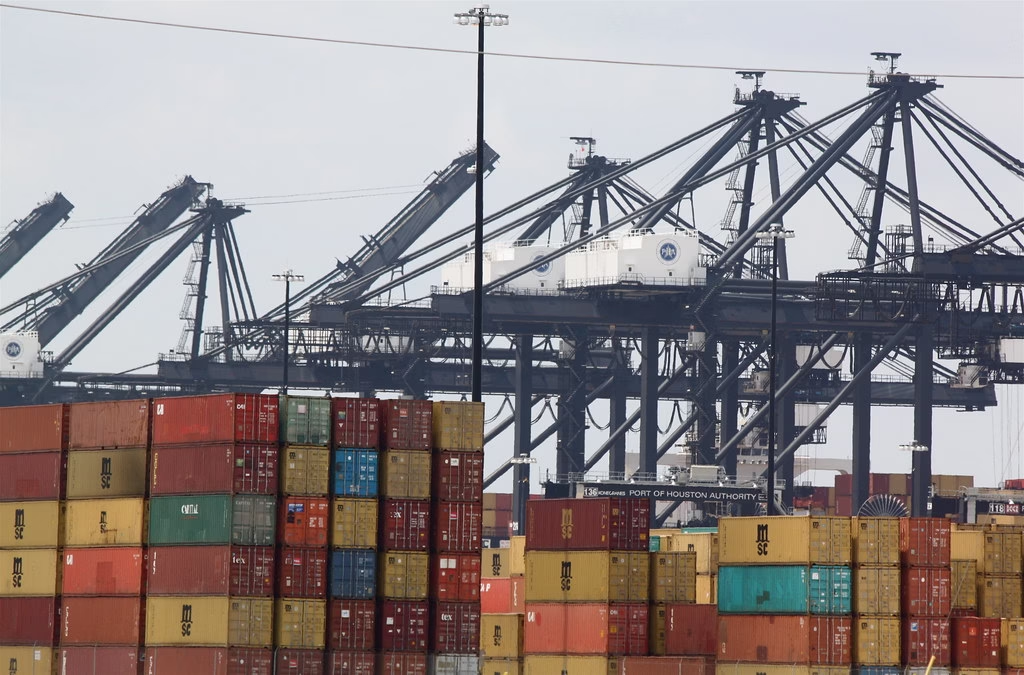
President Donald Trump enacted a broad array of new double-digit import tariffs on dozens of foreign trading partners from Washington on Thursday, dramatically expanding executive trade actions just hours before existing 10% temporary duties expire on Friday. The policy shift marks a direct move to re-establish aggressive trade leverage following a major defeat at the Supreme Court that invalidated prior emergency tariff structures.
The rapid transition from stopgap duties to permanent double-digit tariffs affects major trade corridors across Europe, Asia, and Latin America. Administration officials confirmed that the new rates will take effect immediately at midnight, altering import costs for trillions of dollars in commercial goods entering American ports.
Escalating Trade Pressures Following Judicial Setbacks
The sudden escalation stems from a constitutional challenge concluded last month, in which the Supreme Court ruled that previous broad-spectrum executive tariffs exceeded presidential emergency authorities. In response to the judicial ruling, the administration instituted a temporary 10% blanket tax designed to maintain leverage while staff drafted new, legally tailored trade remedies.
With that stopgap measure set to expire at Friday’s deadline, federal trade negotiators shifted strategy to targeted, country-specific double-digit rates. Administration legal counsel argues these revised measures comply with refined statutory frameworks by linking tariffs directly to specific trade deficits and foreign regulatory barriers.
Trade analysts note that replacing the uniform 10% rate with varied double-digit levies creates unprecedented regulatory complexity for global logistics networks. The foreign targets include traditional geopolitical allies alongside strategic industrial rivals, signaling a total reset of foreign economic policy.
Target Nations and Strategic Objectives
The revised tax schedule applies specific rates ranging from 12% to 25% on critical import categories, including industrial machinery, automotive components, consumer electronics, and agricultural products. Major manufacturing hubs across East Asia and key European exporters face the steepest increases under the executive order.
White House trade advisers contend the aggressive stance is necessary to dismantle long-standing structural trade imbalances and encourage domestic manufacturing investment. The administration emphasized that partners willing to negotiate comprehensive bilateral agreements could secure rate exemptions or reductions in future trade rounds.
However, foreign officials reacted swiftly to the announcement, labeling the double-digit duties an unfair escalation that undermines global trade stability. Several diplomatic delegations have already indicated plans to challenge the measures through international trade forums and domestic U.S. court filings.
Economic Fallout and Industry Perspectives
Economic research groups project that the sudden rate jump will ripple through consumer supply chains within weeks. Data from the National Bureau of Economic Research suggests that double-digit tariffs frequently pass directly to end consumers, potentially adding several hundred dollars in annual household costs across key retail sectors.
“Moving from a temporary baseline to double-digit duties significantly raises input costs for domestic manufacturers reliant on foreign intermediate components,” said Dr. Elena Rostova, chief trade economist at the Global Policy Institute. “Companies face immediate decisions regarding whether to absorb reduced margins or pass costs along to consumers during an already sensitive inflationary period.”
Industry associations representing domestic retailers and technology importers expressed immediate concern over the Friday transition. Supply chain managers report that inventory stockpiles accumulated ahead of the deadline will offer only short-term insulation against the elevated import taxes.
Global Supply Chains and Forward Outlook
Major trading blocs are preparing coordinated responses as the Friday deadline forces international markets to adjust to the new tariff framework. European and Asian officials confirmed they are drafting targeted retaliatory lists focusing on high-value American exports, including agricultural goods, aerospace products, and heavy equipment.
Domestic importers are expected to file urgent court motions seeking emergency injunctions, arguing the administration’s new legal justification remains vulnerable to the same statutory flaws identified by the Supreme Court. Federal courts could issue initial procedural rulings on these emergency filings within days of the tariffs taking effect.
Market observers will monitor upcoming consumer price indices, port import volumes, and diplomatic statements closely over the coming weeks to gauge the full economic impact of the double-digit rates and determine whether trading partners choose retaliation or bilateral compromise.
























Leave a Reply