


In response to escalating global conflicts, Western coalitions led by the United States and the European Union have dramatically accelerated the deployment of economic sanctions against nations like Russia and Iran, yet evidence mounts that these measures are failing to shift the strategic decisions of targeted governments. Designed to isolate rogue states and cripple their financial capabilities, modern sanctions are instead meeting unprecedented resistance as targeted regimes exploit systemic loopholes and forge alternative alliances.
The Evolution of Economic Warfare
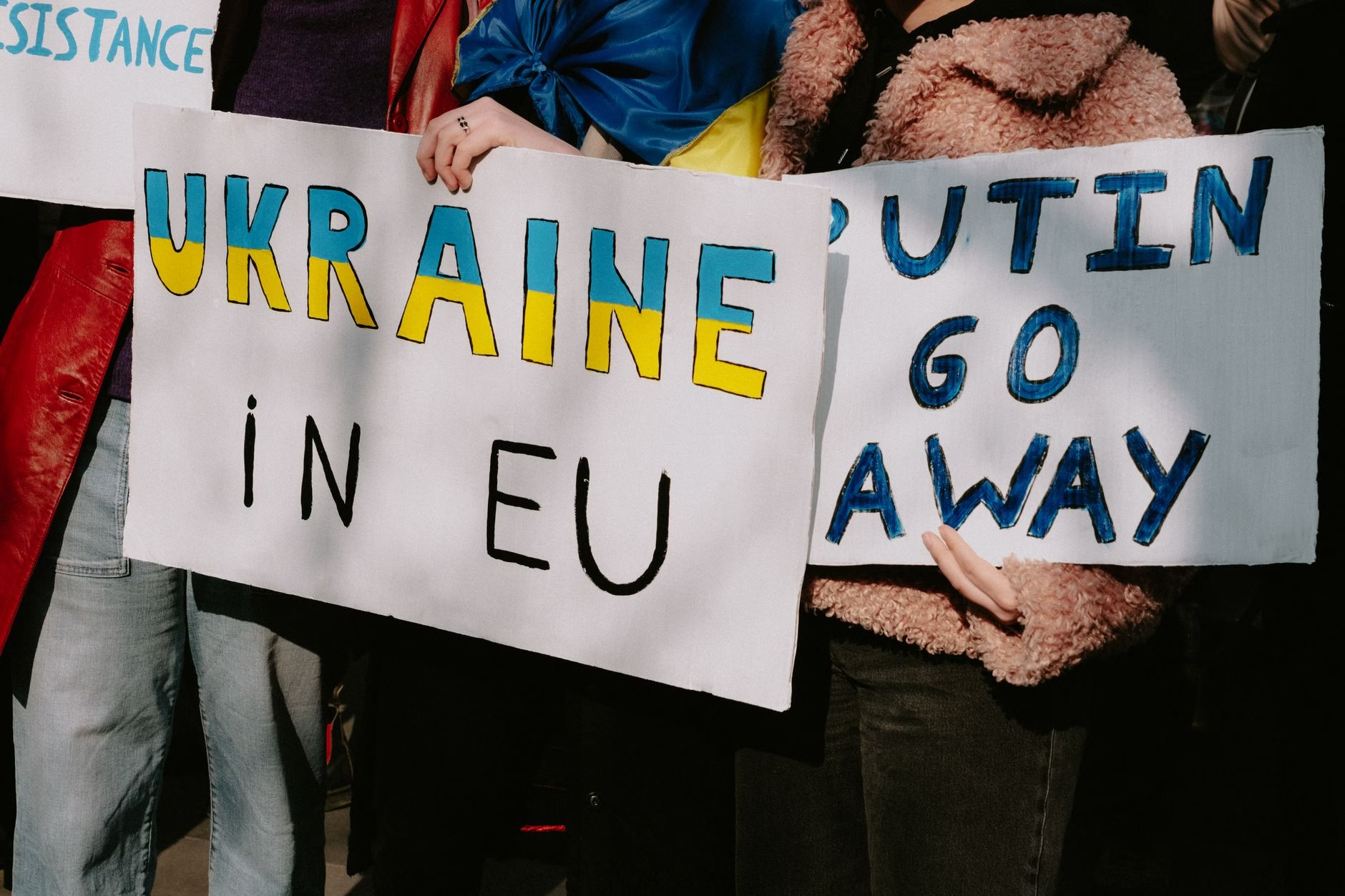
Historically, economic sanctions served as a non-violent alternative to military intervention, designed to coerce nations into compliance by choking their access to global markets. Following Russia’s invasion of Ukraine in 2022 and Iran’s ongoing nuclear advancements, Western powers froze hundreds of billions of dollars in foreign assets and severed key banks from the SWIFT international payment system.
The scale of current restrictions is unprecedented, with Russia now subject to over 16,000 active sanctions, making it the most sanctioned country in history. Despite these sweeping measures, both Moscow and Tehran continue to fund their military and geopolitical agendas, prompting economists and foreign policy experts to re-evaluate the utility of financial warfare.
The Mechanics of Adaptation and Evasion
A primary reason for the declining efficacy of sanctions is the rapid development of parallel trade networks and alternative financial infrastructures. Russia has successfully redirected its oil exports to buyers in India and China, utilizing a “shadow fleet” of uninsured tankers that operate outside Western jurisdiction.
According to data from the International Monetary Fund (IMF), Russia’s economy actually grew by 3.6% in 2023, defying initial Western predictions of a deep recession. Furthermore, the phenomenon of “triangular trade” has surged, where Western goods are exported to third-party nations in Central Asia before being legally re-exported into restricted territories.
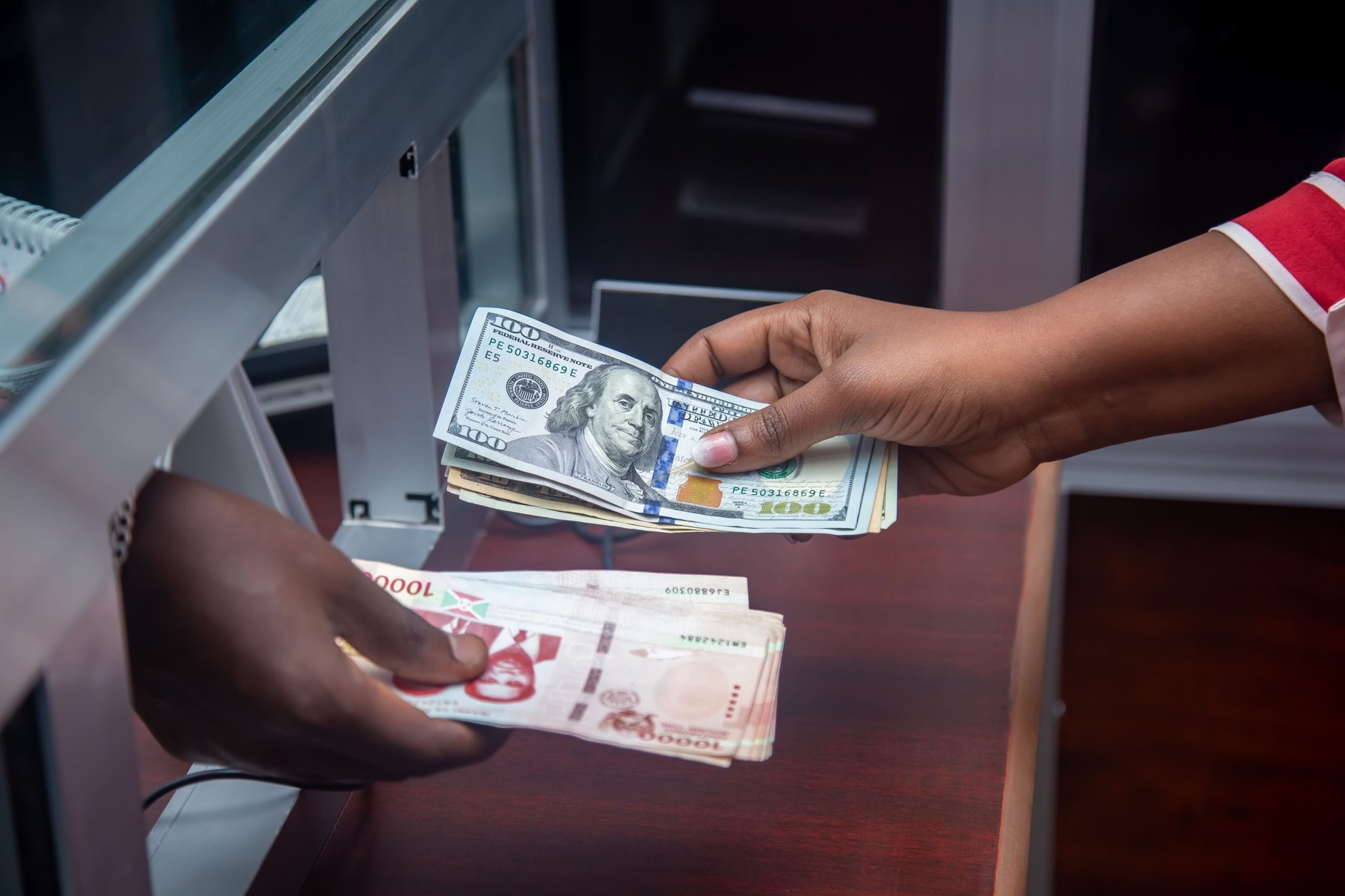
Similarly, Iran has spent decades refining techniques to bypass sanctions, relying on a complex network of front companies and illicit shipping to export crude oil. The rise of digital currencies and non-Western payment systems, such as China’s Cross-Border Interbank Payment System (CIPS), has further insulated these nations from the reach of the U.S. dollar.
The Domestic Paradox and the ‘Rally’ Effect
Political scientists point to a recurring domestic phenomenon known as the “rally-around-the-flag” effect, where external economic pressure inadvertently strengthens authoritarian regimes. Instead of fostering public dissent against the ruling class, broad-based sanctions often allow governments to blame foreign adversaries for domestic economic hardships.
A landmark study by the Peterson Institute for International Economics analyzed over a century of sanctions and concluded that they achieve their stated foreign policy goals in only about 30% to 40% of cases. In highly authoritarian states, the ruling elite often monopolizes remaining scarce resources, further weakening the political opposition and consolidating state control over the economy.
In Iran, decades of sanctions have fostered a “resistance economy” focused on domestic production and self-reliance. This structural shift has shielded critical state sectors from external shocks while disproportionately impacting the civilian middle class.
Unintended Consequences for Global Trade
The aggressive use of sanctions is also accelerating the fragmentation of the global financial system, with significant implications for multinational corporations and international investors. As Western regulators tighten compliance requirements, businesses face skyrocketing legal costs and increased supply chain vulnerabilities.
Furthermore, the weaponization of the U.S. dollar has prompted middle-power nations in Asia, Latin America, and Africa to diversify their reserve currencies. The expansion of the BRICS bloc—which recently invited major oil producers like Iran and the United Arab Emirates to join—signals a broader structural shift toward a multipolar economic order that is inherently resistant to Western financial leverage.
What to Watch Next
As the effectiveness of traditional sanctions wanes, policymakers in Washington and Brussels are shifting their focus toward secondary sanctions, which target third-party entities doing business with sanctioned regimes. This strategy risks straining relations with neutral allies, particularly in the Global South, where countries resist choosing sides in geopolitical disputes.
Observers should watch how the ongoing development of central bank digital currencies (CBDCs) and blockchain-based trade platforms alters the landscape of international finance over the next decade. If these technologies successfully bypass Western-dominated clearinghouses, the ability of Western coalitions to project power through economic means may be permanently diminished, forcing a fundamental rethink of global diplomacy and conflict resolution.




















Leave a Reply