


Ukraine has formally requested an emergency meeting of the United Nations Security Council to address a recent surge in Russian missile and drone attacks targeting civilian infrastructure. The plea, issued by Ukraine’s Permanent Representative to the UN on [Date of Request – e.g., Tuesday], comes amid growing international concern over the humanitarian impact of the intensified bombardment, which has crippled energy facilities and endangered civilian lives across the country.
Escalating Attacks and Humanitarian Concerns
Over the past several weeks, Russia has significantly increased the intensity and scope of its aerial assaults on Ukrainian cities. These attacks predominantly target Ukraine’s energy grid, including power plants and substations, leading to widespread blackouts and severe disruptions to essential services like heating and water supply as winter approaches. Reports from Ukrainian authorities indicate a deliberate strategy to demoralize the population and cripple the nation’s ability to function.
The Ukrainian government has described these strikes as “terrorist acts” and potential war crimes, emphasizing that they violate international humanitarian law. Civilian casualties have been reported in multiple regions, with hospitals, residential buildings, and critical infrastructure bearing the brunt of the onslaught. The Office of the UN High Commissioner for Human Rights (OHCHR) has consistently documented civilian harm resulting from the conflict, with a particular focus on indiscriminate attacks.
Ukraine’s Diplomatic Push
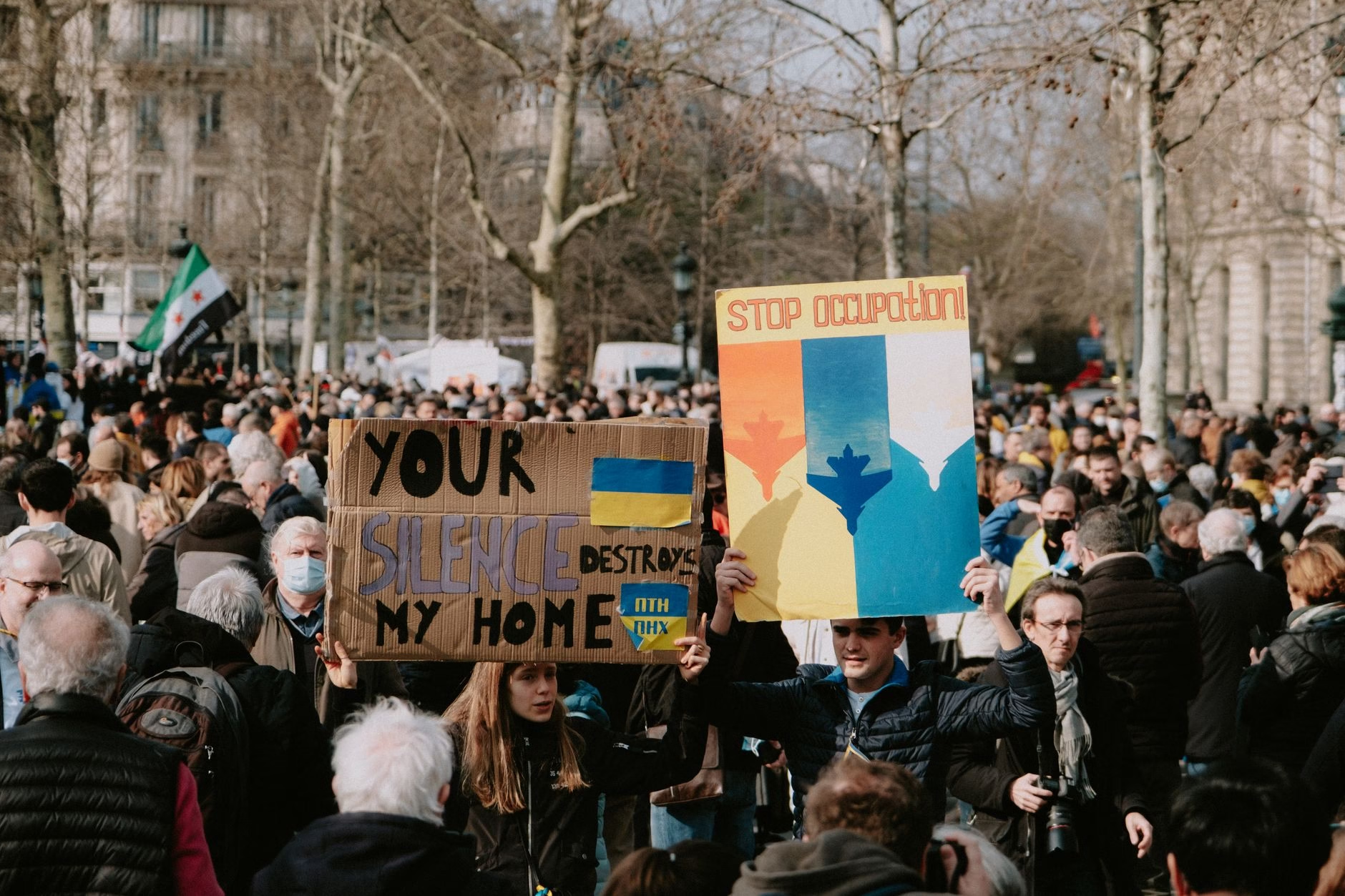
In its formal request, Ukraine cited the escalating attacks as a direct threat to international peace and security, a key mandate of the Security Council. Kyiv aims to use the platform to condemn Russia’s actions, demand an immediate cessation of hostilities, and seek stronger international accountability measures. Ukrainian officials have expressed frustration with the perceived inaction of the Security Council, where Russia holds a permanent seat and veto power, often blocking resolutions critical of its actions.
“We are calling on the Security Council to fulfill its responsibility to maintain international peace and security,” stated [Name of Ukrainian Representative], Ukraine’s envoy to the UN. “These relentless attacks on our people and our infrastructure cannot go unanswered. The international community must stand united against such blatant violations of international law.”
Russian Stance and Security Council Dynamics
Russia, meanwhile, has continued to frame its actions as necessary measures to degrade Ukraine’s military capabilities, often citing alleged Ukrainian provocations. Moscow has consistently denied targeting civilian infrastructure directly, though evidence on the ground and statements from Ukrainian officials and international observers contradict these assertions. The inherent power dynamic within the Security Council, with Russia as a permanent member, has historically limited the body’s ability to take decisive action against Moscow.
Previous attempts by Ukraine and its allies to address Russian aggression within the Security Council have been largely stymied by Russian vetoes. This has led to increased reliance on the UN General Assembly and other international forums to condemn Russia’s actions, though these bodies lack the enforcement power of the Security Council.
Expert Perspectives and Data
Analysts highlight that the current wave of attacks represents a significant escalation in Russia’s strategy. “Russia appears to be shifting towards a war of attrition, aiming to break Ukraine’s will and capacity to resist by targeting its essential services,” commented [Name of Security Analyst], a senior fellow at [Name of Think Tank]. “The focus on energy infrastructure is particularly devastating as winter sets in, creating a dire humanitarian crisis.”
Data from the International Energy Agency (IEA) indicates that the damage to Ukraine’s power generation capacity has been substantial, with estimates suggesting that a significant portion of the country’s energy infrastructure has been affected. This reliance on energy infrastructure for basic survival makes these targets particularly sensitive and impactful.
Implications for Ukraine and the International Community
The immediate implication for Ukraine is a deepening humanitarian crisis, with millions facing cold, darkness, and lack of basic necessities. The attacks also place immense strain on Ukraine’s economy and its ability to sustain its defense efforts. On the international stage, Ukraine’s call for a Security Council meeting underscores the ongoing challenge of holding powerful states accountable within the existing global governance framework.
The effectiveness of such a meeting remains uncertain, given Russia’s veto power. However, it provides a crucial platform for Ukraine to rally international support, document alleged war crimes, and pressure member states to consider alternative measures, such as further sanctions or increased military aid. The outcome will be closely watched as a barometer of the international community’s resolve in the face of persistent aggression.
What to watch next includes potential resolutions debated within the Security Council, responses from individual member states regarding additional humanitarian and military aid, and the ongoing efforts by Ukraine to repair its critical infrastructure amidst continued Russian attacks.

















Leave a Reply