



The Structural Shift: Why the ‘Temporary’ Red Sea Detour is Now Permanent
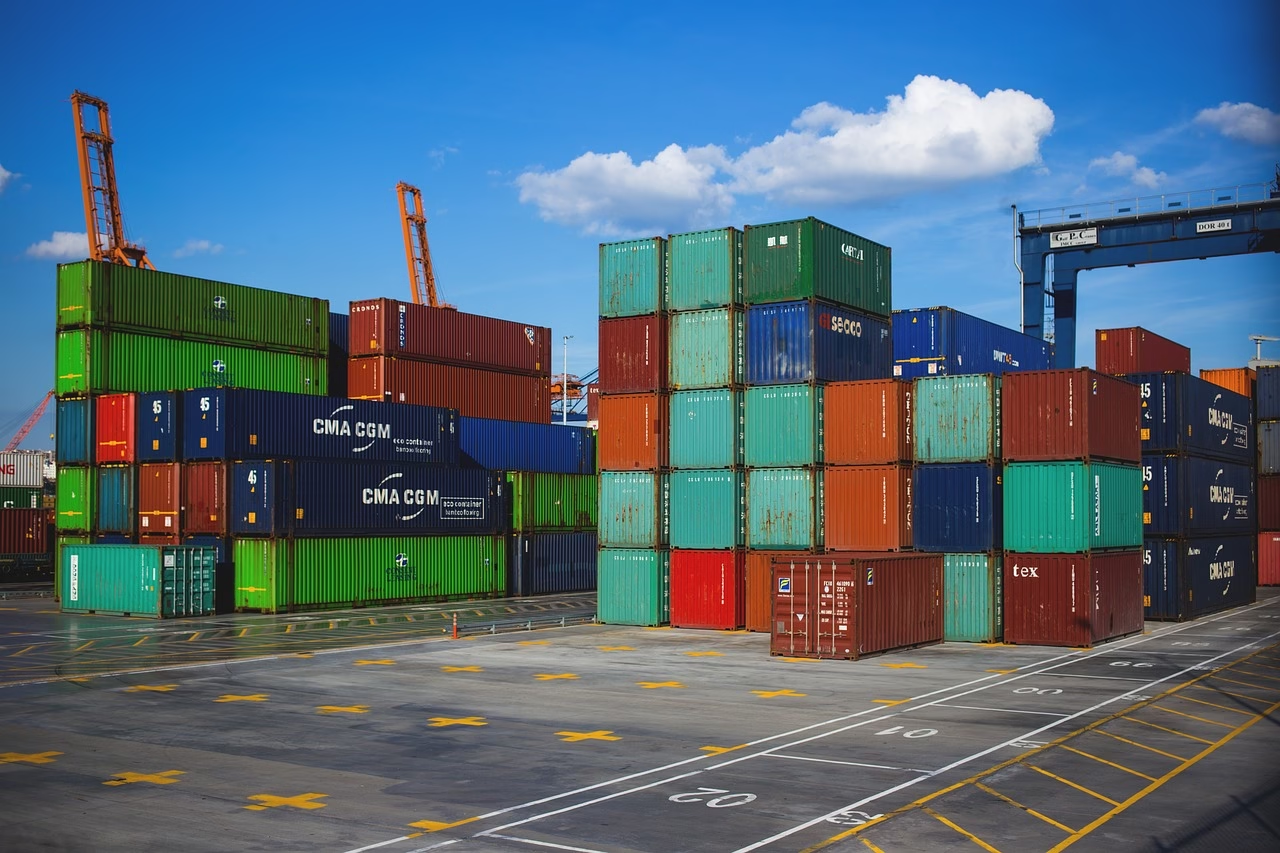
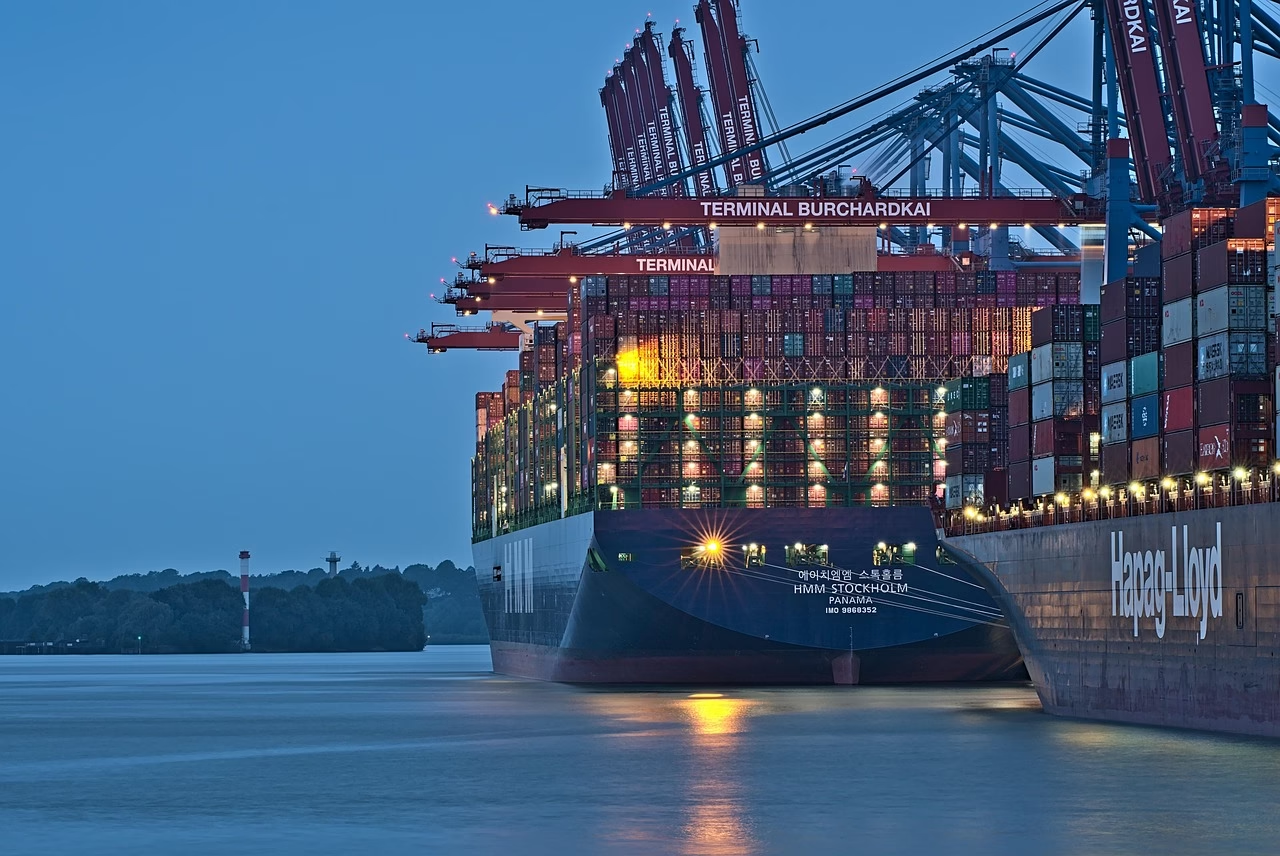
As of May 2026, the maritime landscape has undergone a fundamental transformation. What began as a tactical response to regional instability in the Red Sea has solidified into a structural shift in global trade. For business owners and logistics managers, the ‘Cape of Good Hope’ route is no longer an alternative—it is the baseline. This shift has extended the standard transit time between Shanghai and Rotterdam by 12 to 15 days, effectively removing roughly 10% of global container capacity from the market.
The Intelligence Tool: Monitoring via MarineTraffic and Xeneta
To navigate this volatility, strategic planners are moving beyond standard news cycles and using Xeneta for real-time freight rate benchmarking and MarineTraffic (AIS data) to monitor congestion at alternative bunkering hubs like Las Palmas and Port Louis. By tracking the Ocean Freight Rate Index, businesses can identify the exact moment ‘peak season surcharges’ transition from temporary measures to permanent price floors.
Historical Context: 1967 vs. 2026
History mirrors the current crisis. During the 1967-1975 Suez Canal closure, the global economy saw a similar pivot. However, in 2026, the stakes are higher due to ‘Just-in-Time’ manufacturing dependencies. Unlike the 20th century, today’s rerouting triggers immediate currency volatility in emerging markets—specifically Egypt, which faces a massive shortfall in Suez transit fees, affecting its ability to service sovereign debt and impacting regional investment portfolios.
Practical Impact on Your Operations
- For Logistics Managers: Expect ‘Bunker Adjustment Factors’ (BAF) to remain 20-30% higher than 2024 averages. You must build a 14-day ‘buffer zone’ into your inventory cycles to avoid stock-outs.
- For Global Investors: Commodity-linked currencies in nations along the new route (like South Africa) are seeing increased utility, while insurance stocks remain under pressure as ‘War Risk’ premiums are being redefined for the entire Indian Ocean basin.
- For Freelancers & Small Business: Increased shipping costs are trickling down into the ‘Last Mile.’ If you source physical products from overseas, your landed cost has likely increased by 15% in the last quarter alone.
Strategic Action Plan
Do not wait for a ‘return to normal’ in the Red Sea. Instead, audit your supply chain for near-shoring opportunities in North Africa or Mexico to bypass maritime bottlenecks entirely. Use data from the IMB Piracy Reporting Centre to evaluate the safety of emerging secondary ports. In 2026, the winner isn’t the one with the cheapest shipping, but the one with the most predictable delivery window.























Leave a Reply