


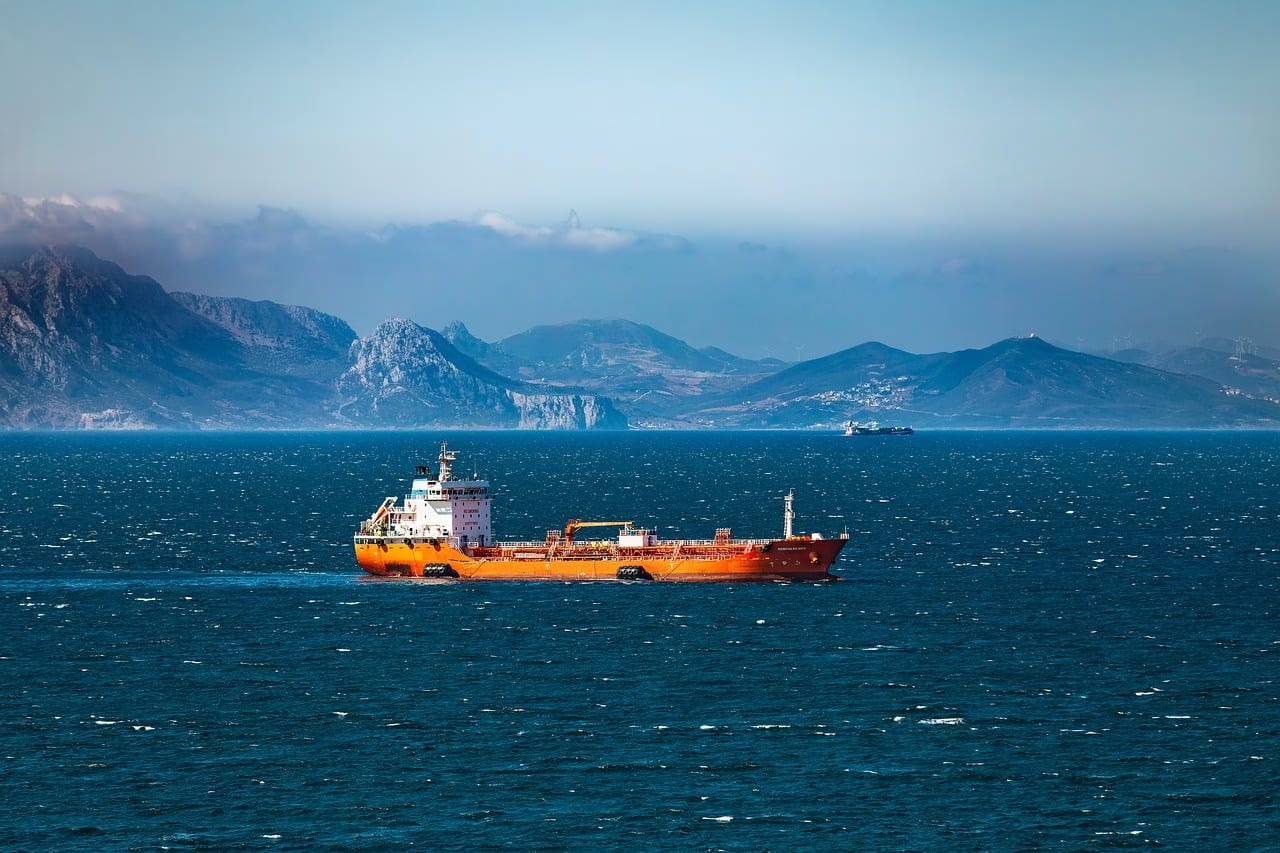
Global energy markets face severe disruption this week as commercial vessel traffic through the Strait of Hormuz plunged by more than 40 percent following the enforcement of a U.S. naval blockade and renewed regional fighting. The sudden slowdown in the world’s most critical oil transit bottleneck has forced major maritime carriers to suspend passage, stranding millions of barrels of crude and sparking fears of a widespread economic shock.
Geopolitical Flashpoint for Global Energy
The Strait of Hormuz, a narrow waterway separating Iran from the Arabian Peninsula, serves as the primary export highway for Middle Eastern petroleum producers. Approximately 20 percent of the world’s petroleum supply—averaging 20 million barrels per day—passes through this 21-mile-wide choke point annually.
Historically, any threat to navigation within the strait causes rapid spikes in global energy prices due to the absence of sufficient overland pipeline alternatives. With the military blockade taking full effect over the past seven days, commercial operators are taking extreme precautions to avoid military engagements and direct interdictions.
The latest operational freeze follows escalating strikes between regional forces and naval assets, prompting maritime safety regulators to raise danger alerts to their highest thresholds for the Persian Gulf and Gulf of Oman.
Maritime Industry Reacts to Heightened Risk
Major international shipping conglomerates, including Maersk and Mediterranean Shipping Company (MSC), have instructed their fleets to pause transit or divert vessels toward safer anchorage zones. Hundreds of supertankers currently sit idling in the open sea, awaiting clearer security protocols or potential naval escorts.
Real-time satellite tracking data from maritime analytics firm Kpler confirms that crude shipments exiting the Persian Gulf dropped from an average of 18.2 million barrels per day down to less than 10 million barrels per day over the past 72 hours. This dramatic decline marks the sharpest single-week drop in waterway traffic recorded in over two decades.
Ship captains report heightened radio interference, electronic spoofing, and frequent warnings from naval authorities operating in the area. These operational hazards have rendered standard commercial routing virtually impossible without significant safety guarantees.
Insurance Costs and Freight Rates Skyrocket
The sudden surge in commercial risk has reverberated through the global maritime insurance market. The Joint War Committee in London officially expanded its high-risk zone across the region, allowing insurers to dramatically adjust their rates for coverage.
Marine underwriters have raised war-risk premiums for tankers intending to enter the Strait of Hormuz from 0.2 percent to over 1.5 percent of a vessel’s total hull value. For a modern Very Large Crude Carrier (VLCC) valued at $120 million, this adjustment adds nearly $1.8 million in additional costs per single transit.
Daily charter rates for crude tankers operating along the Middle East to Asia shipping lanes have simultaneously surged past $125,000 per day. Industry benchmark data from the Baltic Exchange indicates that chartering costs have risen by 180 percent since the blockade was implemented.
Macroeconomic Impact and Refinement Deficits
Energy traders responded immediately to the transport paralysis, sending Brent crude futures up by 8.5 percent to touch $93 per barrel during early trading. Benchmark West Texas Intermediate (WTI) experienced similar upward momentum, approaching $88 per barrel.
Import-dependent economies across Asia face the most acute exposure to the ongoing trade disruption. Refiners in Japan, South Korea, and India rely on Persian Gulf exporters for more than 60 percent of their daily crude requirements.
Several Asian energy conglomerates have already begun reaching out to alternative suppliers in West Africa, Brazil, and the United States to secure emergency spot cargoes. However, analysts warn that long-haul shipping routes around the Cape of Good Hope will add up to two weeks to transit schedules, further straining global vessel capacity.
Escalation Risks and the Horizon Ahead
Energy analysts and policy experts are watching closely to see if international naval coalitions will organize formal convoy operations to escort commercial tankers through the waterway. The implementation of protected convoy systems could restore a degree of commercial traffic, though operational speeds would remain severely reduced.
Market participants are also monitoring whether emergency crude releases will be triggered by member nations of the International Energy Agency (IEA) to stabilize global spot prices. A prolonged operational shutdown lasting beyond 30 days would likely force governments to dip into strategic reserves to prevent severe fuel shortages.
The immediate focus remains on satellite tracking metrics over the coming days to determine whether commercial fleets initiate a tentative return or if total traffic drops further into complete standstill.






















Leave a Reply