


A Historic Homecoming in Savannah
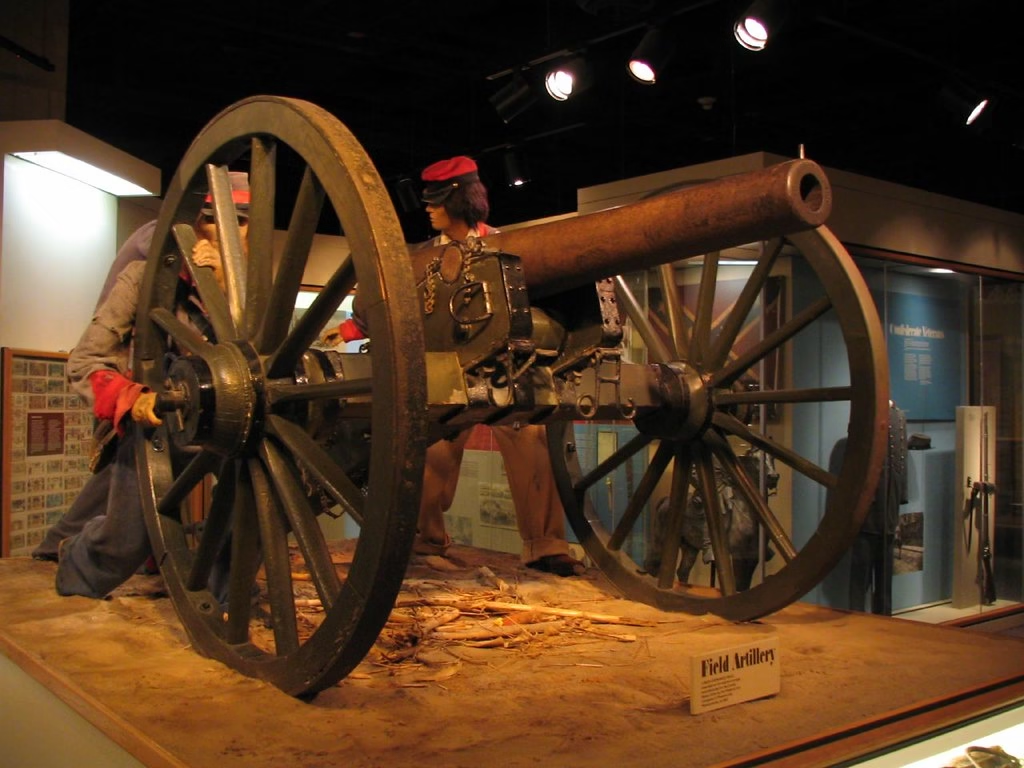
Two rare cannons, lost to the depths of the Savannah River during the American Revolution, are set to go on public display this week at the Savannah History Museum in Georgia. Recovered by maritime archaeologists following years of dredging operations, these artifacts offer a tangible connection to the 1779 Siege of Savannah, marking a significant milestone in the preservation of the city’s colonial naval heritage.
The Context of a Forgotten Conflict
The Siege of Savannah stands as one of the deadliest battles of the American Revolutionary War. In October 1779, a combined force of American and French troops attempted to reclaim the city from British occupation, resulting in a catastrophic defeat for the allied forces. During the chaotic maritime maneuvers surrounding the conflict, several vessels were scuttled or sank, leaving behind a wealth of military equipment that remained buried in the riverbed for over two centuries.
Details of the Recovery Effort
The recovery of these cannons was not an isolated event but rather a byproduct of the Savannah Harbor Expansion Project. As the U.S. Army Corps of Engineers deepened the shipping channel to accommodate larger container vessels, maritime archaeologists monitored the dredging process closely. This collaboration ensured that significant historical items were identified and retrieved before being damaged by heavy machinery.
Conservationists at the museum have spent months treating the iron artifacts to prevent rapid oxidation and deterioration upon exposure to air. According to museum curators, the cannons were found in remarkably stable condition despite being submerged in the oxygen-poor, sediment-heavy environment of the river floor for approximately 245 years.
Expert Perspectives on Material History
Dr. Elena Vance, a lead maritime historian at the Georgia Historical Society, notes that these cannons provide critical data regarding 18th-century naval warfare. “These are not just weapons; they are primary source documents,” Vance explained. “The casting marks and the specific composition of the iron allow us to trace the supply chains of the British military during the colonial period, revealing how they maintained their dominance on the high seas.”
Data from the National Park Service indicates that while hundreds of artifacts have been recovered from the Savannah River over the last decade, intact heavy artillery remains exceedingly rare. The size and weight of these cannons make them difficult to transport and stabilize, which historically led to many being abandoned during dredging efforts in the mid-20th century.
Broader Implications for Coastal Preservation
The public exhibition of these cannons underscores the growing tension between commercial infrastructure development and cultural resource management. As Georgia continues to expand its port facilities to meet global shipping demands, the success of this recovery operation serves as a model for future projects. It demonstrates that industrial progress and historical preservation can coexist when robust archaeological monitoring protocols are strictly enforced.
For the local tourism industry, the arrival of these artifacts provides a fresh draw for the city’s historic district, which attracts millions of visitors annually. It reinforces Savannah’s identity as a living museum, where the landscape itself continues to yield secrets from the nation’s formative years.
Looking Ahead
Industry observers and historians are now turning their attention to the remaining unmapped sections of the riverbed. As further dredging phases proceed, the possibility of uncovering additional shipwrecks or specialized military equipment remains high. Researchers are currently advocating for a dedicated underwater survey to identify other high-priority sites before further harbor modifications occur, ensuring that the next chapter of Savannah’s history is preserved rather than lost to the tide.
















Leave a Reply