


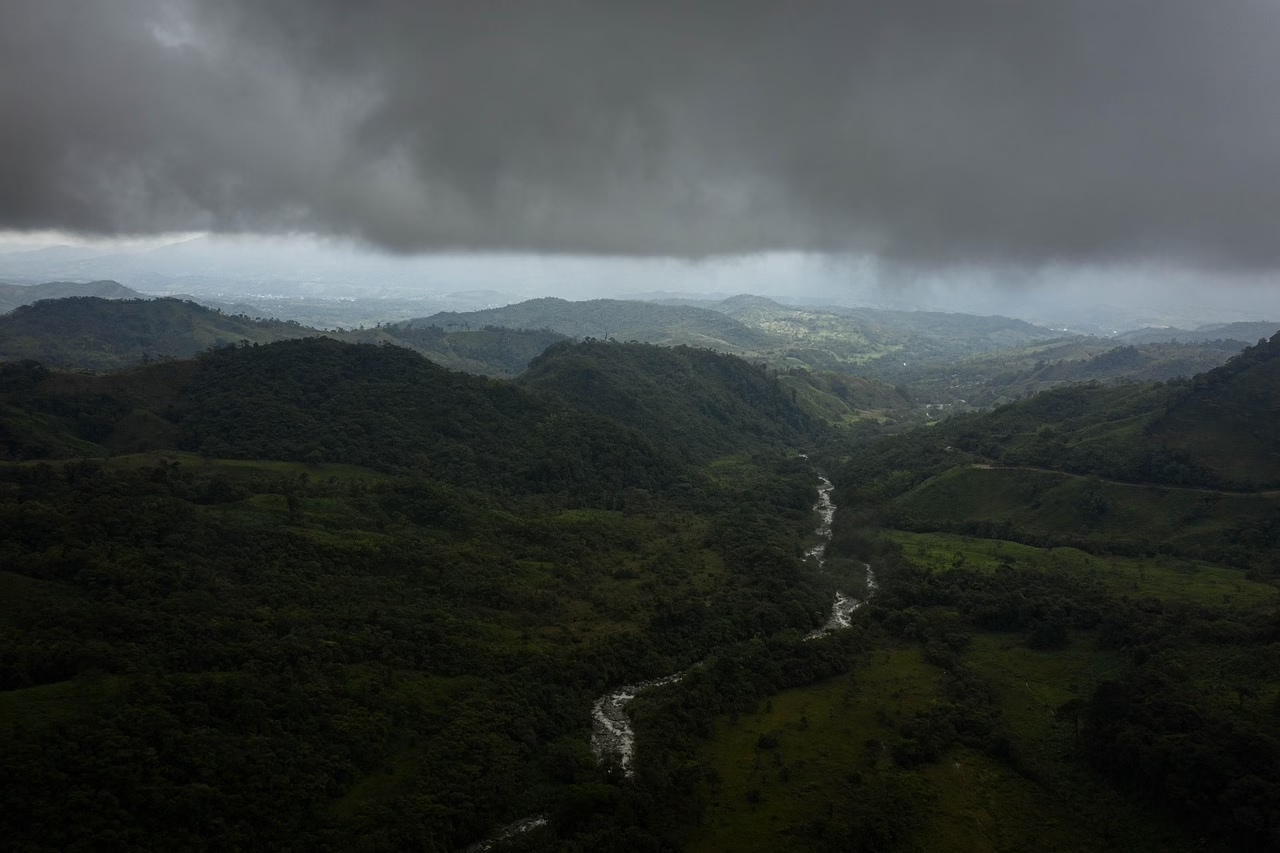
Indigenous community leaders across Brazil’s model Amazonian reserves issued an urgent appeal to federal authorities in Brasília this week, demanding immediate military and police intervention against escalating invasions by transnational criminal gangs. The crisis, centered in high-profile territories once celebrated as global benchmarks for sustainable forest stewardship, highlights a dangerous shift as organized crime syndicates establish drug trafficking routes and illegal extraction operations within protected tribal lands.
For decades, Brazil’s legally designated Indigenous territories have served as the country’s most effective barrier against Amazonian deforestation. Supported by international climate funds and local conservation strategies, these reserves demonstrated that community-led guardianship could successfully preserve biodiversity while providing stable livelihoods.
However, the remote geographical nature of these dense rainforest reserves has made them prime targets for transnational syndicates. As security forces intensified crackdowns on traditional border corridors, criminal networks redirected cocaine trafficking routes into navigable riverways dissecting Indigenous lands, bringing unprecedented violence to historically peaceful communities.
Encroachment by Organized Crime and Resource Extraction
Indigenous surveillance patrols, known as Indigenous Guards, report unprecedented levels of militarization among encroachers. Illegal gold prospectors, wildcat loggers, and drug traffickers affiliated with major South American cartels now operate with automatic weaponry, severely outgunning community monitoring units equipped only with basic radio equipment and GPS trackers.
The encroachment severely threatens both human lives and environmental integrity. Wildcat gold mining operations dump tons of toxic mercury into vital river systems, poisoning fish stocks that serve as primary food sources for thousands of villagers. Simultaneously, illegal clear-cutting for clandestine airstrips and supply camps destabilizes fragile ecosystems.
Community leaders report living under constant death threats, forcing several prominent environmental defenders to flee their ancestral homes. The atmosphere of terror has disrupted traditional farming, schooling, and healthcare delivery across multiple riverine villages in the region.
Data Reveals Growing Conflict in Protected Zones
Data from the Indigenous Missionary Council (CIMI) indicates a 35 percent rise in illegal territorial invasions across northern Brazil over the past two years. Despite official government reports showing that deforestation rates inside unmonitored public areas remain high, strictly protected Indigenous territories historically keep forest loss below one percent annually.
Environmental experts emphasize that preserving these territories is crucial for global climate stability. According to a joint study by the World Resources Institute and the Rights and Resources Initiative, Indigenous-managed forests store significantly more carbon per hectare than unmanaged or private lands across the Amazon basin.
“When criminal networks compromise Indigenous sovereignty, we do not just lose local security—we lose the frontline of global climate stabilization,” stated Dr. Elena Rossi, a senior Amazon analyst at the Center for Socio-Environmental Research. “These communities are performing a vital global service with minimal state infrastructure.”
Broader Implications for Amazonian Conservation
The expanding power of criminal gangs in the Amazon poses a critical test for the Brazilian federal government’s commitment to achieve zero illegal deforestation by 2030. While federal enforcement agencies like IBAMA and FUNAI have stepped up targeted raids, budget constraints and vast geographical distances severely limit sustained state presence.
The situation also risks undermining international climate agreements and green financing mechanisms. Foreign donors contributing to initiatives like the Amazon Fund have increasingly tied financial disbursements to verifiable security and human rights protections for frontline forest defenders.
Furthermore, the conflict threatens to derail regional economic stability. Polluted waterways and displaced communities alter local trade networks, creating long-term economic vulnerability that criminal elements often exploit to recruit impoverished youth.
Key Developments on the Horizon
Security analysts and environmental policymakers are closely monitoring the Brazilian government’s proposed plan to establish permanent joint security posts along critical river junctions. The upcoming regional security summit in Belém is expected to address cross-border policing strategies between Brazil, Colombia, and Peru to interdict illicit riverine traffic.
Additionally, Indigenous organizations are accelerating efforts to acquire advanced technology, including high-resolution satellite monitoring and long-range surveillance drones, to identify illegal encampments before gangs establish permanent footholds. The speed and effectiveness of the federal response over the coming months will determine whether these model reserves can maintain their crucial role as defenders of the world’s largest rainforest.
















Leave a Reply