


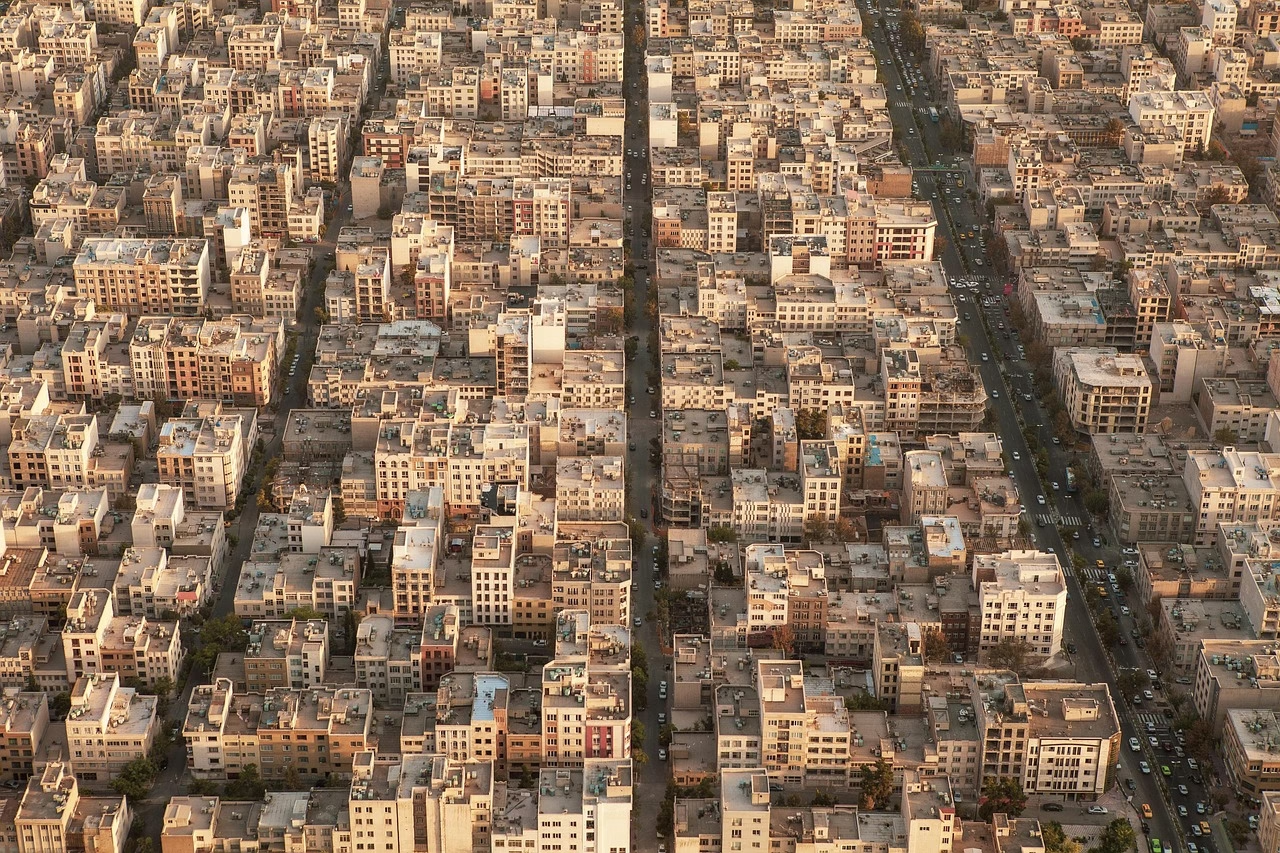
Iranian authorities have paralyzed daily life across Tehran this week, shuttering major streets and restricting national airspace to accommodate a massive, multi-day mourning procession for the late Supreme Leader, whose coffin is currently being transported through dense crowds. The state-mandated mourning period, which commenced on Saturday, is scheduled to culminate this Thursday with an internment ceremony at the Imam Reza shrine in Mashhad, the birthplace of the 86-year-old leader.
A Nation in Transition
The death of the Supreme Leader marks a pivotal juncture for the Islamic Republic, which has navigated decades of geopolitical isolation and internal economic pressure. Observers note that the scale of the state-organized processions serves as a deliberate display of national cohesion during a period of significant political uncertainty.
Tehran has effectively ground to a halt, with government offices, schools, and private businesses closing to facilitate public participation. The spectacle has been punctuated by performative displays of defiance, including the hanging of effigies depicting Western political figures, underscoring the enduring ideological stance of the state apparatus.
Geopolitical and Domestic Implications
The logistical undertaking of the funeral, which spans from the capital to the religious center of Mashhad, serves as a test of the regime’s organizational capacity during a leadership vacuum. Analysts from the Middle East Institute suggest that the mourning rites function as a mechanism for the state to consolidate support and signal continuity to both domestic constituents and international rivals.
Regional security experts point to the closure of airspace and the heavy deployment of security forces as evidence of the government’s concern regarding potential civil unrest. While the state-run media broadcasts images of widespread grief, independent analysts highlight that the transition of power will be closely scrutinized for signs of factionalism within the Islamic Revolutionary Guard Corps and the clerical establishment.
Economic and Social Stability
The economic impact of the week-long shutdown is already beginning to manifest, with local markets and international transit routes experiencing significant disruptions. Inflation and currency volatility, which have plagued the Iranian economy for years, remain the most pressing concerns for the general population regardless of the political shift.
Data from regional economic monitors indicates that the disruption to commercial activity could further strain an already fragile middle class. The government’s ability to maintain social order in the aftermath of the burial will likely depend on its capacity to address these underlying economic grievances.
Future Outlook and Succession
As the procession moves toward Mashhad, the focus of the international community will shift toward the Assembly of Experts, the body tasked with selecting the next Supreme Leader. The selection process will provide the first concrete evidence of how the power structure intends to navigate the post-Khamenei era.
Observers are closely monitoring whether the new leadership will maintain the status quo or attempt a pivot in foreign policy to mitigate the impact of ongoing sanctions. The coming weeks will be critical in determining whether the state can maintain its current trajectory or if the transition will necessitate significant domestic reforms to ensure long-term stability.














Leave a Reply