



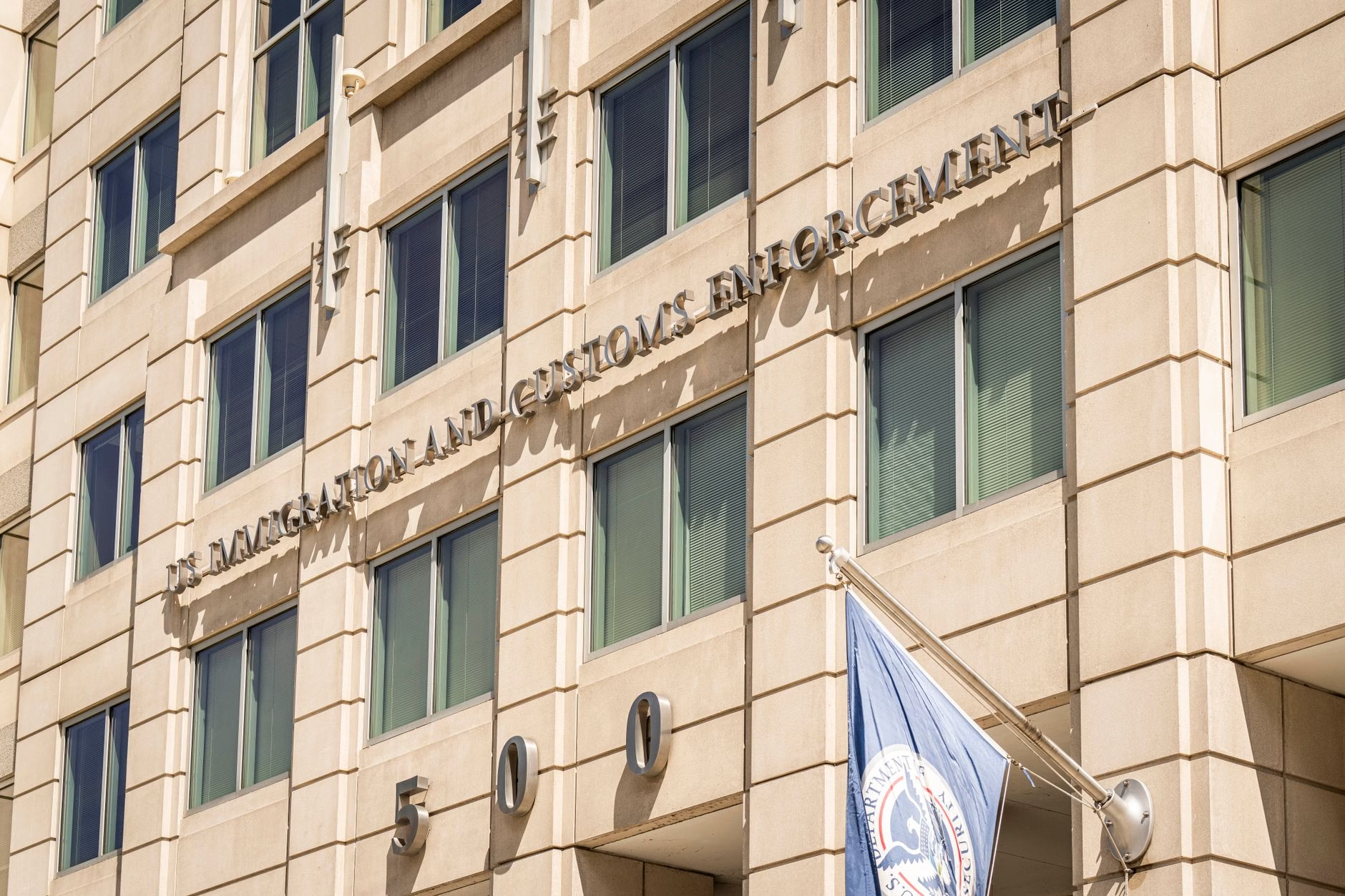
A federal judge in Wisconsin has officially denied a request to overturn the conviction of former Milwaukee County Circuit Court Judge Hannah Dugan, who was found guilty of obstructing an immigration enforcement operation. The ruling, issued this week, confirms the legal consequences for the former jurist after she facilitated the exit of a litigant through a private door to avoid U.S. Immigration and Customs Enforcement (ICE) agents waiting in her courtroom in 2019.
Background of the Legal Conflict
The incident centers on a 2019 courtroom session where ICE agents arrived to take a non-citizen litigant into custody. According to court records, Judge Dugan allowed the individual to leave the courtroom via a non-public exit, effectively bypassing the federal officers stationed in the hallway.
Following the event, prosecutors charged Dugan with obstruction of justice. The case sparked a intense national debate regarding the boundaries of judicial authority, the sanctity of courtrooms as safe havens, and the ethical obligations of judges when interacting with federal immigration authorities.
Details of the Court’s Decision
In his decision to uphold the conviction, the federal judge rejected arguments that Dugan’s actions were protected under judicial discretion. The court emphasized that while judges possess broad powers to manage courtroom decorum, those powers do not extend to actively interfering with federal law enforcement operations.
Legal analysts note that the ruling reinforces the principle that judicial officers remain subject to the same obstruction statutes as any other citizen. The prosecution successfully argued that by providing a means of escape, Dugan deliberately hindered the execution of a federal arrest warrant.
Expert Perspectives on Judicial Immunity
Legal scholars remain divided on the broader implications of the case. Proponents of the conviction argue that the rule of law must apply uniformly, regardless of a person’s position in the judiciary. They maintain that if judges are permitted to pick and choose which federal laws to enforce, the integrity of the legal system is compromised.
Conversely, some legal experts worry that the ruling could chill the ability of judges to maintain control over their courtrooms. They argue that courtrooms should be considered neutral zones, and that ICE presence during civil or criminal proceedings can disrupt the administration of justice for all parties involved.
Broader Industry Implications
The finality of this conviction serves as a stark warning to other members of the bench regarding the limits of their authority. The case has already prompted several state court systems to issue clearer guidelines regarding how judges should interact with federal immigration officials when they appear in court buildings.
For the legal industry, this incident highlights the growing tension between local judicial administration and federal immigration enforcement policies. As the landscape of immigration law remains highly contested, practitioners are watching to see if this ruling will lead to more formal inter-agency agreements between court systems and federal authorities.
Future Developments to Watch
Legal observers are now monitoring potential appeals or petitions to higher courts, though the window for such actions is narrowing. Furthermore, the case is likely to influence future judicial training curricula, specifically regarding the ethical boundaries of courtroom management when federal agents are present.
The industry will also be tracking whether state legislatures move to codify protections for court attendees, or conversely, if more states pass legislation requiring court staff to cooperate fully with federal immigration detainers. The intersection of local judicial independence and federal enforcement remains a volatile point of contention in the American legal system.





















Leave a Reply