


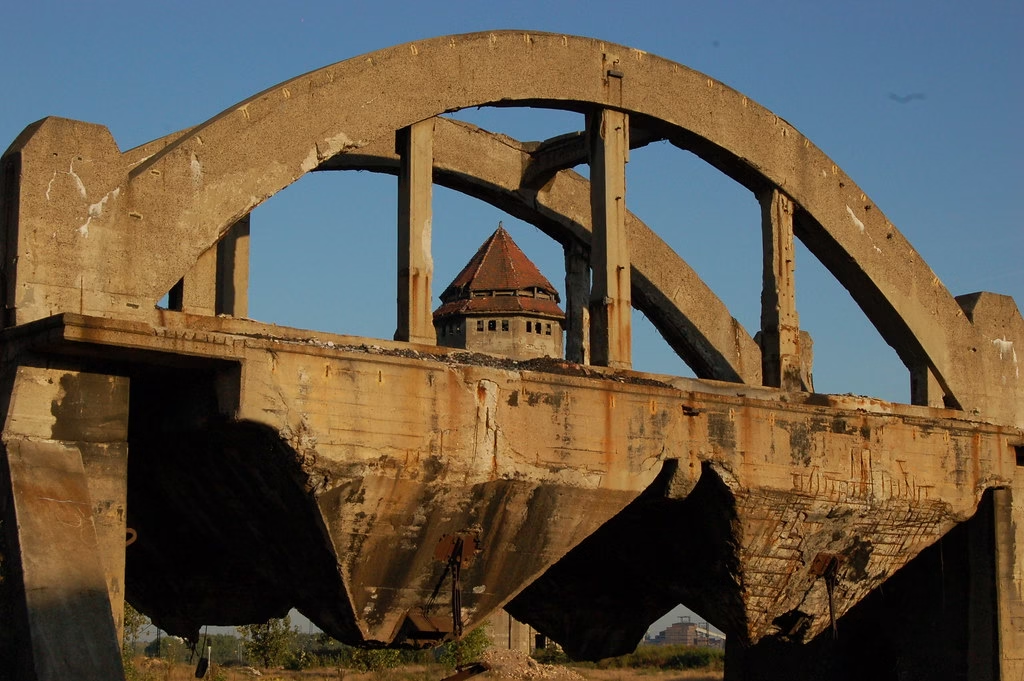
Tragedy at the Ponte do Esqueleto
A 21-year-old woman, identified as Maria Eduarda Rodrigues de Freitas, died on Sunday after falling from the Ponte do Esqueleto in Limeira, São Paulo, during a rope jump activity. Local authorities are investigating allegations that staff failed to properly attach the safety cord before the victim jumped, resulting in an unprotected fall from the abandoned bridge.
Context of the Incident
The Ponte do Esqueleto, or ‘Skeleton Bridge,’ is a decommissioned railway structure that has become a popular, albeit unauthorized, site for extreme sports enthusiasts in the region. Despite the lack of formal safety infrastructure or municipal oversight, the location frequently draws individuals seeking thrill-seeking activities. The unregulated nature of these jumps has long been a point of contention among local safety experts who warn against the dangers of utilizing abandoned industrial sites.
Investigation and Alleged Negligence
Initial police reports suggest that the equipment setup was fundamentally flawed, leading to the catastrophic failure of the safety protocols. Investigators are currently questioning the event organizers to determine if the activity was being operated by a professional company or an informal group. Authorities are focusing on whether the staff members involved possessed any formal certification for extreme sports instruction.
The Civil Police of São Paulo have seized the equipment found at the scene for forensic analysis. Preliminary findings indicate that the restraint system was not connected to the anchor point on the bridge, a critical oversight that rendered the safety gear useless. The investigation is exploring potential charges of involuntary manslaughter against those responsible for the jump’s management.
Safety Standards in Extreme Sports
Industry experts emphasize that rope jumping, often confused with bungee jumping, requires rigorous adherence to technical standards, including double-redundancy systems. According to the International Adventure Sports Safety Association, equipment failure in such scenarios is almost exclusively linked to human error rather than mechanical malfunction. The lack of standardized licensing for adventure tourism operators in Brazil remains a significant hurdle for ensuring participant safety.
Data from local emergency services indicates that calls regarding accidents at unauthorized extreme sports locations have increased by approximately 15% over the last two years. This trend highlights the growing demand for adrenaline-based tourism versus the slow pace of government regulation. Safety advocates argue that without mandatory safety audits for these sites, the risk of similar fatalities remains high.
Implications for the Adventure Tourism Industry
This incident serves as a grim warning for both operators and participants regarding the necessity of vetting safety protocols before engaging in high-risk activities. For the adventure tourism industry, the tragedy will likely trigger calls for stricter legislative frameworks and mandatory insurance requirements for all rope-based activities. Potential participants are being urged to verify the credentials of any organization offering extreme sports, specifically asking for documented proof of safety inspections and insurance coverage.
As the legal proceedings in Limeira move forward, the focus will shift toward whether the municipality should enforce physical barriers to restrict access to the bridge. Observers should watch for new safety ordinances in the São Paulo region, as local officials are under increasing pressure to address the risks associated with the growing popularity of ‘urban exploring’ and unauthorized extreme sports.
























Leave a Reply