


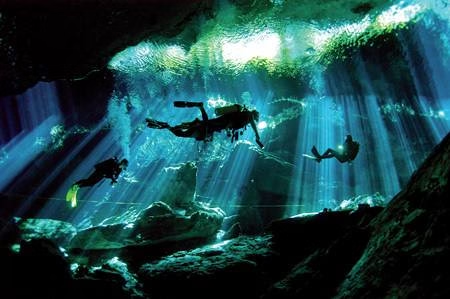
Cave divers and marine researchers in the Yucatán Peninsula are currently uncovering an expansive, interconnected network of flooded limestone caverns that experts believe could rewrite the geological history of the region. This ongoing exploration, primarily concentrated around the Riviera Maya, involves international teams mapping thousands of miles of submerged tunnels, revealing prehistoric fossils and hidden archaeological sites that have remained untouched for millennia.
The Geological Context of the Yucatán
The Yucatán Peninsula is characterized by its unique karst landscape, where porous limestone bedrock has been hollowed out by centuries of acidic rainwater filtration. These formations, known as cenotes, act as the primary entrances to a subterranean plumbing system that funnels fresh water toward the Caribbean Sea.
Historically, these sites were sacred to the ancient Maya, who viewed them as portals to the underworld, or Xibalba. Modern exploration has transitioned from archaeological interest to a scientific imperative, as understanding the flow of this aquifer is critical for managing the region’s rapidly growing water demands.
Technological Advancements in Underwater Mapping
Mapping these dark, confined environments requires specialized equipment and extreme physical endurance. Divers now utilize advanced closed-circuit rebreathers (CCRs) that recycle exhaled gases, allowing them to remain submerged for hours at a time without the limitations of traditional open-circuit scuba gear.
High-resolution photogrammetry and sonar scanning have replaced manual sketching, allowing researchers to create three-dimensional models of the cave systems. These digital twins provide unprecedented insight into the structural integrity of the caverns and the movement of underground rivers.
Scientific Discoveries and Biodiversity
The dark, nutrient-poor waters of the cenotes host a specialized ecosystem found nowhere else on Earth. Biologists have identified unique species of blind, pigment-less cave fish and crustaceans that have evolved to survive in total darkness.
Beyond biology, the caves serve as time capsules for paleontology. Exploration teams have recovered the remarkably preserved remains of Pleistocene-era megafauna, including giant ground sloths and saber-toothed cats. According to data from the National Institute of Anthropology and History (INAH), these findings provide essential clues about the climate shifts that occurred at the end of the last Ice Age.
Industry and Environmental Implications
The rapid development of the tourism industry in Mexico poses a significant threat to these fragile cave systems. Increased urban runoff and wastewater discharge are currently contaminating the aquifer, potentially damaging the delicate stalactite and stalagmite formations that take tens of thousands of years to develop.
Local conservation groups are now lobbying for stricter zoning laws to protect the recharge zones of these underground rivers. For the tourism sector, the stakes are equally high; the pristine nature of these cenotes is the primary draw for millions of international visitors annually.
Looking ahead, the focus will shift toward long-term groundwater monitoring and sustainable land-use policies. As mapping efforts continue, the integration of real-time environmental sensors will be essential to track water quality and ensure these hidden labyrinths remain preserved for future generations of scientists and explorers.




















Leave a Reply