


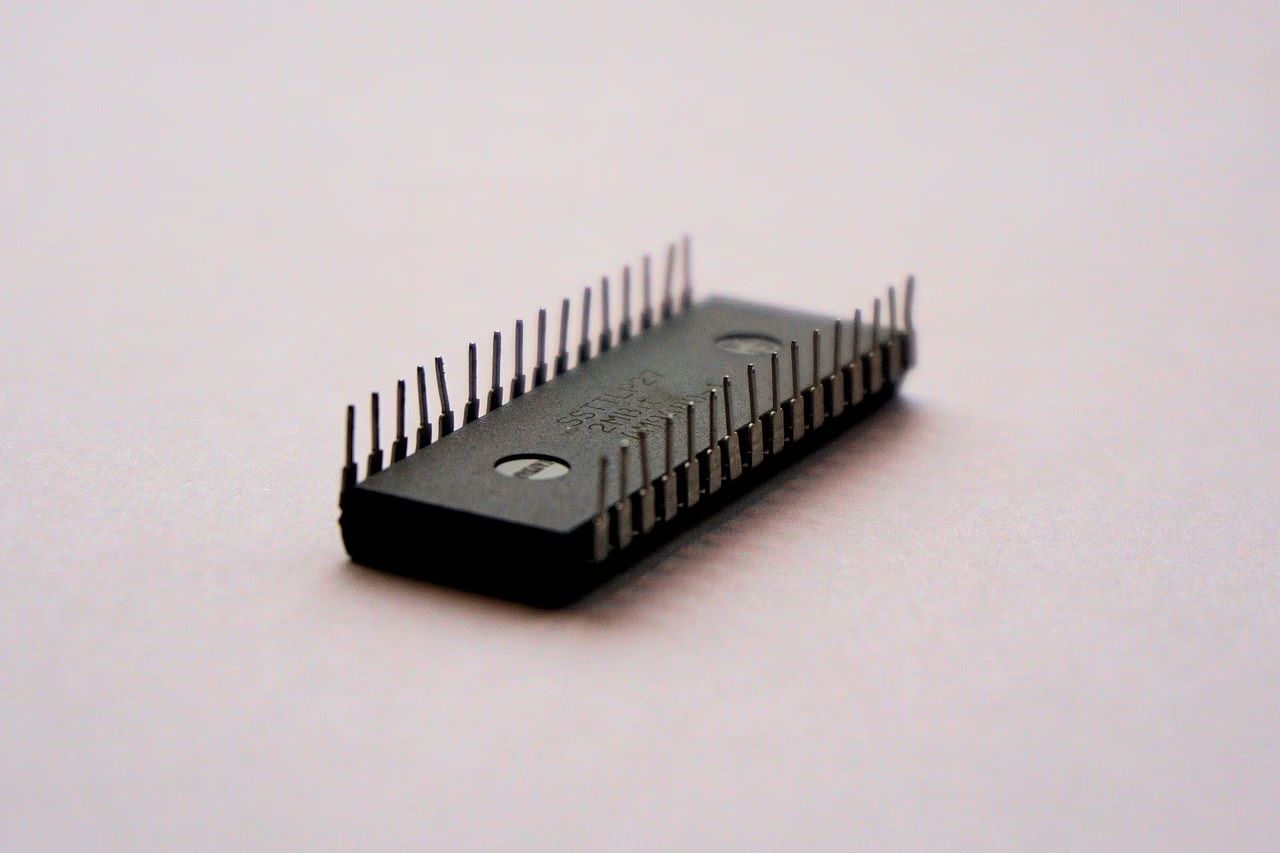
Mistral AI, the prominent French artificial intelligence startup, announced this week that it is actively exploring the design of its own custom semiconductor chips. Chief Executive Officer Arthur Mensch revealed the strategic pivot during a recent industry forum, signaling an aggressive push to reduce reliance on third-party hardware providers as the company scales its infrastructure to compete with global rivals like OpenAI and Anthropic.
The Growing Necessity for Vertical Integration
As the demand for large language model (LLM) training and inference surges, the global AI industry faces a critical bottleneck in compute capacity. Currently, most AI firms rely heavily on high-end GPUs produced by Nvidia, which dominate the market but remain subject to supply chain constraints and escalating costs.
By exploring proprietary chip design, Mistral joins a burgeoning trend of software-first companies seeking vertical integration. By controlling both the software stack and the underlying silicon, firms can optimize hardware specifically for their unique model architectures, potentially achieving higher efficiency and lower latency.
Competitive Landscape and Infrastructure Hurdles
Mistral has positioned itself as a European champion in the generative AI space, emphasizing open-weights models and transparency. However, maintaining that competitive edge requires massive capital investment in data centers and specialized hardware.
Industry analysts suggest that designing custom silicon is a high-stakes endeavor that requires significant research and development expenditure. While companies like Google and Amazon have successfully deployed custom Tensor Processing Units (TPUs) and Inferentia chips, the transition from software-focused development to hardware engineering represents a fundamental shift in Mistral’s operational model.
Expert Perspectives on Silicon Sovereignty
Market data from Gartner indicates that the AI chip market is expected to grow significantly over the next five years, driven by the proliferation of edge and cloud-based generative applications. Experts note that for startups, the move toward custom hardware is less about replacing general-purpose GPUs entirely and more about optimizing specific workflows to save on long-term operational expenditures.
“The move toward vertical integration is a natural maturation point for AI leaders,” says technology consultant Marcus Thorne. “When you reach a certain scale, the margins gained by custom hardware often outweigh the immense risks of semiconductor manufacturing.”
Long-Term Industry Implications
The decision by Mistral to move into hardware design will likely trigger a ripple effect across the European tech ecosystem. If successful, it could signal a new era of ‘digital sovereignty’ for the continent, reducing dependence on U.S.-based hardware suppliers.
Observers should watch for upcoming partnerships between Mistral and established semiconductor foundries, as the startup lacks the fabrication facilities required for mass production. Future announcements regarding chip architecture specifications and potential timelines for prototyping will be critical indicators of whether Mistral can successfully bridge the gap between software innovation and hardware manufacturing.






















Leave a Reply