


Global crude oil benchmarks breached the $100-per-barrel threshold on Thursday morning as intensifying military conflict in the Red Sea forced major shipping operators to divert tankers away from the Bab el-Mandeb strait. Brent crude traded at $100.60 per barrel by 11 a.m. Eastern time, marking a sharp surge driven by growing fears of prolonged supply chain disruptions through one of the world’s primary energy choke points.
A Critical Maritime Bottleneck in Jeopardy
The Bab el-Mandeb strait, a 18-mile-wide channel located between Yemen on the Arabian Peninsula and Djibouti and Eritrea in the Horn of Africa, serves as the southern gateway to the Red Sea and the Suez Canal. It is an indispensable artery for international trade, facilitating the passage of approximately 12 percent of total seaborne-traded oil and nearly 8 percent of global liquefied natural gas (LNG).
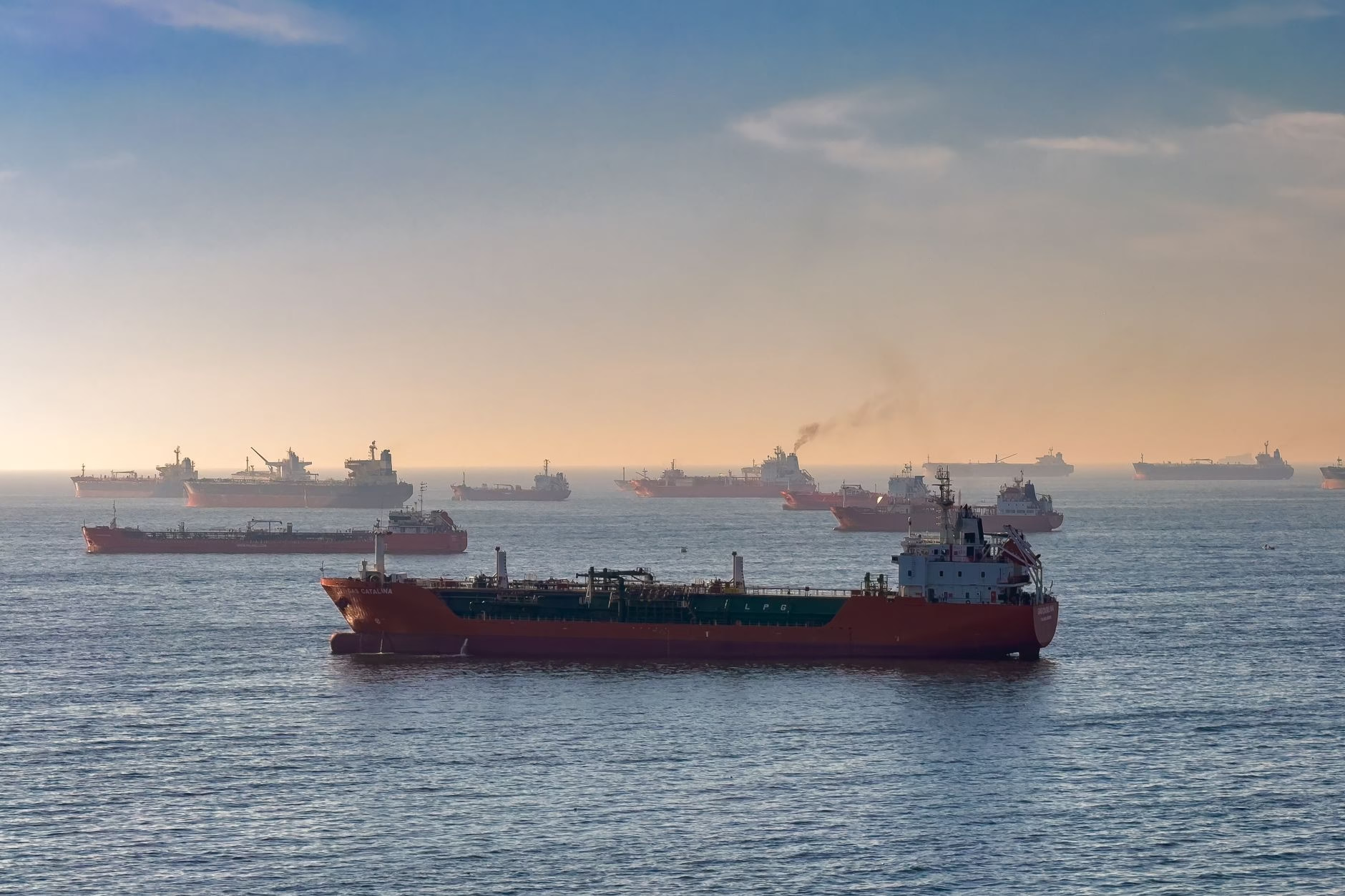
Historically known as the “Gate of Tears” due to its treacherous navigation, the strait has become a acute strategic flashpoint following repeated missile and drone attacks on commercial vessels navigating the regional waters. Major maritime carriers and state-owned energy firms have suspended transits through the region to protect crews and assets, forcing ships to bypass the Red Sea entirely.
The sudden drop in tanker traffic has effectively decoupled localized supply from immediate demand centers, stranding millions of barrels of crude at sea and forcing market participants to price in a substantial geopolitical risk premium.
Rerouting Vessels and Escalating Logistics Costs
To avoid the volatile corridor, ocean carriers are rerouting vessels around the Cape of Good Hope at the southern tip of Africa. This alternative route adds approximately 3,500 to 4,000 nautical miles to a journey from the Persian Gulf to Western Europe, extending transit times by 10 to 14 days.
The extended voyages have created a severe strain on global shipping capacity. According to data from maritime analytics firm Windward, the volume of crude oil actively floating in transit has increased by over 15 percent in recent weeks, tying up vessel supply and pushing tanker charter rates to multi-year highs.
Insurance costs have similarly skyrocketed. War risk insurance premiums for vessels still attempting the Red Sea transit have surged from less than 0.1 percent of hull value to over 1 percent, adding hundreds of thousands of dollars in operational costs per voyage.
Expert Perspectives and Economic Impacts
Energy analysts warn that the structural shift in maritime trade routes could keep oil prices elevated well into the coming quarters. The disruption is particularly acute for European refiners, which rely heavily on Middle Eastern crude imports to replace lost Russian supplies.
“What we are witnessing is not a shortfall in physical oil production, but a massive dislocation of the global distribution architecture,” said Sarah Lin, senior energy strategist at Global Commodities Insights. “When you lengthen supply lines by two weeks, you effectively shrink global inventory buffer zones, making the market hypersensitive to further supply shocks.”
Data from the U.S. Energy Information Administration (EIA) indicates that roughly 6.2 million barrels per day of crude oil and refined petroleum products flowed through the Bab el-Mandeb prior to the recent escalation. Current maritime tracking data suggests that throughput has dropped by more than 50 percent since hostilities intensified.
Macroeconomic Implications for Consumers and Central Banks
The surge in energy prices presents a renewed challenge for central banks struggling to contain persistent inflation. Rising crude prices translate directly into higher consumer costs at the pump, as well as increased fuel surcharges for aviation, trucking, and maritime logistics.
In the United States, retail gasoline prices are projected to rise by 20 to 30 cents per gallon over the coming weeks as refiners pass along higher crude acquisition costs. In Europe and emerging markets, where energy costs represent a larger share of household expenditures, the inflationary impact could be even more pronounced.
Economists caution that sustained triple-digit oil prices could slow global economic growth and force monetary authorities to maintain higher interest rates for longer, potentially stifling broader business investment.
What to Watch Next as Crisis Unfolds
Industry observers are closely monitoring whether coalition naval escorts can secure commercial shipping lanes effectively enough to restore operator confidence in the Bab el-Mandeb strait. The willingness of major container lines and oil majors to resume normal transits remains the single critical variable for price stabilization.
Additionally, market participants are eyeing potential policy responses from major consuming nations, including coordinated releases from Strategic Petroleum Reserves (SPR) by International Energy Agency (IEA) member countries. Any further spread of regional instability to adjacent infrastructure, such as Persian Gulf loading terminals or processing plants, could trigger additional volatility in energy markets worldwide.
























Leave a Reply