


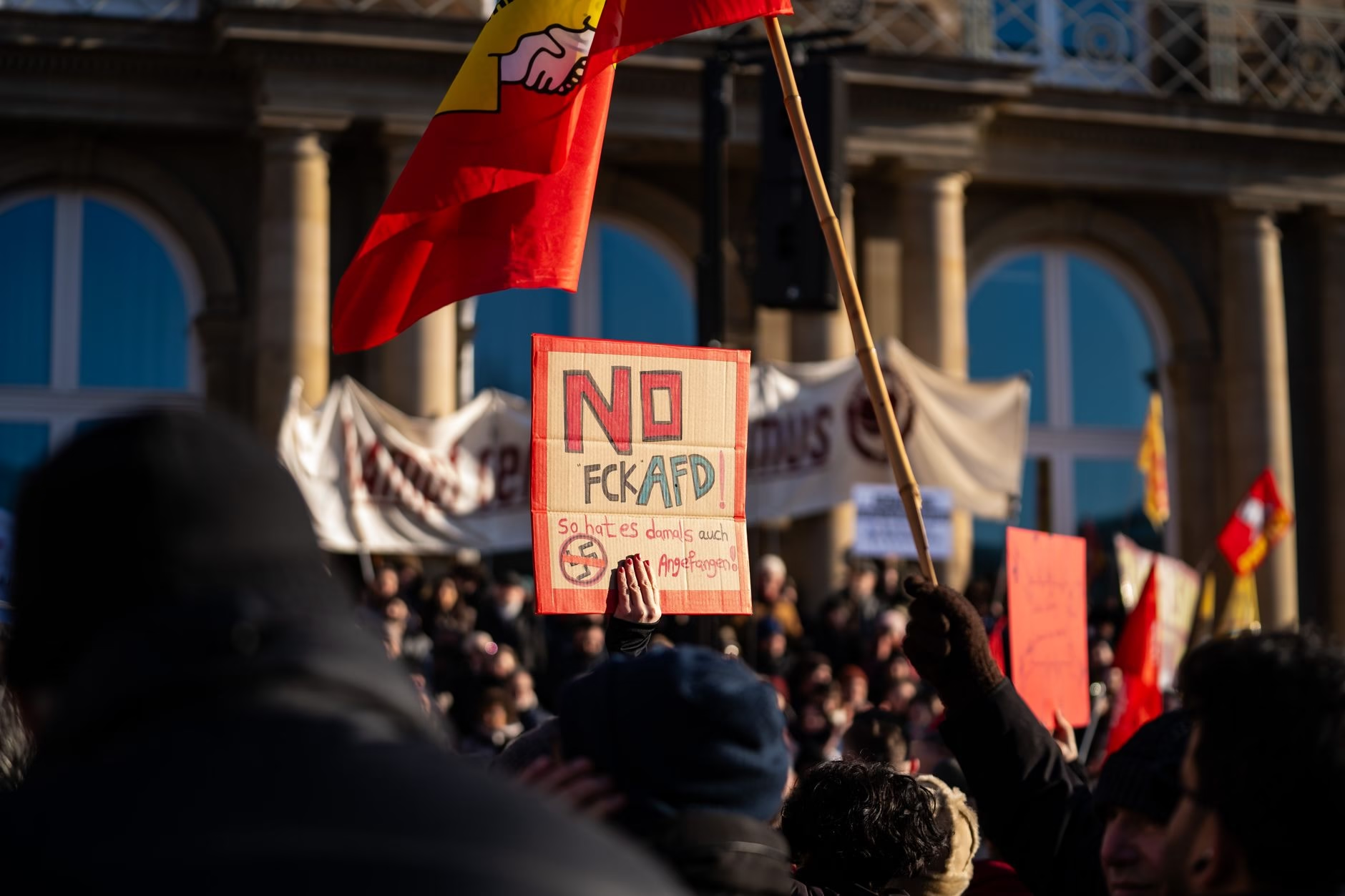
Political Developments in Germany
Germany is currently navigating a period of intense political reassessment following a significant electoral breakthrough by the country’s prominent populist party. The Alternative for Germany, widely known by its abbreviation AfD, delivered a powerful performance in a recent regional ballot, narrowly missing an absolute majority. This development has sent immediate shockwaves through the nation’s traditional political establishment.
Reactions from National Leadership
Prominent figures within the German political sphere have expressed deep concern over the outcome of the regional vote in Saxony-Anhalt. Among them, opposition leader Friedrich Merz made no secret of his astonishment regarding the strong showing by the nationalist faction. The results highlight a growing political polarization across various regions, challenging the dominance of mainstream parties and forcing a critical evaluation of current governance strategies.
The Rise of the Alternative for Germany
The AfD has steadily expanded its influence by capitalizing on widespread public anxieties surrounding immigration policy and foreign affairs, including its distinct stance on diplomatic relations with Russia. Sunday’s ballot results demonstrate that these messaging strategies continue to resonate strongly with a substantial portion of the local electorate, translating into tangible legislative power and altering the regional political balance.
Implications for the Broader Political Landscape
This outcome poses profound questions for the future stability of governance coalitions within the nation. Mainstream political architects must now grapple with how to address the underlying grievances of voters who have turned toward populist alternatives. As regional dynamics shift, the pressure mounts on federal leaders to formulate effective responses that can bridge the widening political divide before upcoming national milestones.

























Leave a Reply