



The Decoupling of Global Finance: The BRICS+ Common Ledger is Live
As of May 2024, the mBridge project was a pilot; today, in May 2026, it has transitioned into a full-scale operational alternative to the SWIFT messaging system. For business owners and logistics managers, this represents the most significant shift in the global financial architecture since Bretton Woods.
The Event: Operationalizing the ‘Common Ledger’
This month, the expanded BRICS+ bloc—now including major energy players like Saudi Arabia and the UAE—has officially integrated their central bank digital currencies (CBDCs) into a unified ‘Common Ledger.’ This allows for instantaneous, peer-to-peer trade settlement without the need for US dollar intermediation or correspondent banks in New York.
The Tool: How to Track This Shift
To monitor these flows in real-time, strategic analysts are using the Atlantic Council Central Bank Digital Currency (CBDC) Tracker and the BIS Innovation Hub mBridge Project Dashboard. These platforms provide live data on which nations are settling trades in non-USD assets and the total volume of liquidity moving through these alternative corridors.
Why This Matters for Your Business
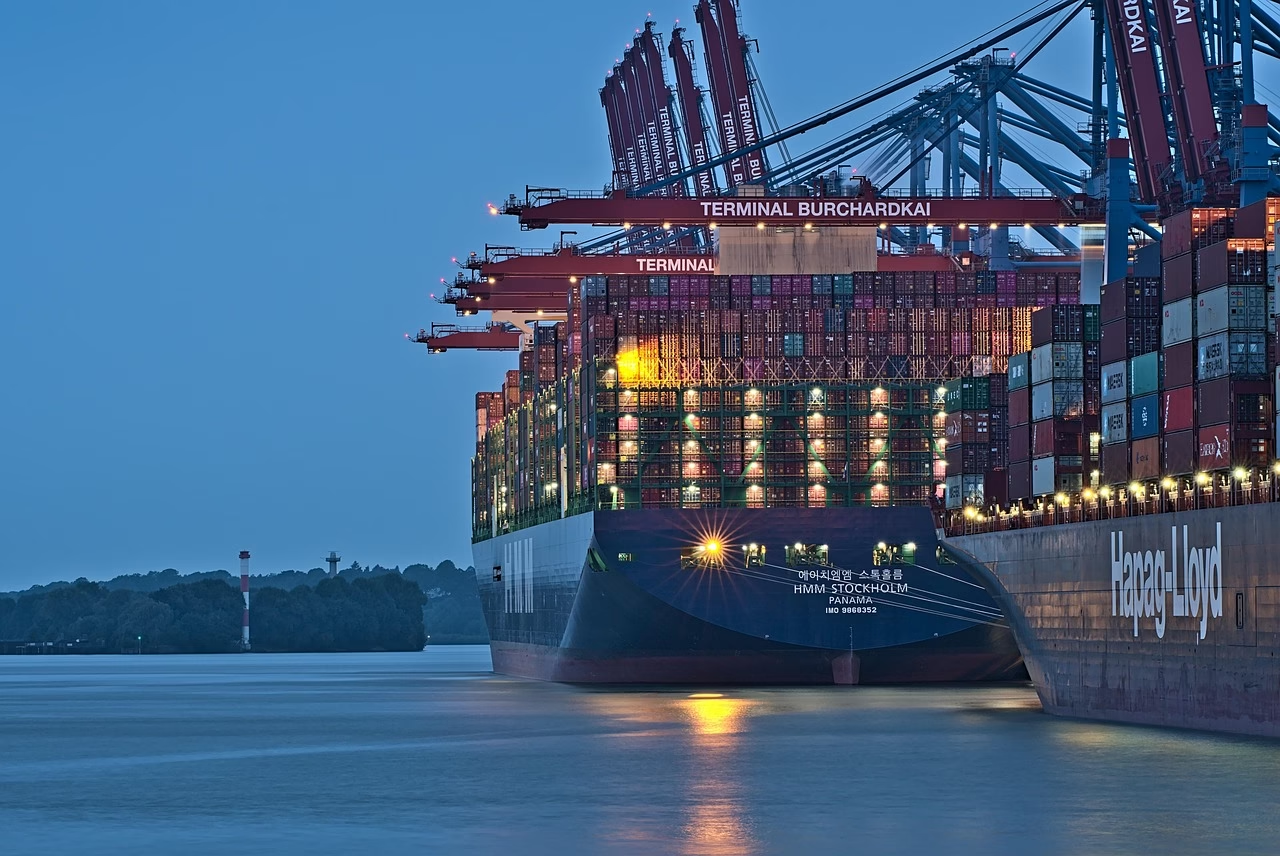
- Logistics and Shipping: For managers handling routes through the Suez Canal or Persian Gulf, port fees and fuel bunkering are increasingly being invoiced in local currencies (SAR or CNY). Using the mBridge system can reduce transaction fees by up to 3%, but it requires setting up digital wallets within these specific jurisdictions.
- International Freelancers: The 3-to-5 day wait for international wire transfers is being disrupted. Freelancers working for firms in the BRICS+ orbit can now receive ‘atomic settlements’—instant payments that bypass the intermediary fees of the traditional banking system.
- Global Investors: Currency volatility is no longer tied strictly to US Federal Reserve moves. We are seeing a ‘bifurcation’ of liquidity. Investors must now hedge against the ‘de-dollarization’ premium, as a significant portion of global oil trade is no longer reflected in USD demand.
Strategic Risk Monitoring
The primary risk is no longer just ‘sanctions’—it is fragmentation. If your business is strictly optimized for a USD-only environment, you are now facing higher ‘friction costs’ when dealing with the Global South. The ‘Greenback’ remains the reserve king, but for the first time in 80 years, it has a functional, tech-driven competitor that is faster and cheaper for regional trade.
Actionable Step
Review your vendor contracts in the Middle East and Southeast Asia. Identify which partners are offering discounts for settlement via mBridge or local CBDCs. The 2% you save on FX and intermediary fees could be the difference between a profitable quarter and a loss in a high-inflation environment.
























Leave a Reply