


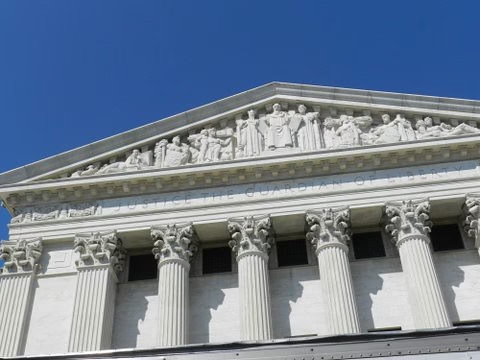
Legal Setback for Prosecutors
The Arizona Supreme Court issued a ruling on Tuesday denying an appeal from prosecutors who sought to bypass a lower court’s order to return the high-profile “fake elector” case to a grand jury. The decision mandates that the legal proceedings involving individuals accused of attempting to subvert the 2020 presidential election results must now return to the investigative stage for further review.
Background of the Investigation
The case centers on allegations that a group of Republican activists and political figures acted as unauthorized electors in an attempt to award Arizona’s electoral votes to Donald Trump instead of the certified winner, Joe Biden. Prosecutors have spent months building a case against these individuals, arguing that their actions constituted a coordinated effort to undermine the democratic process.
Earlier this year, a lower court judge determined that the presentation of evidence to the original grand jury lacked sufficient procedural clarity regarding the specific charges. This ruling effectively stalled the prosecution’s momentum, prompting the state to seek an emergency intervention from the state’s highest court to avoid restarting the grand jury process.
The Procedural Struggle
By denying the appeal, the Arizona Supreme Court has upheld the requirement that prosecutors must re-present their evidence to a new or existing grand jury to ensure the charges meet stringent legal standards. This procedural hurdle reflects the complexity of navigating election-related litigation in an era of intense political scrutiny.
Legal analysts note that returning to the grand jury is a significant tactical delay for the state. Each time a case is remanded, the prosecution must ensure that the testimony and evidence provided to jurors are airtight, as any perceived error can lead to motions for dismissal from defense counsel.
Expert Perspectives
“This ruling underscores the judiciary’s commitment to procedural due process, regardless of the political sensitivity of the underlying charges,” said Sarah Whitmore, a legal scholar specializing in election law. “Prosecutors now face the challenge of re-litigating the foundational aspects of their case before they can even reach a trial phase.”
Data from the Administrative Office of the Courts suggests that such delays are common in complex conspiracy cases, where the breadth of evidence can often overwhelm initial grand jury presentations. The state must now balance the need for speed against the necessity of building a legally unassailable case that can withstand rigorous cross-examination.
Future Implications and Expectations
The immediate implication for the defendants is continued legal limbo as the state prepares its next steps. For the public, the development signals that the legal resolution of the 2020 election disputes in Arizona remains a long-term prospect rather than an imminent event.
Observers are now watching to see how quickly the prosecution can re-convene the grand jury and whether they will modify the scope of the original indictments. The outcome of the upcoming grand jury sessions will dictate the timeline for potential trials, which are expected to dominate Arizona’s political and legal landscape well into the next election cycle.













Leave a Reply