


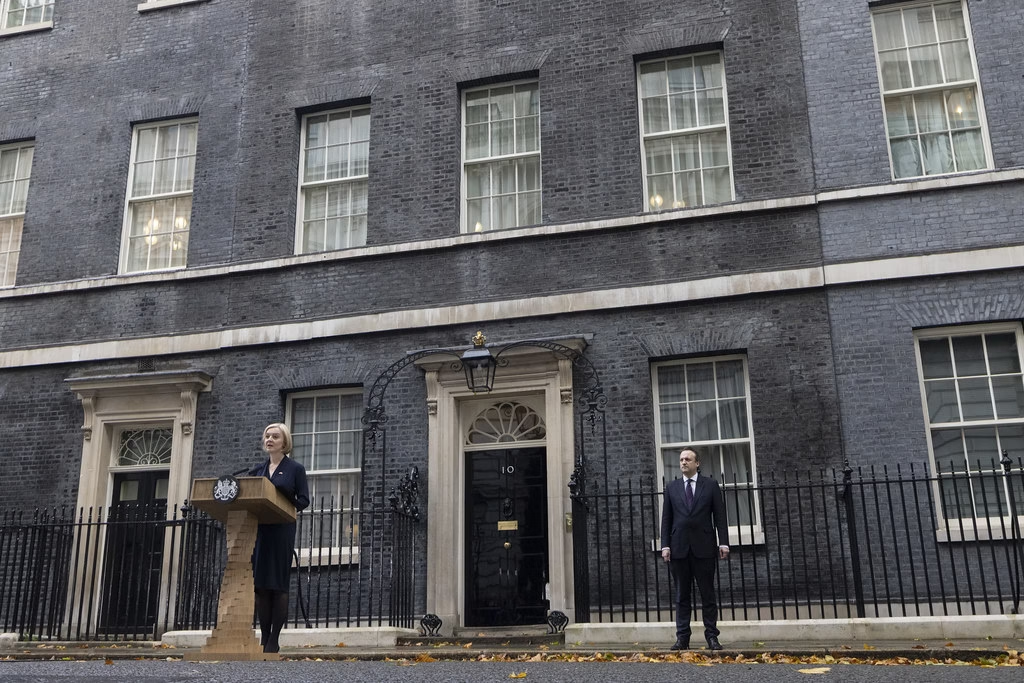
LONDON — Andy Burnham officially assumed office as the United Kingdom’s new Prime Minister on Tuesday following a dramatic leadership transition in Westminster, immediately confronting a sharp sell-off in British sovereign debt and scathing diplomatic criticism from former U.S. President Donald Trump.
Background to a Historic Political Shift
Burnham, the former Mayor of Greater Manchester long viewed as a prominent figure on the Labour Party’s left wing, succeeds Keir Starmer following an intense internal party vote. His ascension marks a distinct ideological pivot toward regional investment and expanded social spending, breaking from the fiscal caution that characterized the previous administration.
However, the prospect of a Burnham presidency has unnerved institutional investors for months. Market analysts point to his proposed economic platform—which prioritizes heavy state intervention, public health funding, and infrastructure spending—as a primary driver of rising yields on British government bonds.
Market Turbulence and Bond Jitters
Financial markets reacted swiftly to the official handover of power in London. UK gilt yields surged to multi-month highs on Tuesday morning as international bond investors demanded higher risk premiums to hold British debt, reflecting widespread anxiety over expanding deficit spending.
The British pound experienced heightened volatility against both the U.S. dollar and the euro during early trading sessions. Traders attributed the market swings to uncertainty regarding how the new administration plans to fund its ambitious domestic programs without escalating national debt.
“The market response underscores an extreme sensitivity to fiscal policy shifts in the current macroeconomic climate,” said Sarah Jenkins, chief European economist at Global Capital Insights. “Investors are seeking immediate clarity on whether the new administration can maintain fiscal discipline while pursuing public sector expansion.”
Transatlantic Friction and Diplomatic Fallout
Transatlantic relations faced an instant strain as Donald Trump launched a blistering attack on the new British leadership during a press event in Florida. Trump characterized the United Kingdom as a “poverty-stricken disaster,” attributing its economic struggles to progressive governance and high tax burdens.
“Britain has turned into a poverty-stricken disaster because they keep choosing high taxes and weak leadership,” Trump told reporters, warning that future trade cooperation between Washington and London could face significant friction under Burnham’s leadership.
Downing Street refrained from responding directly to Trump’s remarks, though a spokesperson emphasized Prime Minister Burnham‘s commitment to maintaining a robust Anglo-American security and economic partnership based on historic national ties.
Expert Perspectives and Economic Outlook
Data from the Institute for Fiscal Studies indicates that implementing Burnham’s proposed economic reforms could require an additional £35 billion in annual public funding or structural tax adjustments. Economists caution that such expansive borrowing could reignite domestic inflationary pressures if not carefully balanced.
Political analysts view Burnham’s elevation as a key test for left-leaning policy in Western Europe, where governments are struggling to balance voter demands for public services against tight budgetary constraints.
“Burnham holds a strong political mandate to address regional economic inequalities outside London,” noted Dr. Marcus Vance, senior political fellow at the London School of Economics. “However, his ability to deliver on those promises will depend entirely on how financial markets respond to his government’s initial fiscal disclosures.”
Implications and Key Milestones to Watch
For British businesses and international investors, attention now turns to the appointment of the new Chancellor of the Exchequer and the forthcoming presentation of an emergency budget statement. Corporate leaders are closely monitoring potential adjustments to corporate tax rates, capital investment allowances, and green energy mandates.
Diplomatically, observers will watch how the Burnham administration manages foreign policy relations across both Washington and Brussels over the coming months. Critical indicators to watch next include the upcoming auction demand for UK government gilts, official inflation data releases, and bilateral engagement strategies ahead of the next major international economic summits.























Leave a Reply